




01. Edit your form 8915 f online
Type text, add images, blackout confidential details, add comments, highlights and more.

Type text, add images, blackout confidential details, add comments, highlights and more.

Draw your signature, type it, upload its image, or use your mobile device as a signature pad.

Send form 8915f via email, link, or fax. You can also download it, export it or print it out.
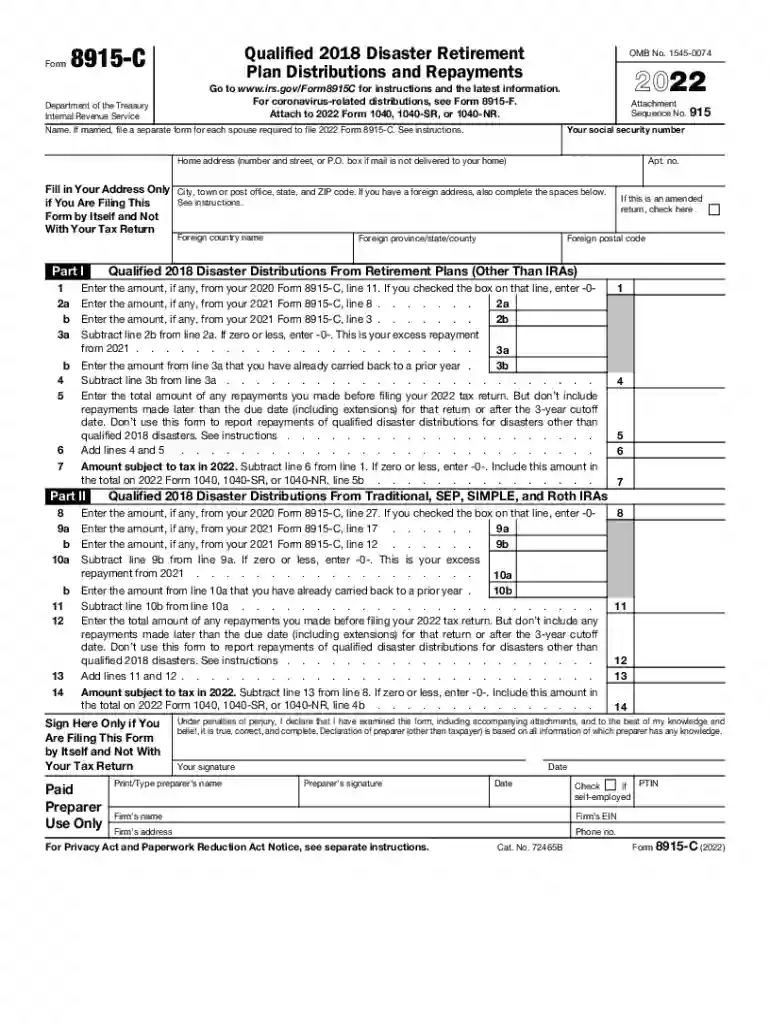
Form 8915-F, officially known as the Qualified Disaster Retirement Plan Distributions and Repayments form, is utilized by taxpayers in the United States to report distributions from retirement plans and annuities that are taken due to qualified disasters. These distributions can provide financial relief during periods of hardship caused by natural disasters. By completing this form, individuals can spread the taxable income from such distributions over three years, thereby easing their tax burden. Additionally, the form allows for the reevaluation of repayments, which can ensure that the taxes are calculated accurately.
Gather Required Information: Collect all necessary documents related to retirement plan distributions, including 1099-R forms and previous repayment records.
Review Distribution Types: Identify the distributions specifically related to qualified disasters, as not all distributions qualify for special tax treatment.
Calculate Taxable Amounts: Determine the amount of the distribution that is taxable for the current year, factoring in any repayments made.
Complete the Form: Fill out each section of Form 8915-F accurately, entering personal information, distribution amounts, and repayment details.
Check for Errors: Double-check figures, calculations, and spelling to avoid any potential discrepancies or errors in reporting.
File with Your Tax Return: Submit Form 8915-F along with your federal income tax return by the due date, ensuring compliance with IRS regulations.
To utilize Form 8915-F, taxpayers must meet certain eligibility criteria:


The IRS has specific guidelines for using Form 8915-F:
Tax software such as TurboTax or QuickBooks is compatible with Form 8915-F, offering a streamlined way to complete and submit the form. These platforms provide guidance and automation, minimizing human error and ensuring compliance with IRS regulations.
We've got more versions of the form 8915 f form. Select the right form 8915 f version from the list and start editing it straight away!
At DocHub, your data security is our priority. We follow HIPAA, SOC2, GDPR, and other standards, so you can work on your documents with confidence.


