





Definition and Meaning
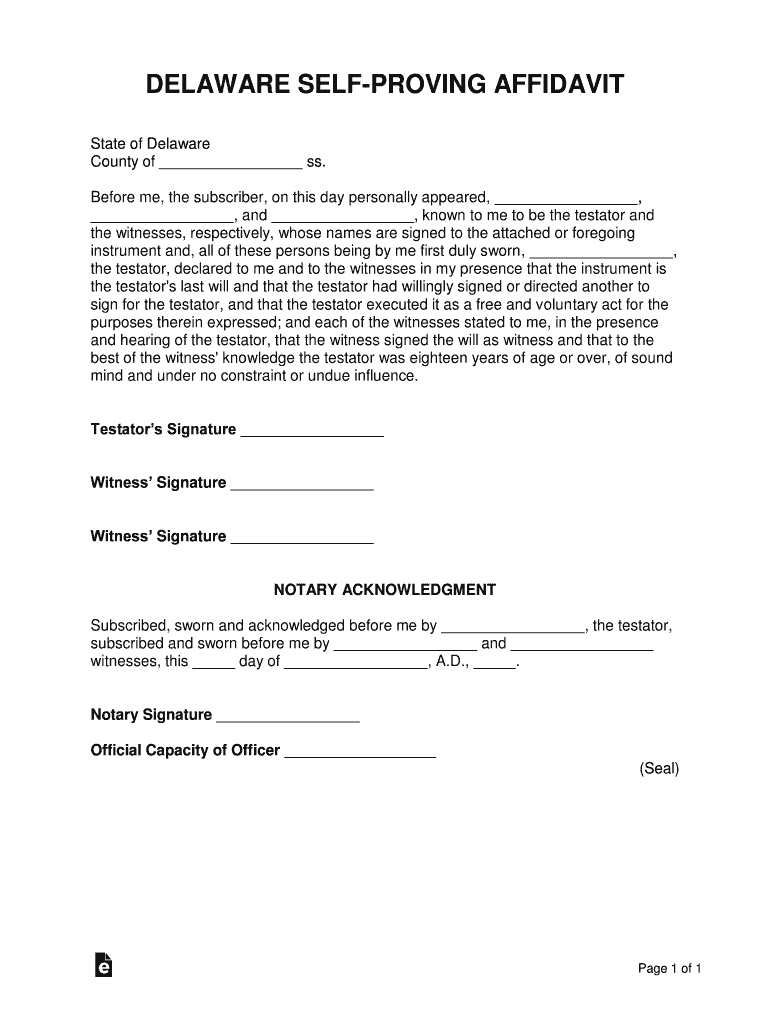
The Delaware Self-Proving Affidavit Form is a legal document used to confirm that a will has been executed properly. This form includes sworn statements from the testator—the person who made the will—and the witnesses affirming the authenticity of the document as the testator's last will. The affidavit serves to streamline the probate process by eliminating the need for witnesses to testify in court about the will's validity. The notarization of this form further ensures its credibility by providing an official attestation of the signers' identities and consent.
How to Use the Delaware Self-Proving Affidavit Form
To use the Delaware Self-Proving Affidavit Form effectively, follow these steps:
-
Prepare the Will: Ensure that the original will is ready and correctly formatted, including clauses that accurately reflect the testator's wishes regarding asset distribution.
-
Gather Witnesses: Identify two or more competent adults to act as witnesses. These individuals must be present during the signing of both the will and the affidavit.
-
Complete the Affidavit: Fill out the form with the required personal details of the testator and witnesses. All parties must affirm that the testator is of sound mind and is executing the will voluntarily.
-
Notarization: Present the form along with valid identification to a notary public. The notary will oversee the signing and then notarize the document to make it legally binding.
Using the Delaware Self-Proving Affidavit Form in conjunction with a will can help alleviate future legal challenges by clearly presenting the testator’s intentions.
Steps to Complete the Delaware Self-Proving Affidavit Form
Completing this form involves a series of specific actions to ensure its validity and legal enforceability:
-
Review the Legal Requirements: Before beginning, familiarize yourself with Delaware’s legal requirements concerning wills and affidavits to ensure full compliance.
-
Correctly Identify All Parties: Precisely enter the full names and addresses of the testator and witnesses. Verify that all parties meet legal qualifications and are aware of their roles.
-
Execute in Presence of a Notary: The signing of the will, along with the affidavit, must occur in the presence of a notary public, who will verify identities and witness the signatures.
-
Double-Check Information: Before finalizing, review all entered information for accuracy to avoid errors that could invalidate the affidavit.
-
Securely Store the Affidavit and Will: Once notarized, keep the affidavit and will in a safe, accessible place. Inform a trusted individual of their location to facilitate the probate process.
Key Elements of the Delaware Self-Proving Affidavit Form
Several elements are vital to the effectiveness of the Delaware Self-Proving Affidavit Form:
-
Signatures: The testator and witnesses must sign the affidavit to affirm the testator's consent and mental competency at the time of signing the will.
-
Notary Public Seal and Signature: A notary public's seal and signature certify the validity of the signatures and the identities of the signatories.
-
Witness Statements: Testify to the testator’s mental state, lack of undue influence, and acknowledgment of the will as a true reflection of their wishes.
Incorporating these elements safeguards the will’s integrity and simplifies the probate process.
Legal Use of the Delaware Self-Proving Affidavit Form
The primary legal function of this affidavit is to validate the will during probate:
-
Proof of Execution: The affidavit provides prima facie evidence that the will is validly executed without the need for witness testimony in court.
-
Expedited Probate Process: By removing the need for further witness involvement, the affidavit can expedite the legal proceedings, thus saving time and potentially reducing legal costs.
Utilizing the Delaware Self-Proving Affidavit Form means increased legal efficiency and reduced probate challenges.
Why Use the Delaware Self-Proving Affidavit Form
The reasons for using the Delaware Self-Proving Affidavit Form are manifold:
-
Avoid Probate Delays: Simplifies the probate process, potentially avoiding delays and legal complexities.
-
Cost-Effective: Reduces the need for court appearances by witnesses, which can significantly lower probate expenses.
-
Durability: Offers a robust legal safeguard that ensures the will's intended execution despite potential challenges.
Incorporating this affidavit demonstrates prudence in estate planning, addressing common legal hurdles proactively.
State-Specific Rules for the Delaware Self-Proving Affidavit Form
State laws dictate specific procedural requirements:
-
Witness Requirements: Delaware law mandates that witnesses be legally competent, generally meaning that they are of sound mind and over the age of eighteen.
-
Format Compliance: The affidavit must adhere to Delaware's statutory format specifications, including the necessary legal language affirmations.
Noncompliance with state-specific rules can lead to the affidavit being invalid, underscoring the importance of ensuring all requirements are met.
Important Terms Related to Delaware Self-Proving Affidavit Form
Understanding specific terminology is fundamental:
-
Testator: The individual creating the will, whose assets and possessions are to be distributed according to their specifications.
-
Affidavit: A written statement confirmed by oath or affirmation, used as evidence in court.
-
Notary Public: An official authorized to witness the signing of documents, ensuring they are authentic and executed under free will.
Comprehending these terms enhances the user's ability to navigate the form process efficiently and effectively.