






Definition & Meaning
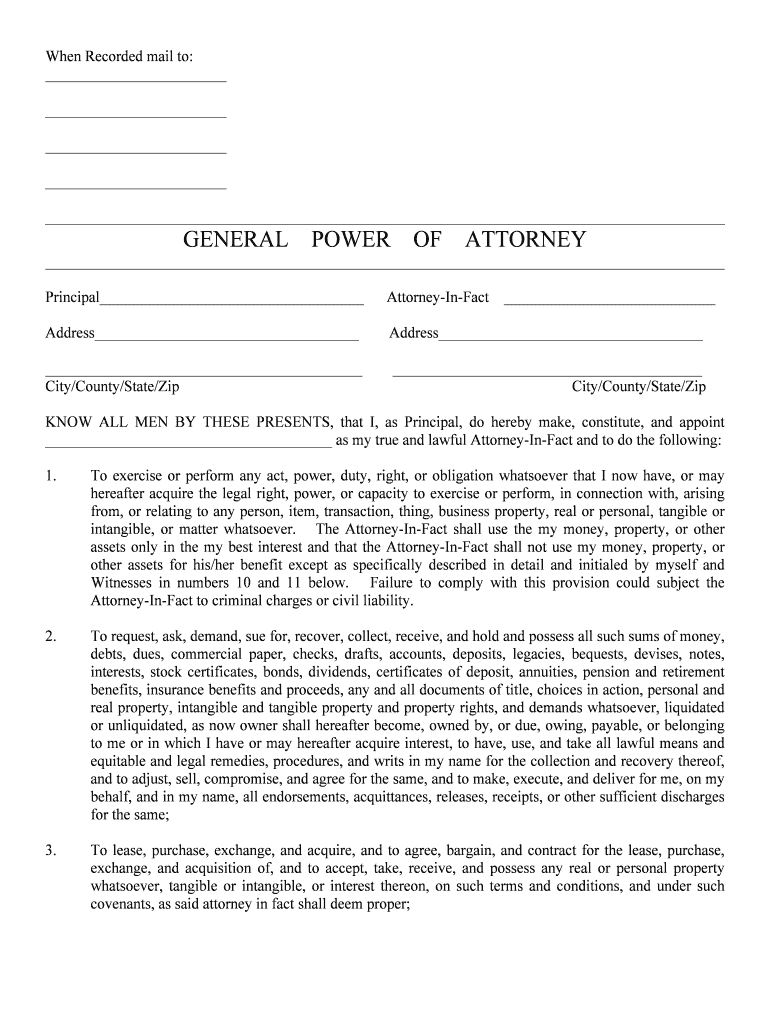
A General Power of Attorney in Arizona is a legal document granting an appointed individual, known as the Attorney-In-Fact, the authority to act on behalf of another person, the Principal, in various legal and financial matters. This form is essential for situations where the Principal needs someone to manage their affairs due to absence or incapacity. The document clearly outlines the powers granted, which can include managing property, conducting business, and handling financial transactions. Understanding this form's definition and significance is crucial for anyone preparing to assign or take on such responsibilities.
How to Use the Arizona General Attorney
Using the Arizona General Attorney form requires a comprehensive understanding of the powers and limitations it entails. The appointed Attorney-In-Fact can act on behalf of the Principal in numerous capacities, but it is critical to adhere to the specific instructions outlined in the document. For instance, they may manage real estate transactions, banking activities, or investment decisions on behalf of the Principal. However, they must ensure that all actions align with the Principal's best interests and adhere to any specific restrictions or conditions mentioned in the document. This form can facilitate smooth management of affairs, especially when the Principal is unavailable or incapacitated.
Steps to Complete the Arizona General Attorney
- Identify the Principal and Attorney-In-Fact: Clearly state the names and contact information for both parties.
- Outline Powers Granted: Specify the scope of authority provided to the Attorney-In-Fact, including any limitations.
- Select the Duration: Determine whether the power of attorney is temporary or durable, continuing if the Principal becomes incapacitated.
- Add Witnesses and Notarization: In Arizona, it is advisable, though not mandatory, for the document to be witnessed and notarized to enhance legality.
- Review and Sign: Both the Principal and the Attorney-In-Fact should thoroughly review the document and sign it in the presence of the notary and any witnesses.
Ensuring each step is completed accurately is crucial to avoid complications in executing the legal powers granted by the document.
Legal Use of the Arizona General Attorney
The Arizona General Attorney form is used legally to empower the Attorney-In-Fact to make decisions and act on behalf of the Principal across a wide range of activities. It is crucial to ensure that all actions taken under this document comply with Arizona state laws and that the Attorney-In-Fact understands the legal responsibilities they are undertaking. Misuse or overstepping the granted authority can lead to legal consequences, including potential revocation of powers or financial liabilities. Adhering to the legal framework provides protection for both the Principal and the Attorney-In-Fact.
Key Elements of the Arizona General Attorney
- Identifying Information: Both parties' full legal names, addresses, and contact details.
- Scope of Powers: Clear description of what the Attorney-In-Fact is authorized to do.
- Limitations and Conditions: Any specific restrictions on the powers granted.
- Duration of Authority: The effective period, whether fixed-term or indefinite until revoked.
- Signatures and Notarization: Authentication by notary public and optional witnesses to ensure validity.
Understanding these elements is essential to create an enforceable and clear power of attorney.
State-Specific Rules for the Arizona General Attorney
Arizona has specific statutory requirements for creating a valid General Power of Attorney. While notarization is not legally required, it is highly recommended to avoid disputes. The document should explicitly state that it is to be used as a power of attorney, and if the document is to include durable powers, clear language must reflect that these powers are retained even if the Principal is incapacitated. Customizing the document to reflect these state-specific regulations ensures it adheres to legal standards and is accepted by institutions within Arizona.
Important Terms Related to Arizona General Attorney
- Principal: The individual granting authority to the Attorney-In-Fact.
- Attorney-In-Fact: The person receiving authority to act on behalf of the Principal.
- Durable Power of Attorney: Remains effective even if the Principal becomes incapacitated.
- Revocation: The process by which the Principal can withdraw the authority granted at any time.
- Notarization: The process of officially certifying the document to verify its legitimacy.
Familiarity with these terms is crucial for correctly interpreting and executing the document.
Penalties for Non-Compliance
Failure to adhere to the terms of the Arizona General Attorney form or misuse of granted powers can lead to significant legal penalties. The Attorney-In-Fact could be held accountable for any losses incurred due to unauthorized actions or breaches of fiduciary duty. These penalties can include restitution to the Principal, legal sanctions, or civil litigation. Understanding the gravity of these consequences emphasizes the importance of strict compliance with all terms outlined in the document and state laws.