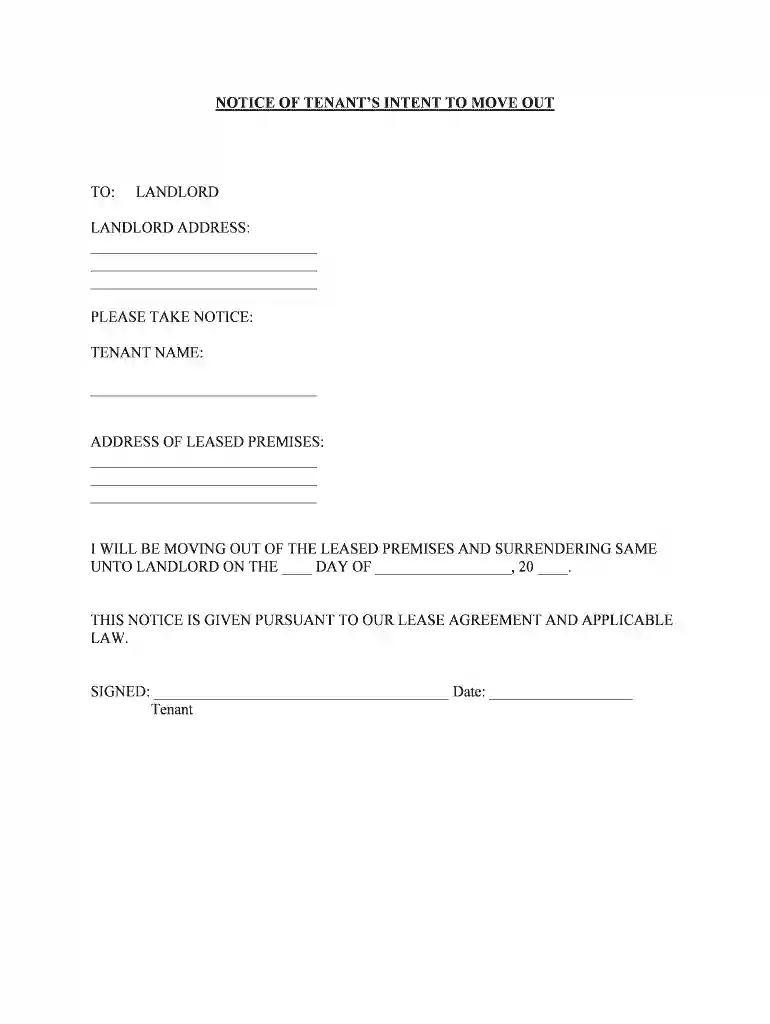
Move out form 2026

Get Form
moving out form Preview on Page 1

Here's how it works

01. Edit your moving out form online
Type text, add images, blackout confidential details, add comments, highlights and more.

02. Sign it in a few clicks
Draw your signature, type it, upload its image, or use your mobile device as a signature pad.

03. Share your form with others
Send form for tenant to sign when moving out via email, link, or fax. You can also download it, export it or print it out.

Understanding the Move Out Form

The move out form serves as an essential document for tenants intending to vacate a rental property. This formal notice informs landlords of a tenant's intention to leave the premises, adhering to the requirements set forth in the lease agreement and applicable state laws. A properly completed move out notice form can help ensure a smooth transition and protect the tenant's rights regarding their security deposit and final rent obligations.

Key Components of a Move Out Form

A well-structured move out form includes essential information to validate the notice. It typically comprises:

  • Tenant Information: Names and contact information of all tenants on the lease.
  • Property Address: The full address of the rental property being vacated.
  • Move Out Date: The specific date when the tenant plans to vacate.
  • Landlord Information: The name and contact details of the landlord or property management company.
  • Notice Period: The duration of the notice period as required by the lease agreement, generally ranging from thirty to sixty days.

These components ensure clarity and provide necessary contact points for any further communication.

Steps for Completing the Move Out Form

Filing a move out form requires careful attention to detail to ensure compliance with lease terms. The following steps outline the process:

  1. Review the Lease Agreement: Before proceeding, thoroughly examine your lease for specific move out procedures and notice periods.
  2. Gather Necessary Information: Compile tenant and property details. Ensure accuracy to avoid any potential misunderstandings.
  3. Complete the Form: Clearly fill in all required fields without leaving any necessary information blank. It's important to be precise, especially with dates and names.
  4. Sign and Date the Form: Ensure all tenants sign the form; this affirms the intent to vacate and acknowledges their understanding of the implications.
  5. Submit the Form: Deliver the completed form to your landlord via the preferred method specified in your lease, which may include mailing, emailing, or hand-delivering.

Legal Implications of the Move Out Notice

The move out form carries legal significance. It is crucial to comply with state-specific laws concerning notification periods and conditions. Failure to properly submit or adhere to the guidelines can result in financial consequences, such as:

  • Loss of Security Deposit: Landlords might retain part or all of the deposit if proper notice isn't given, citing early lease termination.
  • Legal Disputes: Disagreements may arise if the landlord claims insufficient notice has been provided, potentially leading to necessary legal action.

Understanding and utilizing the move out form properly safeguards tenants against negative outcomes.

The Importance of Timing When Submitting the Form

Timely submission of the move out notice significantly impacts the rental conclusion process. Key considerations include:

  • Adhering to Notice Periods: Ensure that your notice period matches the lease requirements. For example, if the lease stipulates a thirty-day advance notice, submitting the form late may mean you are liable for an additional month's rent.
  • Planning for Final Inspections: Providing notice in advance allows landlords to schedule necessary property inspections and facilitates smoother move-out conditions.

State-Specific Regulations on Move Out Procedures

Each state may have unique regulations regarding move out procedures. Essential aspects to consider include:

  • Notice Duration: Some states require a minimum of a 30-day notice while others may extend this duration to 60 days.
  • Security Deposit Rules: State statutes dictate how landlords must handle security deposits, including timelines for their return post-move out.

Consulting local laws can provide clarity and ensure compliance throughout the move out process.

Examples of Required Documentation

In addition to the move out form, tenants may need to prepare several other documents, such as:

  • Final Rent Payment Records: Proof of final payments can validate no outstanding balances.
  • Move-In Condition Reports: These documents provide a baseline for the state of the property when initially rented, aiding in potential disputes regarding damage.
  • Correspondence Records: Keep any emails or letters sent to the landlord regarding the move-out notification as evidence.

These supporting documents establish transparency and protect tenants during the transition.

be ready to get more

Complete this form in 5 minutes or less

Get form

Got questions?

We have answers to the most popular questions from our customers. If you can't find an answer to your question, please contact us.
Contact us
A move-in fee is a non-refundable charge landlords may add to cover any repairs made before move-in. A security deposit is charged as insurance in case a tenant does not pay rent or leaves docHub damages. Security deposits may be returned upon move-out if a tenant leaves the property in good condition.
A well-crafted Notice to Vacate Letter should include the following key components: Tenant Information. Landlord or Property Manager Information. Date of the Letter. Intended Move-Out Date. Reason for Leaving (Optional) Request for a Move-Out Inspection. Forwarding Address (Optional) Signature.
Move-out letters and notices to vacate serve different purposes. A move-out letter is a friendly courtesy reminder of a lease termination, while a formal notice to vacate often involves asking the tenant to leave the property for a specific reason, such as non-payment of rent or a violation of the lease agreement.
The letter tells the tenant how and when to return the keys, and reminds them to give the landlord a new address to send back the security deposit. Its also written proof of when the tenants supposed to move out, which can be helpful if there are legal issues later or a holdover tenant situation.
Dear [tenants full name], This letter serves as a formal notice to vacate the property at [address of rental property], pursuant to our lease agreement dated [lease start date]. Please consider the following details: Move-out date: As stipulated in our lease agreement, your lease will expire on [lease end date].

Security and compliance

At DocHub, your data security is our priority. We follow HIPAA, SOC2, GDPR, and other standards, so you can work on your documents with confidence.

Learn more
ccpa2
pci-dss
gdpr-compliance
hipaa
soc-compliance

People also ask

A move-in/move-out checklist is a document completed at the start and end of a rental period to determine damage caused by the tenant. Its main purpose is to protect a tenants security deposit from being deducted by the landlord without evidence of damage.
phrasal verb moved out; moving out; moves out. : to leave ones house, apartment, etc., and go to live somewhere else. He was 20 when he moved out of his parents house. Her lease ends next month, so shell have to move out (of her apartment) soon.
A move-in/move-out checklist is a document filled out at the beginning and end of a lease term to record any prevalent issues or material damage on the premises. Once completed, the form is signed by the tenant and landlord.

move out form for tenant