
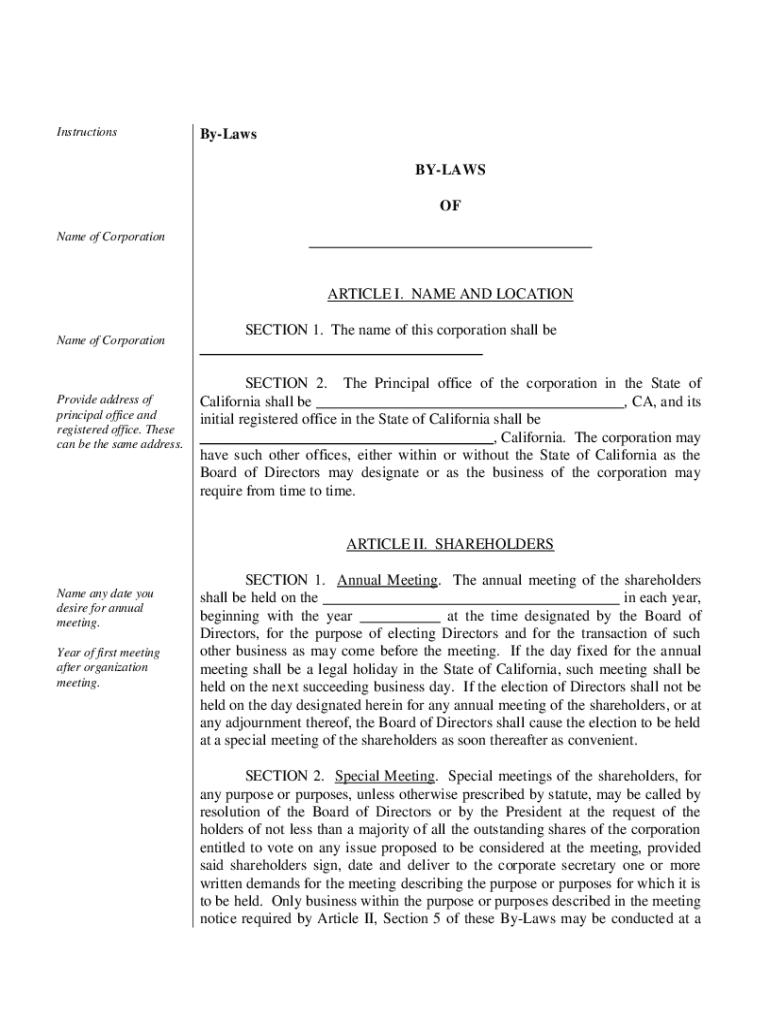







Definition & Meaning
A California Corporation, commonly referred to as a "CA corporation," is a legal entity that is formed under the laws of the state of California. This type of corporation is an independent legal entity separate from its owners, allowing it to own assets, incur liabilities, and conduct business activities in its name. In the context of professional practices, a CA corporation must ensure that all shareholders, officers, and directors hold the necessary California licenses to practice within their specific fields. This structure provides various benefits, including limited liability protection for its shareholders and potential tax advantages.
Key Elements of a CA Corporation
- Separate Legal Entity: A CA corporation exists independently from its shareholders, which limits personal liability for debts and legal actions.
- Shareholder Licensure: For professional corporations, all shareholders must be licensed in their respective professions in California.
- Formal Structure: Includes a board of directors, officers, and shareholders, each with specific roles and responsibilities.
- Governance Documents: By-laws outline the internal operating procedures and governance policies of the corporation.
- Compliance Requirements: Adherence to state regulations, including annual reporting and renewal of licenses for professional entities.
How to Obtain the CA Corporation
To establish a CA corporation, you must follow a series of steps to comply with legal requirements in California. The process involves filing specific documents with the Secretary of State and obtaining necessary licenses.
- Choose a Corporate Name: The name must be unique, not misleading, and include a corporate designator such as "Inc." or "Corporation."
- File Articles of Incorporation: This document includes key information about the corporation, such as its name, purpose, and the agent for service of process.
- Appoint Directors: Initial directors are appointed to oversee the corporation's setup and operations until the first shareholder meeting.
- Adopt Bylaws: The corporation must adopt internal rules governing its management and operations.
- Obtain Necessary Licenses: Professional corporations require that all practicing members be properly licensed in California.
- File the Initial Statement of Information: Must be submitted within 90 days of incorporation to provide contact and address details.
Important Terms Related to CA Corporation
- Articles of Incorporation: A fundamental document that serves as the charter to establish the corporation.
- Bylaws: Internal rules governing how a corporation is managed.
- Shareholder: An individual or entity owning shares in the corporation.
- Board of Directors: Elected members responsible for overseeing the corporation's activities.
- Agent for Service of Process: A designated individual or organization authorized to receive legal documents on behalf of the corporation.
Steps to Complete the CA Corporation
Establishing a CA corporation involves several procedural steps that must be followed meticulously:
- Research and Reserve a Name: Check the availability of your chosen corporate name with the California Secretary of State and reserve it if necessary.
- Prepare Articles of Incorporation: Draft and file this document with the necessary details including the corporation's name, principal office address, and the names of the initial directors.
- Appoint Initial Board and Officers: Elect officers such as the president, treasurer, and secretary to manage the corporation.
- Create Corporate Bylaws: Establish operational guidelines and procedures that will govern the corporation.
- Hold the First Board Meeting: Approve bylaws, issue shares to initial shareholders, and authorize the appropriate banking resolutions.
- File the Initial Statement of Information: Ensure it includes accurate contact information for the corporation's agent and executives.
State-Specific Rules for CA Corporation
California imposes unique regulations on corporations formed within the state. Familiarity with these rules is crucial for compliance:
- Professional Corporations: Specific licenses are required depending on the profession. All shareholders, officers, and directors must be licensed in the relevant field.
- Annual Filings: Corporations must file an annual Statement of Information with updated contact and officer details.
- Franchise Tax: California requires corporations to pay an annual minimum franchise tax, which varies based on total income and corporate structure.
- Shareholder Meetings: Corporations are required to hold annual shareholder meetings and document meeting minutes.
Legal Use of the CA Corporation
Operating as a CA corporation entails various legal obligations and protections. This structure assists in legitimizing business operations and ensuring compliance with state laws:
- Limited Liability Protection: Shields owners' personal assets from corporate debts and liabilities.
- Perpetual Existence: Continues beyond the lifespan of its founders, facilitating succession and continuity.
- Contractual Authority: Capable of entering into contracts, acquiring liabilities, and owning properties in the corporation's name.
- Compliance with Licensure Laws: For professional entities, meeting state licensure requirements ensures legal operation.
Examples of Using the CA Corporation
Understanding the practical applications of a CA corporation helps illustrate its utility and advantages in various business contexts:
- Professional Practices: Lawyers, engineers, medical professionals can form professional corporations to limit liability and ensure compliance with state licensing laws.
- Technology Startups: Offers protection for intellectual property, while enabling fundraising through share issuance.
- Family Businesses: Provides a structured approach to business operations with clear inheritance and succession policies through share allotment.
Software Compatibility with CA Corporations
Managing a CA corporation involves various software solutions for efficient operations, record-keeping, and compliance reporting:
- Accounting Software: Programs such as QuickBooks facilitate financial tracking, invoice management, and tax preparation.
- Document Management: Platforms like DocHub ensure secure handling, editing, and signing of business documents.
- Collaboration Tools: Google Workspace integration can streamline daily operations, enabling document sharing and communication within and beyond the corporation.
By understanding and applying these facets of a CA corporation, businesses can effectively manage their setup, operations, and compliance with California state laws.




