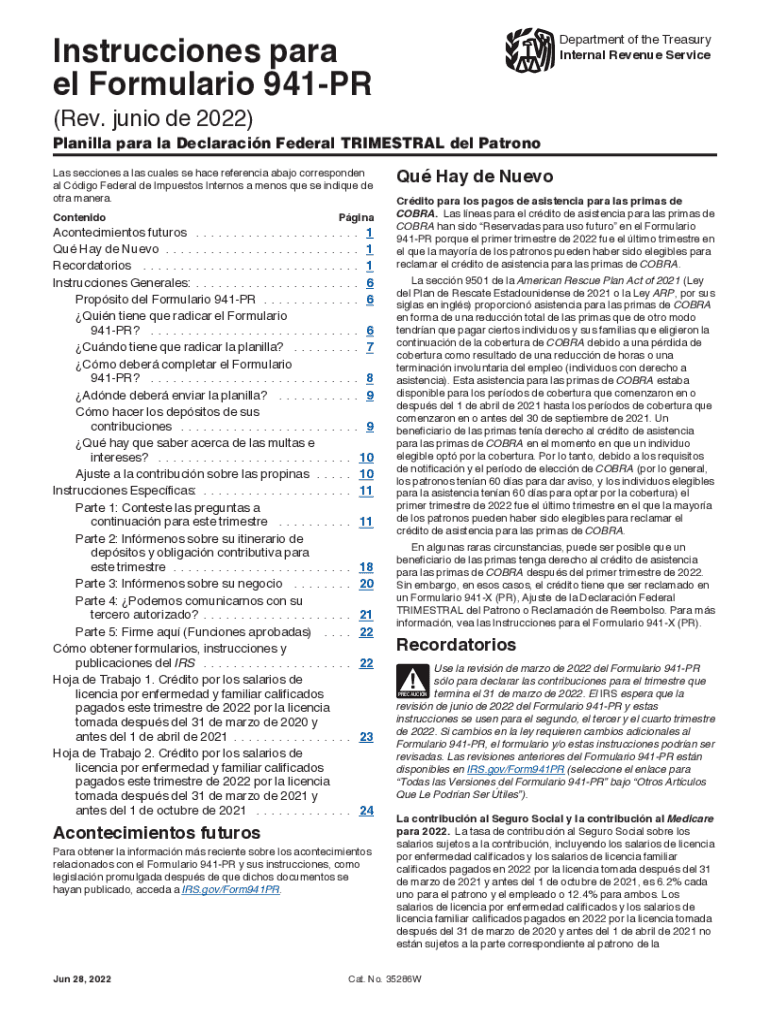







Definition and Purpose of the Form 940-PR
The Form 940-PR, also known as the "Puerto Rico Annual Federal Unemployment (FUTA) Tax Return," is a tax form used by employers in Puerto Rico to report their annual unemployment tax obligations to the IRS. It is crucial for the calculation and payment of the Federal Unemployment Tax, which funds unemployment benefits. The primary function of this form is to ensure compliance with federal tax laws relating to employment and to help fund state unemployment insurance programs.
How to Use the Form 940-PR
Employers use the Form 940-PR to calculate and report their annual FUTA tax liability. The form requires employers to report total payments made to employees and determine the amount due after accounting for any adjustments, exemptions, or credits. Understanding each section of the form is essential to preventing calculation errors and ensuring accurate tax reporting. Employers should collect all necessary payroll data before beginning the completion process to streamline form submission and compliance.
How to Obtain the Form 940-PR
The Form 940-PR can be downloaded directly from the IRS website or requested via mail by contacting the IRS. Digital resources allow employers to access the most current version of the form, ensuring all updates and revisions are incorporated. It is crucial to check that any paper version acquired is the most recent version to avoid discrepancies or rejections by the IRS.
Steps to Complete the Form 940-PR
- Gather Employee Payment Information: Collect all relevant payroll data, including total payments made to employees and any adjustments.
- Determine Taxable Wages: Subtract any FUTA-exempt wages from total wages to determine the amount subject to the unemployment tax.
- Calculate Tax Due: Apply the FUTA tax rate to taxable wages to compute the total tax liability.
- Account for Credits: Deduct any applicable credits, such as state unemployment tax credits, to find the amount owed.
- Review and Sign: Verify all calculations for accuracy and completeness, then sign and date the form.
Filing Deadlines and Important Dates
Employers must file the Form 940-PR by January 31 of the year following the tax year in which the wages were paid. If the deposited tax amount is satisfactory, the filing deadline extends to February 10. Missing these deadlines can result in penalties, so timely submission is crucial for compliance.
Penalties for Non-Compliance
Failing to file the Form 940-PR accurately or on time can result in penalties. The IRS imposes additional charges for late filings, underreporting of tax liabilities, or inaccurate information submission. To mitigate these risks, it is vital for employers to adhere to deadlines and ensure precise data entry.
IRS Guidelines for the Form 940-PR
The IRS provides detailed instructions and guidelines for completing the Form 940-PR. Employers should review these guidelines carefully to ensure they understand all requirements, including reporting unusual wage payments or applying lawful credits. These guidelines also offer insights into recent changes in legislation or tax calculation methods.
Important Terms Related to the Form 940-PR
- FUTA (Federal Unemployment Tax Act): A federal law that imposes a payroll tax on businesses to fund unemployment benefits.
- Taxable Wages: The portion of employee wages subject to FUTA taxes.
- State Unemployment Tax Act (SUTA) Credit: Credits given for paying state unemployment taxes.
Form Submission Methods
Employers have multiple options for submitting the Form 940-PR, including electronic filing through IRS-approved software or sending a paper form through mail. Digital submissions typically offer faster processing times and confirmation of receipt, reducing errors associated with manual entries.
Software Compatibility
The Form 940-PR can be filled using various software tools such as TurboTax or QuickBooks. Software compatibility ensures accuracy in calculations and facilitates electronic submissions. Using these tools, employers can automate data entry and calculations directly imported from payroll systems.
Taxpayer Scenarios and Business Entity Types
Different taxpayer scenarios, such as self-employed individuals or corporations, must adhere to specific rules when completing the Form 940-PR. Corporations, partnerships, and sole proprietorships in Puerto Rico each face unique requirements under FUTA regulations. Understanding these specifics helps in tailoring the form to suit the entity’s obligations.