






Understanding the Audiogram of Familiar Sounds
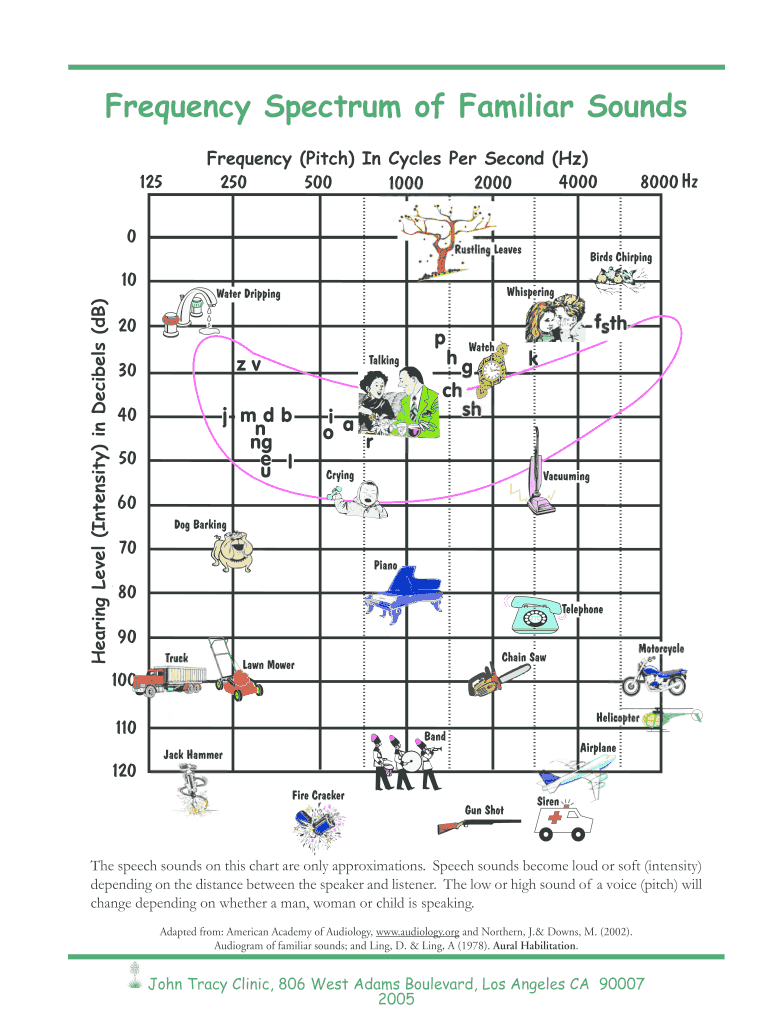
The audiogram of familiar sounds is a useful tool in audiology that visually represents different sounds and their frequencies. This instrument displays a range of sounds that most individuals encounter in daily life, mapped according to their pitch (measured in hertz) and loudness (measured in decibels). It is particularly beneficial for illustrating how these sounds overlap with speech, which can aid in understanding how hearing loss affects communication.
Purpose of the Audiogram of Familiar Sounds
The primary purpose of this audiogram is to help individuals and professionals understand sound levels that are significant in everyday contexts. By utilizing a chart that includes sounds such as a whisper, normal conversation, or loud music, audiologists can identify thresholds where a person may struggle to hear certain frequencies. This resource assists in both educational settings and clinical evaluations by providing a familiar context for understanding hearing capabilities and limitations.
How to Utilize the Audiogram of Familiar Sounds
To make the most of the audiogram of familiar sounds, one should take the following steps:
- Familiarization: Start by reviewing the chart that categorizes various common sounds. Identify which sounds you are familiar with and can relate to your experiences.
- Comparison: Use the audiogram to relate personal hearing capabilities to everyday sounds. This comparison can help articulate specific listening challenges.
- Assessment: If you are undergoing a hearing assessment, professionals may utilize the audiogram to visualize how your hearing thresholds compare with various sounds.
Steps to Obtain the Audiogram of Familiar Sounds
To obtain an audiogram of familiar sounds, follow these steps:
- Consult an Audiologist: Schedule an appointment for a hearing evaluation with a certified audiologist.
- Evaluation: During the evaluation, the audiologist will conduct standard hearing tests, assessing your hearing thresholds across various frequencies.
- Receive the Audiogram: After the assessment, the audiologist will provide you with the results, including the audiogram of familiar sounds, which will visually represent your hearing capabilities.
Importance of the Audiogram of Familiar Sounds
The audiogram of familiar sounds plays a crucial role in various aspects:
- Educational Tool: It serves to educate individuals about the sounds they may miss due to hearing loss, thereby raising awareness of the importance of hearing health.
- Facilitating Communication: Understanding the sounds chart can enhance communication strategies between individuals experiencing hearing challenges and those around them.
- Clinical Utility: It assists audiologists in making informed decisions regarding hearing aids and other interventions for patients.
Common Users of the Audiogram of Familiar Sounds
The audiogram of familiar sounds is utilized by:
- Audiologists: For assessing and educating patients about their hearing capabilities.
- Speech-Language Pathologists: To determine how hearing loss impacts speech recognition and development.
- Educators and Parents: To understand the auditory experiences of children with hearing impairments, which can aid in developing appropriate learning strategies.
- Individuals with Hearing Loss: To comprehend their hearing capabilities in relation to familiar environmental sounds, thus enhancing self-advocacy in communication needs.


Key Terms Associated with the Audiogram of Familiar Sounds
Understanding key terminology can enhance comprehension of the audiogram:
- Frequency: The pitch of a sound measured in hertz, indicating how high or low a sound is.
- Decibel (dB): A unit indicating the intensity or loudness of sound.
- Threshold of Hearing: The minimum level of sound that a person can hear at various frequencies.
- Speech Banana: A term referring to the area on the audiogram that represents the frequency and volume of human speech sounds, which is crucial for understanding hearing capabilities in speech contexts.
Legal Considerations for the Audiogram of Familiar Sounds
Although the audiogram of familiar sounds itself may not have direct legal implications, it is essential in the context of compliance with regulations related to hearing health and education:
- ADA Compliance: In educational settings, understanding students' auditory needs is vital for compliance with the Americans with Disabilities Act (ADA), ensuring that appropriate accommodations are made.
- Health Regulations: Clinics must follow established guidelines for audiometric testing and reporting, ensuring that audiograms are accurately documented and shared with patients, maintaining health privacy standards.
Examples of the Audiogram of Familiar Sounds in Use
In practice, the audiogram of familiar sounds is utilized in numerous ways:
- In Clinical Settings: Audiologists might show patients their audiogram alongside the audiogram of familiar sounds to help illustrate their hearing loss. For example, if a patient’s hearing threshold is above a whisper but below a normal conversation level, this dual representation clarifies their specific listening challenges.
- Educational Workshops: Agencies may conduct workshops for parents of children with hearing impairments, using the chart to highlight which sounds the child may struggle to hear, based on their audiometric profile.
- Informational Materials: Audiology practices and schools may provide handouts that include the audiogram to better inform clients and stakeholders about the sound frequencies that are addressed during evaluations.
Emphasizing the relevance and functionality of the audiogram of familiar sounds aids both professionals and individuals in navigating the complexities of auditory health and communication effectively.