







Definition & Meaning of the Vision Virginia DMV
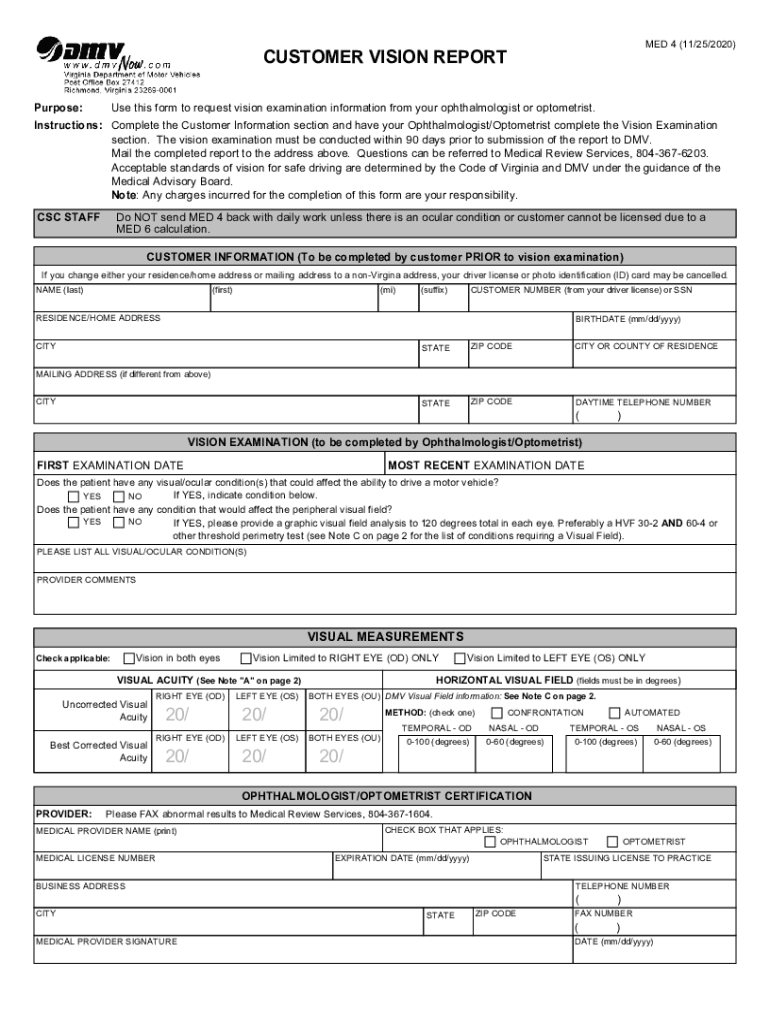
The Vision Virginia DMV form, commonly referred to as the MED 4 form, is a document used to verify that individuals meet the state's vision requirements for driving eligibility. This form is essential for the Virginia Department of Motor Vehicles (DMV) to assess whether a driver's vision is sufficient for safe driving. The form is typically completed by a licensed optometrist or ophthalmologist, who evaluates the individual's vision through standard eye examination procedures.
Key components of the form include:
- Patient Information: This section captures essential details about the individual, such as their name, date of birth, and identification number.
- Vision Standards: The MED 4 form lists the minimum vision acuity standards that drivers must meet according to Virginia law, which includes peripheral vision requirements and clarified standards for corrective lenses.
- Doctor's Certification: The form requires a licensed eye care professional to certify the results of the eye examination, confirming that the individual meets the necessary vision criteria.
In summary, the Vision Virginia DMV form serves as an official document that ensures all drivers possess adequate vision to operate a vehicle safely on public roads.
How to Use the Vision Virginia DMV Form
Using the Vision Virginia DMV form involves a clear and structured process that involves several specific steps. Understanding how to properly utilize this form ensures compliance with Virginia's driving regulations.
- Obtain the Form: You can acquire the MED 4 form from the Virginia DMV website or directly from your eye care provider's office. Having a physical copy allows you to fill it out accurately.
- Schedule an Eye Exam: Arrange an appointment with a licensed optometrist or ophthalmologist. During the examination, the eye care professional will perform various tests to assess your vision.
- Complete the Form: After the eye exam, the doctor will fill out the required sections on the MED 4 form, including test results and whether corrective lenses are needed.
- Submit the Form: Once completed, submit the MED 4 form to the Virginia DMV either in person or by mail, ensuring that you maintain copies of all submitted documents for your records.
Using the form correctly is crucial for maintaining driving privileges, especially for those who may have vision impairments that need to be addressed.
Steps to Complete the Vision Virginia DMV Form
Completing the Vision Virginia DMV form requires a systematic approach to ensure all information is accurately captured and submitted.
- Download or Acquire the Form: Access the MED 4 form through the Virginia DMV website or request it from your healthcare provider.
- Fill in Personal Information: Provide your full name, date of birth, and any other required identification details at the beginning of the form.
- Attend the Eye Examination: Schedule your exam, ensuring you bring the form along. The eye care professional will conduct the necessary vision tests.
- Document Results: The doctor will record the results of your vision tests on the form, including:
- Visual Acuity: Measurement of how well you can see at various distances.
- Peripheral Vision Test: Evaluation of your side vision.
- Corrective Lenses Requirement: Indication of whether you need glasses or contact lenses.
- Doctor's Signature: Ensure the doctor completes the certification portion and signs the form, endorsing its validity.
- Submit the Completed Form: Deliver the MED 4 form to the DMV by mail or in person, adhering to any specific instructions concerning submission locations or additional documentation.
Completing these steps thoroughly prevents delays in processing your vision screening results and ensures compliance with DMV requirements.
Important Terms Related to the Vision Virginia DMV
Understanding the terminology associated with the Vision Virginia DMV form can help clarify responsibilities and procedures.
- Visual Acuity: This term refers to the clarity or sharpness of vision, commonly measured using the Snellen chart during eye exams.
- Peripheral Vision: Also known as side vision, this is the ability to see objects outside of your direct line of sight, crucial for safe driving.
- Corrective Lenses: These are glasses or contact lenses that aid individuals in achieving adequate visual acuity necessary for driving.
- Ophthalmologist/Optometrist: Eye care professionals qualified to perform eye examinations and prescribe treatments or corrective lenses.
- Certification: The act of a licensed eye care provider ensuring that the information provided in the MED 4 form is accurate and attests to the individual's vision capabilities.
Familiarizing yourself with these terms can enhance understanding of the document and its implications for driving eligibility.
State-Specific Rules for Completing the Vision Virginia DMV Form
Virginia has specific regulations governing the completion and submission of the Vision Virginia DMV form, which must be adhered to for successful processing.
- Age Requirements: Individuals of all ages are required to meet vision standards, which are particularly emphasized for first-time drivers.
- Vision Standards: Virginia mandates certain vision acuity levels for different types of driving licenses. For example, individuals must generally have at least 20/40 vision in one eye, with or without corrective lenses, in order to qualify for a driver's license.
- Reexamination Policy: Drivers may be required to submit a new MED 4 form if their vision significantly changes or if they are reported to have vision issues. Regular renewals may also require updated evaluations.
- Submission Time Frame: It is recommended that the completed MED 4 form be submitted promptly after the eye exam to ensure that there are no delays in processing your driving application or renewal.
Adhering to these state-specific rules contributes to the legal validity of your driving credentials and ensures safety on the roads.




