
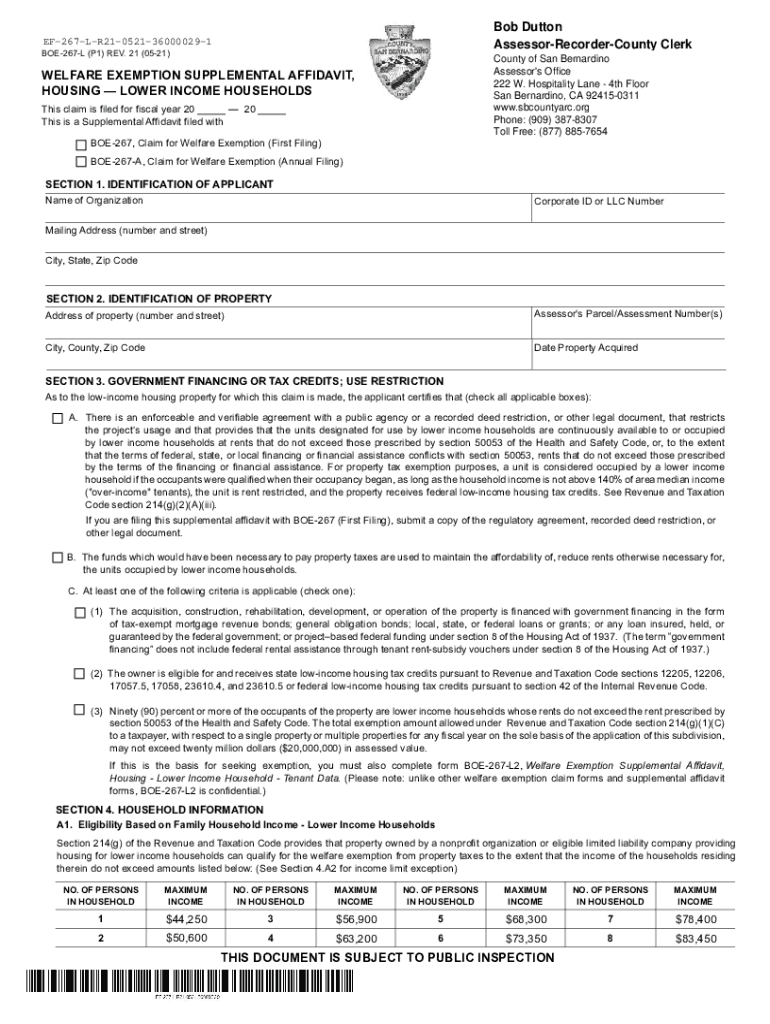







Definition and Meaning
The "267 l" is a form used for specific tax or legal purposes. Within the context of tax codes or property law, such forms are utilized to ensure compliance with regulations that apply to various financial or property-related activities. Understanding the full scope of its purpose is essential for individuals or organizations seeking to use it correctly.
Key Functions
- Tax Compliance: Ensures adherence to tax laws relevant to the transaction or action being documented.
- Legal Validation: Acts as a legal record that validates the conditions met for a transaction or exemption.
Contextual Importance
Understanding the exact implications of the 267 l form is crucial for aligning your actions with applicable legal or tax standards, thereby avoiding potential penalties.
How to Use the 267 l
Using the 267 l form involves accurately filling out the required sections based on provided instructions and specific situational requirements.
Step-by-Step Usage
- Identify Purpose: Clearly determine the legal or tax-related purpose the form is needed for.
- Gather Information: Collect all necessary documents and information as specified by the form’s guidelines.
- Complete Sections: Fill out the form meticulously, ensuring no sections are left incomplete.
Avoiding Common Errors
- Inaccurate Information: Double-check details before submission.
- Omitted Sections: Ensure every relevant section is completed where applicable.
Steps to Complete the 267 l
Completing the 267 l requires careful attention to detail to ensure accuracy and compliance.
Detailed Completion Procedure
- Read Instructions: Begin by thoroughly reading any accompanying instructions or guidelines.
- Fill Out Personal Information: Enter all required personal or business information.
- Detail-Specific Sections: Complete additional sections that relate to the form's specific requirement (e.g., financial details).
- Review and Verify: Conduct a final review to verify that all information entered is accurate.
Verification and Submission
Once completed, verify the form to ensure all information is correct before proceeding to submit it to the appropriate authority.
Who Typically Uses the 267 l
The 267 l form is typically employed by individuals or entities that need it for specific tax, financial, or legal purposes.


Common Users
- Businesses: Organizations may use the form to document financial activities or exemptions.
- Individuals: People involved in particular transactions may also need this form for tax purposes.

Legal Use of the 267 l
Using the 267 l properly within a legal context is vital for ensuring compliance and validation within applicable jurisdictional standards.
Compliance and Legal Standards
- Adheres to Tax Codes: Ensures all actions comply with existing tax legislation.
- Supports Legal Claims: Documents legal merit of claims or transactions, which may be necessary for audits or legal proceedings.
Key Elements of the 267 l
Understanding the key elements of the 267 l form is essential for proper completion and submission.
Essential Components
- Demographic Sections: Include personal or business details.
- Financial Information: Requires detailed reporting of financial data or transaction specifics.
- Supporting Documentation: Often, additional documentation is required as evidence.
Precautionary Measures
Ensure every section is filled accurately to maintain the integrity and legal standing of the form.
Required Documents
The submission of the 267 l may necessitate accompanying documents that verify the information provided.
Essential Attachments
- Proof of Identity: You may need to attach identification documents.
- Financial Reports: Relevant financial statements or reports may be required.
- Legal Documentation: Any supporting legal documents that pertain to the form's content.
Documentation Tips
Ensure all documents are up-to-date and accurately reflect the information provided in the form.
Penalties for Non-Compliance
Failing to adhere to the requirements associated with the 267 l can lead to penalties.
Potential Consequences
- Fines: Financial penalties or fines can be imposed for false information or incomplete submission.
- Legal Repercussions: Non-compliance can also result in legal action against the individual or entity.
Compliance Best Practices
Maintain thorough records and ensure all parts of the form and supporting documentation adhere to federal, state, and local guidelines to prevent potential issues.
This comprehensive understanding of the "267 l" is critical for effective use within any applicable legal or financial framework, ensuring compliance and minimizing risks associated with form submission.




