




Definition and Meaning of a Promissory Note
A promissory note is a legal document that outlines a written promise from one party (the maker) to pay a specified sum of money to another party (the payee) at a particular time or upon demand. This note serves as a financial instrument and can be used in various transactions, including personal loans, business agreements, and real estate deals. The terms included in a promissory note often specify:
- Loan amount: The total sum of money being borrowed.
- Interest rate: The cost of borrowing, expressed as a percentage.
- Payment schedule: Specific dates or intervals at which payments must be made, such as monthly or annually.
- Consequences of default: Conditions under which the lender can take action, such as seeking repayment through legal means or repossessing collateral.
- Transfer of rights: Provisions regarding whether the rights to the loan can be transferred to another party.
Understanding the definition and components of a promissory note is critical for ensuring that all parties involved have a clear agreement that protects their rights and outlines obligations.
Key Elements of the Promissory Note in DocHub
Using DocHub to create or manage a promissory note involves several key elements that should be clearly defined to assure that the document is legally binding and effective. These elements include:
- Identifying information: Full names and addresses of both the borrower and lender.
- Principal amount: The amount that is being borrowed, which should be clearly stated in numerals and words.
- Interest terms: Specification of whether the interest is fixed or variable, along with the specific rate and how it is applied (e.g., annually).
- Repayment details: A detailed schedule of payments, including due dates, methods of payment, and any grace periods allowed.
- Default provisions: Outline of the penalties or actions that can be taken in the event of a missed payment, including late fees and legal recourse.
- Governing law: Specification of which state's laws govern the note, should disputes arise.
Having these elements clearly defined within a promissory note created in DocHub aids in avoiding misunderstandings between the parties and ensures compliance with relevant legal standards.
Steps to Complete the Promissory Note in DocHub
Creating a promissory note in DocHub is a straightforward process that requires attention to detail. Follow these steps for efficient completion:
- Access DocHub: Log in to your DocHub account or create one if you don’t have an existing account.
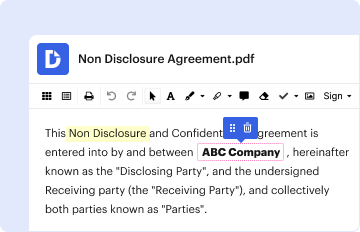
- Start a new document: Choose to create a new document. You can opt to start from a blank template or upload an existing draft.
- Fill in the necessary information: Enter the names, addresses, and contact information of both the borrower and lender. Include the principal loan amount, interest rate, payment schedule, and any default clauses.
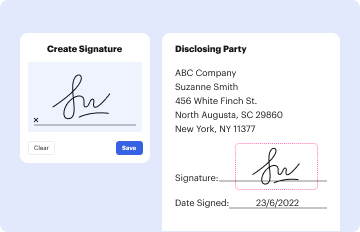
- Add signature fields: Include designated areas for both parties to sign the document, ensuring that it includes options for electronic signatures according to the legal requirements.
- Review the document: Carefully review all the details for accuracy to prevent any potential issues. It may be beneficial to have another party, like a legal advisor, review it for compliance.
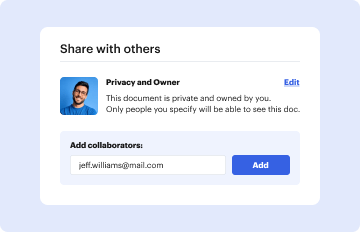
- Save and distribute: Once confirmed, save the document and share it with the necessary parties via email, or export it to cloud storage or local storage as needed.
These steps ensure a smooth process for creating a legally sound promissory note while utilizing the valuable features offered by DocHub.
Legal Use of the Promissory Note in DocHub
When utilizing a promissory note through DocHub, it is essential to adhere to applicable laws and regulations to maintain its legal integrity. Key legal considerations include:
- Compliance with state laws: Promissory notes must comply with the laws governing financial transactions in the state where the agreement is executed. This can include stipulations about interest rates and disclosure requirements.
- Legally binding signatures: Ensure that the signatures on the promissory note are obtained under conditions that acknowledge consent, as digital signatures are treated the same way as handwritten signatures.
- Consideration: For a promissory note to be enforceable, it must involve consideration; both parties should exchange something of value.
- Record keeping: Maintain a record of the transaction and communication regarding the promissory note in case of disputes. DocHub provides version history, which can be useful.
By following these legal guidelines within DocHub, users can create enforceable promissory notes while safeguarding all parties involved.
Important Terms Related to Promissory Notes
Understanding key terms associated with promissory notes can enhance comprehension and effectiveness in managing loans and financial agreements. Here are some vital terms to be aware of:
- Principal: The original sum of money borrowed in the promissory note.
- Interest Rate: The percentage that is charged on the principal, which can be either fixed or variable.
- Maturity Date: The date when the outstanding loan balance is due and payable.
- Default: The failure to meet the terms outlined in the promissory note, which may trigger legal actions or financial penalties.
- Guarantor: A third party that agrees to pay the debt if the borrower defaults, offering additional security for the lender.
Familiarity with these terms not only aids in the drafting and interpretation of promissory notes but also supports effective communication amongst parties involved in financial transactions.
Examples of Using the Promissory Note in DocHub
Various situations necessitate the use of a promissory note, and DocHub offers a practical way to create tailored documents. Here are some examples:
- Personal loans: Individuals often enter into agreements with friends or family members for borrowing money, where a promissory note can details the repayment structure and conditions.
- Medical expenses: Patients seeking deferred payment for hospital bills may sign a promissory note outlining how they will repay the amounts owed over time.
- Business financing: Small business owners may use promissory notes to secure financing from investors or banks, specifying terms that align with their cash flow projections.
- Real estate transactions: Buyers might issue a promissory note for part of the purchase price in real estate deals, allowing them to pay over time while securing property ownership.
Each of these scenarios benefits from DocHub's tools for digital signing, ease of sharing, and document management, ensuring that agreements are clear and legally binding.