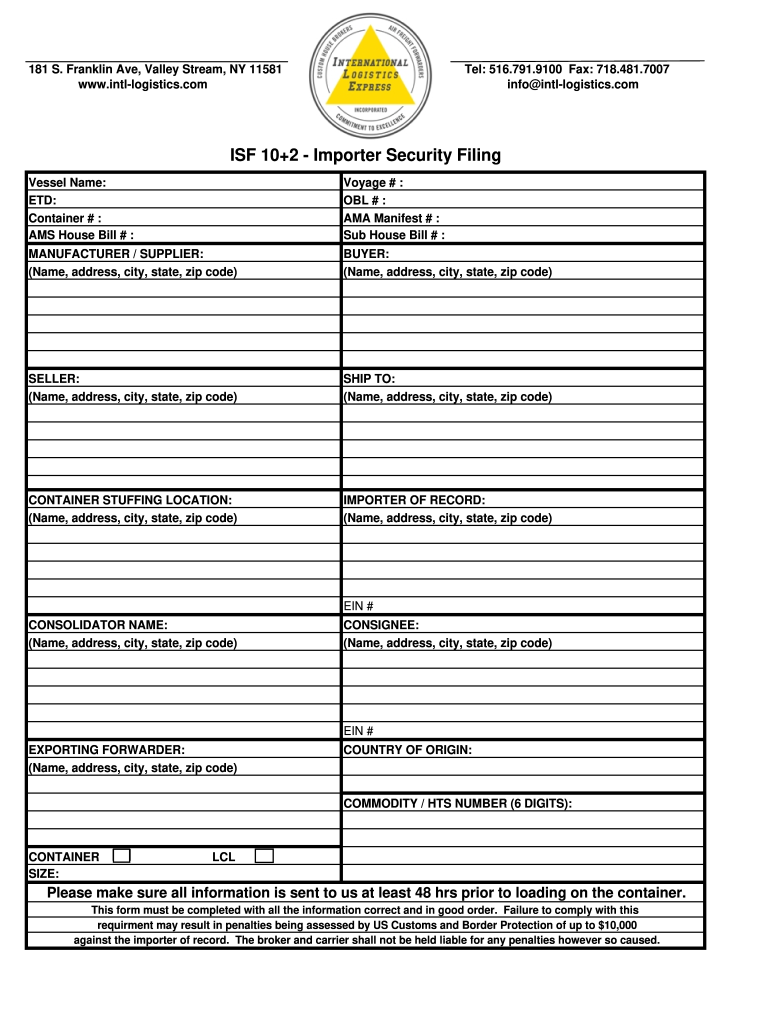







Definition & Meaning of ISF 10-2 Blank Form Excel
The ISF 10-2 blank form Excel is an essential document in international shipping used for the Importer Security Filing (ISF) requirements mandated by U.S. Customs and Border Protection (CBP). It consists of ten data points plus two additional optional data elements that importers must file prior to loading cargo onto a vessel bound for the United States. This form serves to enhance cargo security and helps in risk assessment during the import process. It typically includes vital information such as the vessel's name, container number, the parties involved in the transaction, and specific details about the shipment. Proper completion and timely submission of this form help avoid penalties and ensure compliance with U.S. regulations.
How to Use the ISF 10-2 Blank Form Excel
Using the ISF 10-2 blank form in Excel involves several straightforward steps.
-
Download the Form: Access the blank ISF 10-2 form in Excel format. Ensure you have a compatible version of Excel to open and edit the file.
-
Input Required Data: Fill in each field with the necessary information:
- Importer details (name and address)
- Consignee information
- Vessel name and estimated arrival
- Container numbers
- Description of goods being imported
- Harmonized Tariff Schedule (HTS) code
-
Review for Accuracy: Double-check all entries for errors. Any inaccuracies can lead to compliance issues or penalties from CBP.
-
Submit the Filing: Once completed, submit the form electronically through the chosen filing system, either through an authorized filing agent or directly via the ACE (Automated Commercial Environment) portal.
-
Retain a Copy: Keep a copy of the filed ISF form for your records, as it is essential for tracking and compliance.
Steps to Complete the ISF 10-2 Blank Form Excel
Completing the ISF 10-2 blank form in Excel requires attention to detail and a systematic approach. Here are the detailed steps:
-
Open the Excel Form: Start by downloading and opening the blank ISF 10-2 Excel form.
-
Fill in Importer Information: Enter the importer’s name, address, and contact details. This is fundamental as it identifies the entity responsible for the shipment.
-
Provide Consignee Information: Input the name and address of the consignee receiving the goods in the U.S., ensuring it is accurate and matches the shipping documents.
-
Detail Shipping Information: Include the vessel's name, sailing date, and estimated arrival date. Each container number must be entered along with the specific items being shipped.
-
Include Harmonized Code: Determine and enter the HTS code associated with each item. This code categorizes the goods and determines applicable tariffs.
-
Review and Validate: Go through the completed form ensuring all fields are filled and that information aligns with supporting documents. Use Excel's built-in features, such as data validation tools, to check for errors.
-
Save and Submit: Save your completed form and then transmit it through the specified electronic platform to ensure compliance with CBP timelines.
Important Terms Related to ISF 10-2 Blank Form Excel
Understanding key terms associated with the ISF 10-2 blank form is crucial for compliance and successful submission.
- Importer: The individual or business responsible for bringing goods into the U.S. and is liable for the submission of the ISF.
- Consignee: The person or entity to whom the goods are being shipped and who is responsible for clearing them through U.S. Customs.
- Harmonized Tariff Schedule (HTS): A globally standardized numerical method of classifying traded products, which helps determine duties and taxes.
- Automated Commercial Environment (ACE): CBP's online system used for submission of documents and management of customs activities.
- Container Number: A unique identifier used for tracking and identifying shipping containers.
Key Elements of the ISF 10-2 Blank Form Excel
The ISF 10-2 blank form consists of various elements necessary for fulfilling the filing requirements. Each key component must be thoroughly understood:
-
Importer Security Filing Data Elements:
- Entity names and addresses (both importer and consignee)
- Container numbers to track physical shipments
- Description of cargo to clarify what is being imported
- Estimated arrival details for customs processing
- HTS codes to classify goods accurately and assess duties
-
Optional Data Points:
- Country of origin can facilitate quicker customs inspections.
- Additional details like the purchaser may enhance transaction transparency.
By recognizing these elements, importers can ensure that they capture all necessary data for compliance with U.S. Customs regulations.
Who Typically Uses the ISF 10-2 Blank Form Excel
The ISF 10-2 blank form is primarily utilized by a variety of stakeholders involved in importing goods into the United States. Key users include:
- Importers: Companies or individuals importing goods who are responsible for compliance and filing the ISF form accurately.
- Customs Brokers: Professionals hired by importers to manage and facilitate the customs clearance process on their behalf.
- Freight Forwarders: Entities that help organize the shipment of goods by arranging transportation and ensuring compliance with shipping regulations.
- Logistics Managers: Individuals overseeing supplies and inventory who need to ensure that all shipping documentation is correctly completed and submitted for timely receipt of goods.
By understanding the typical users, one can appreciate the importance of the ISF 10-2 form in international trade practices.