
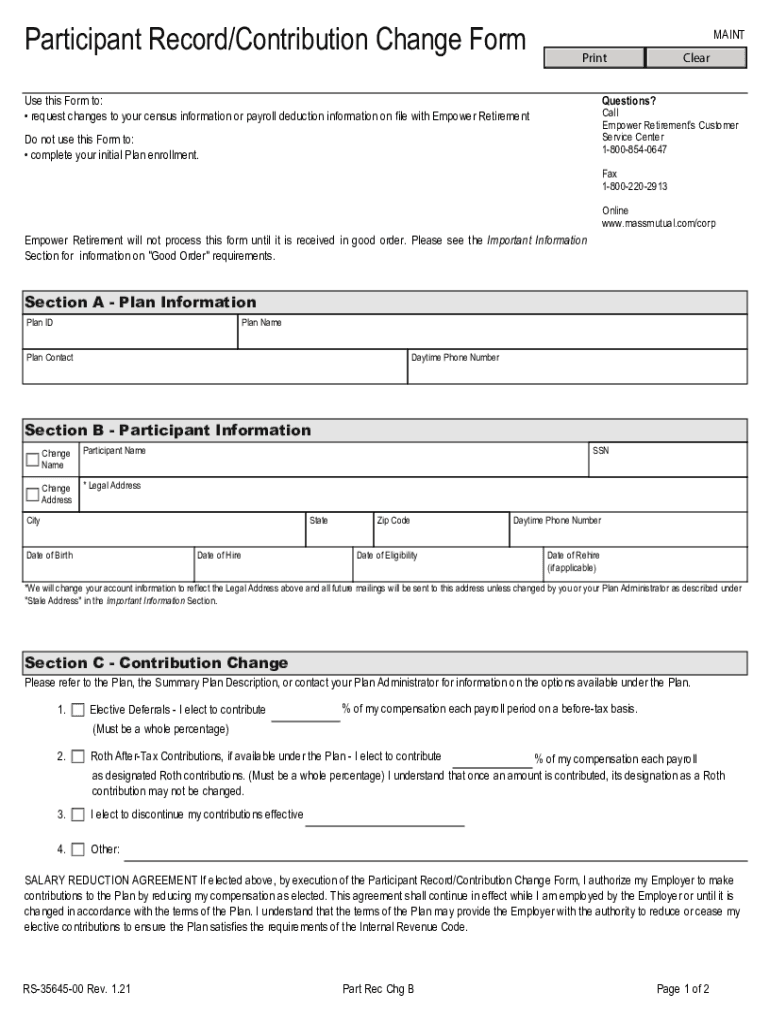







Definition and Meaning
The concept of "Maintaining Your Retirement Plan Records - IRS tax forms" refers to the documentation required by the Internal Revenue Service (IRS) for tracking and managing retirement plan information. These forms are essential in ensuring compliance with federal tax laws, which mandate comprehensive reporting of retirement savings, distributions, contributions, and deductions.
- Purpose: To ensure accurate tax reporting and facilitate the efficient management of retirement plan data.
- Key components: The forms typically involve details about contributions, distributions, participant information, and plan specifics.
- Usage scenarios: By individuals managing their retirement savings accounts or by employers administering employee retirement plans.
Understanding these forms' definitions and meanings is crucial for accurate tax submissions and record maintenance.
Steps to Complete the Maintaining Your Retirement Plan Records - IRS Tax Forms
Completing IRS forms for retirement plans involves several detailed steps to ensure accurate and compliant reporting.
-
Gather Necessary Information:
- Include personal details such as name, address, and social security number.
- Aggregate financial data pertinent to retirement contributions, distributions, and balances.
-
Identify the Correct Forms:
- Some common forms include the 1099-R for distributions and the 5498 for account contributions.
- Verify which forms are necessary for your specific retirement plan type.
-
Fill Out the Forms Accurately:
- Double-check all entries against official financial statements.
- Enter data precisely to avoid errors that could result in non-compliance.
-
Review and Verify for Accuracy:
- Conduct a thorough review to ensure all information is correct.
- Cross-reference with previous submissions to maintain consistency.
-
Submit the Forms:
- Submission can be electronic or through postal mail, depending on the form.
- Ensure that forms are submitted before relevant deadlines to avoid penalties.
This step-by-step completion ensures that retirement plan records comply with IRS requirements, reducing the risk of penalties.
Why You Should Maintain Your Retirement Plan Records
Maintaining precise retirement plan records is vital for several reasons, influencing both compliance and financial security.
- Legal Compliance: Adhering to IRS requirements is essential to avoid penalties and audits, which could incur additional costs.
- Accurate Tax Assessment: Proper record maintenance ensures that tax liability is correctly calculated, potentially lowering taxable income through deductions and credits.
- Financial Planning: Up-to-date records allow for better financial monitoring and forecasting, crucial for long-term financial health and planning.
- Facilitate Adjustments: Having well-organized records makes it easier to adjust contributions and withdrawals as necessary, thus maximizing retirement fund efficiency.
For these reasons, maintaining comprehensive and organized retirement plan records is beneficial to both individuals and businesses.
IRS Guidelines
The IRS provides specific guidelines concerning retirement plan records, which aim to clarify how records should be managed and reported.
- Documentation Requirements: Keep comprehensive documentation of all retirement contributions and withdrawals.
- Retention Period: Maintain records for a minimum of seven years, ensuring availability for potential audits.
- Compliance Checks: Regularly check for updates in IRS policies and requirements, as guidelines can change.
Understanding these IRS guidelines helps ensure that all retirement plan records meet federal standards, enabling seamless tax reporting and record-keeping.
Key Elements of the Maintaining Your Retirement Plan Records - IRS Tax Forms
Critical elements should be captured accurately within the IRS tax forms to ensure complete and compliant retirement plan documentation.
- Participant Information: Details of each individual involved in the retirement plan, including contact information and social security numbers.
- Financial Transactions: Record of all monetary transactions related to the retirement plan, such as deposits, earnings, and distributions.
- Plan Type and Status: Information on the type of retirement plan and its current status, crucial for determining applicable rules and calculations.
- Compliance Codes: Indications of the tax compliance status of contributions, especially for different plan types.
Focusing on these key elements guarantees that all necessary information is captured, ultimately supporting lawful and accurate reporting.
Important Terms Related to Maintaining Your Retirement Plan Records
Understanding specific terms surrounding IRS tax forms for retirement plans can enhance your comprehension and accuracy in maintaining these records.
- Distribution: Withdrawal of funds from a retirement account, which can trigger taxable events.
- Contribution Limit: The maximum allowable annual contribution to a retirement account, differing by account type and participant age.
- Rollover: Transfer of funds from one retirement account to another, generally tax-free if completed within a specific period.
- Designated Beneficiary: An individual or entity named to receive retirement plan proceeds upon the account holder's death.
Grasping these terms is vital for correct form preparation and submission, ensuring adherence to IRS regulations.
Required Documents
Submission of IRS tax forms for retirement plan maintenance necessitates several documents, essential for complete and verifiable reporting.
- Annual Statement of Accounts: Summary of financial activity within your retirement accounts over the past year.
- Proof of Contributions and Distributions: Documentation showing all funds deposited into or withdrawn from your retirement plan.
- Tax Filings from Previous Years: Helps ensure continuity and accuracy in record maintenance and IRS submissions.
- Legal Documents: Includes any changes in beneficiaries or plan structures that may impact tax status.
Ensuring the availability of all required documents reduces the likelihood of submission errors and potential compliance issues.
Filing Deadlines / Important Dates
Several key deadlines associated with IRS tax form submissions for retirement plans require attention to avoid penalties.
- Contribution Deadline: Generally April 15, aligning with the tax return filing deadline, for most retirement plan contributions.
- Distribution Reporting Deadline: January 31 for forms like the 1099-R, which detail distributions from retirement accounts.
- Correction Window Closes: Allowance to correct submission errors without incurring penalties typically available up to October 15.
Being aware and prepared for these deadlines ensures timely and efficient submission of all required retirement plan records, safeguarding against unnecessary fines.




