




01. Edit your rt 6 tax form online
Type text, add images, blackout confidential details, add comments, highlights and more.

Type text, add images, blackout confidential details, add comments, highlights and more.

Draw your signature, type it, upload its image, or use your mobile device as a signature pad.

Send quarterly report instructions via email, link, or fax. You can also download it, export it or print it out.
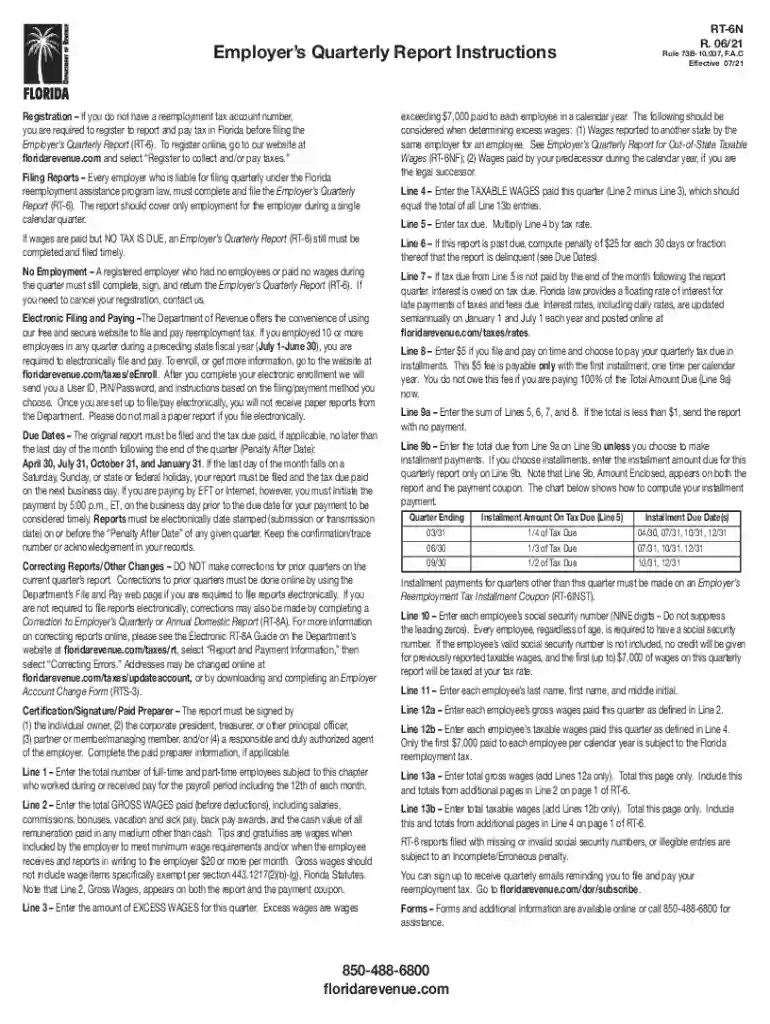
The RT-6 instructions are a detailed guide for employers in Florida on filing the Employer's Quarterly Report for reemployment tax. This document is crucial for accurately reporting taxable wages and ensuring compliance with state requirements even if no tax is due.
The RT-6 instructions serve as a comprehensive manual to assist employers in understanding the steps necessary for filing the Employer's Quarterly Report. It provides specific guidance on inputting and reporting taxable wages, ensuring that all information submitted is accurate and adheres to regulatory standards.
Employers should refer to the RT-6 instructions for detailed guidance on completing the Employer's Quarterly Report. The document provides step-by-step instructions, which include:
Employers can access the RT-6 instructions directly from the Florida Department of Revenue's website. The document is available in both digital and printable formats, ensuring that employers have easy access to the guidelines necessary for compliance.
The RT-6 instructions include various critical components:
Filing the Employer's Quarterly Report on time is imperative to avoid penalties. According to the RT-6 instructions, late submissions may result in financial penalties and interest charges. The document outlines the applicable penalties and the importance of adhering to set deadlines to avoid these additional costs.
Familiarity with the terminology used in the RT-6 instructions is crucial. Key terms include:
The RT-6 instructions specify quarterly deadlines for report submissions. Employers should mark these dates to ensure timely filing:
In preparing to file the Employer's Quarterly Report, employers need specific documents, including:
For clarity, the RT-6 instructions delineate a sequential process:
The RT-6 instructions incorporate Florida's specific legal and regulatory requirements. It's essential to understand these state-specific rules to maintain compliance and ensure proper tax filings.
By following these detailed guidelines, employers in Florida can efficiently manage their reemployment tax obligations, minimize the potential for errors, and avoid penalties associated with late or incorrect submissions.
We've got more versions of the rt 6 tax form form. Select the right rt 6 tax form version from the list and start editing it straight away!
At DocHub, your data security is our priority. We follow HIPAA, SOC2, GDPR, and other standards, so you can work on your documents with confidence.
File an Employers Quarterly Report (Form RT-6) by the end of each month following the end of the quarter. *Note: Reports are due even if you had no employeesRead more
This Instruction Manual (Applied) provides instructions for advanced use of the FR-E700 series CC-Link type inverters. RYn6 Second function selection (RT
Withhold federal income, social security, and. Medicare taxes (or railroad retirement taxes, if applicable) as usual and report them in boxes 2, 4, and 6,.Read more


