
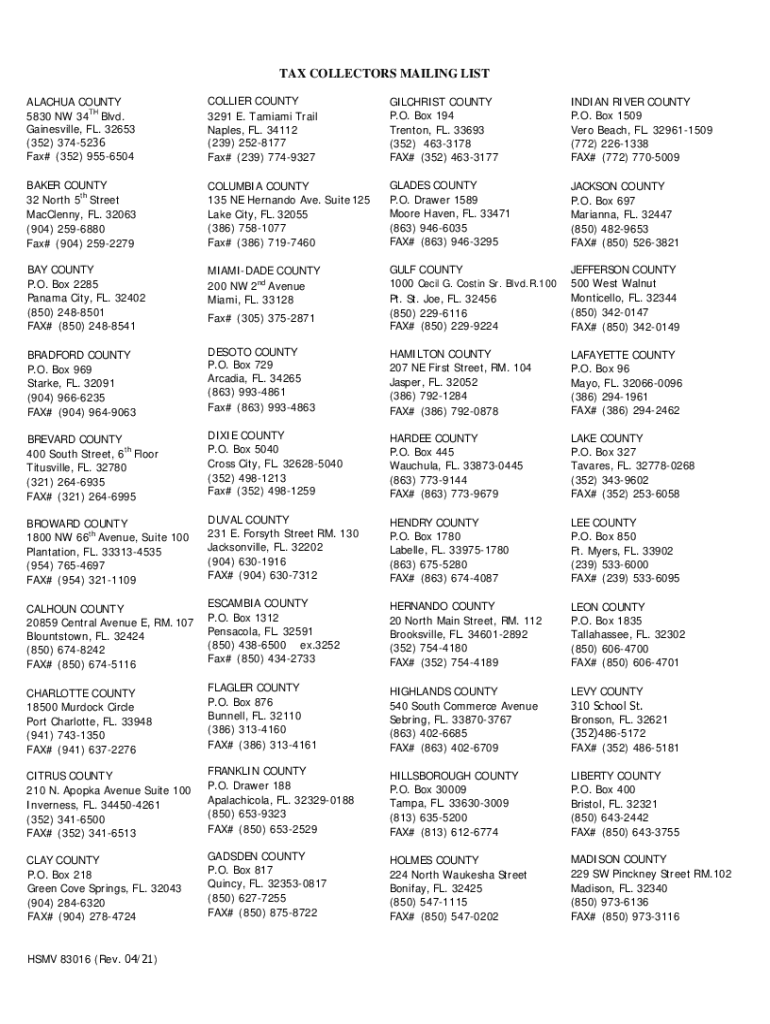







Definition and Meaning
The Florida tax collectors list is a comprehensive directory that provides essential contact information for tax collectors across various counties in Florida. This list typically includes addresses, phone numbers, and fax numbers, allowing individuals and businesses to reach out to the appropriate county tax office for their specific needs. The list serves as a valuable resource for those needing to communicate with tax authorities regarding property taxes and other local tax obligations.
Key Components of the List
- County Name: Identifies the specific geographic area served by the tax collector.
- Collector's Office Address: Physical location for in-person inquiries or document submissions.
- Contact Numbers: Telephone and fax numbers for direct communication with the office.
- Email or Website: Digital contact methods, if available, for convenient access.
How to Use the Florida Tax Collectors List
When utilizing the Florida tax collectors list, individuals and businesses can ensure timely and accurate communication with the appropriate tax office. This process can be streamlined by understanding how to effectively navigate and use the list.
Accessing the Information
- Identify the County: Determine the county in which you require tax services.
- Locate Contact Details: Use the list to find the address and contact numbers for the county’s tax collector.
- Utilize Contact Methods: Reach out via phone, fax, or in-person as needed for inquiries or document submissions.
Practical Scenarios
- Property Tax Queries: Use the list to contact the tax office with questions about property assessments or payment deadlines.
- Document Submissions: Send necessary documents via fax or mail to the correct office using the provided contact details.
How to Obtain the Florida Tax Collectors List
Obtaining the Florida tax collectors list can involve a few straightforward steps. Whether looking for an online source or a physical document, various methods ensure you can access this valuable information.
Steps to Acquire the List
- Check Online Resources: Visit official state or county websites that might provide downloadable versions of the list.
- Request from Tax Office: Contact a local tax office to ask how to obtain the list.
- Public Libraries: Some libraries may carry printed directories containing this information.
Who Typically Uses the Florida Tax Collectors List
The tax collectors list serves a variety of users across different sectors, each engaging with the list for specific purposes.


Common Users
- Tax Professionals: Accountants or consultants handling client taxes often use this list to contact offices for clarification and compliance.
- Property Owners: Individuals seeking information on property taxes or making tax payments.
- Businesses: Companies requiring guidance on local tax obligations or appeals processes.

Legal Use of the Florida Tax Collectors List
Understanding the legal frameworks governing the use of the Florida tax collectors list ensures compliance and responsible usage.
Permitted Uses
- Contacting Offices: Allowed for tax-related inquiries and clarifications.
- Documentation Submissions: Sending required paperwork directly to the relevant offices.
- Information Verification: Validating property tax details with official sources.
Restrictions
- Privacy Regulations: Users must adhere to privacy laws and not misuse personal contact information.
- Non-Commercial Use: The list is intended for private, governmental, and non-commercial purposes only.
Important Terms Related to the Florida Tax Collectors List
Familiarity with terms commonly associated with the tax collectors list can enhance interactions and communication efficiency.
Key Terms to Know
- Assessed Value: The dollar value assigned to a property for tax purposes.
- Millage Rate: The rate used to calculate local property taxes.
- Tax Certificate: A document purchased at a tax sale auction representing unpaid property taxes.
State-Specific Rules for the Florida Tax Collectors List
Each state, including Florida, may have distinctive guidelines and practices regarding the management and accessibility of tax collector information.
Florida-Specific Regulations
- Open Government Laws: Florida’s "Sunshine Law" provides public access to government proceedings and records, impacting how such lists are managed.
- Periodic Updates: County offices may periodically update the list to reflect staffing and contact changes.
Examples of Using the Florida Tax Collectors List
Real-world uses of the Florida tax collectors list illustrate its practical value in everyday scenarios.
Case Scenarios
- Home Purchase: A new homeowner uses the list to ascertain property tax obligations in a specific county.
- Tax Dispute Resolution: A business owner contacts their county’s tax office to resolve an assessment disagreement.
- Public Records Request: An individual requests property tax records for personal review and analysis.




