






Definition and Purpose of Illinois Hearing Facility
Illinois hearing facilities are venues provided by the Illinois Secretary of State for individuals seeking resolutions related to traffic violations, driver's license suspensions, and revocations. These facilities enable informal hearings where driving records are reviewed, and corrective action plans may be discussed. They serve an integral role in the process of reinstating driving privileges for individuals who have faced penalties due to infractions or specific circumstances. These hearings typically address concerns such as DUI-related suspensions and are crucial for regaining legal driving status.
How to Use Illinois Hearing Facility Services
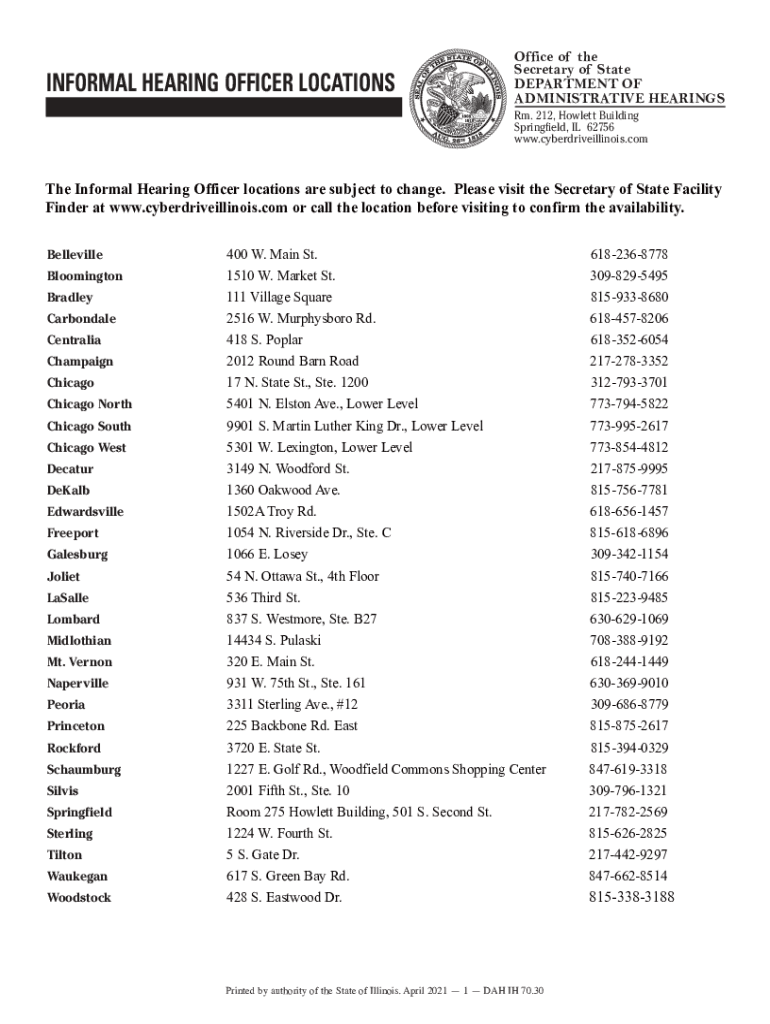
Accessing services at an Illinois hearing facility involves several clearly defined steps. First, individuals should verify their eligibility to request a hearing by reviewing the notice from the Secretary of State’s office. Scheduling an appointment is a mandatory requirement; walk-ins are not accommodated. Appointments can be made by contacting the appropriate office listed on the Secretary of State Facility Finder, ensuring that you have all required personal identification and documentation related to the infraction ready for submission.
Preparing for Your Appointment
- Gather all documentation regarding your driving history and the specific incident or infraction.
- Ensure you have an up-to-date identification card or driver's license.
- Consider consulting with a legal advisor if your case involves complex legal issues.
Steps to Complete the Illinois Hearing Process
To successfully navigate the hearing process, follow these steps:
- Request an Appointment: Contact your nearest hearing facility to schedule a session.
- Prepare Documentation: Collect all relevant documents, including police reports, letters from treatment programs, and personal references.
- Attend the Hearing: Arrive on time and present your case, providing all necessary information and answering any questions from the hearing officer.
- Follow-Up: Post-hearing, follow any additional instructions given, which may include further education or treatment requirements before receiving a decision.
Why Utilize an Illinois Hearing Facility
Using an Illinois hearing facility is crucial for those looking to appeal traffic-related penalties. It provides an opportunity for individuals to present their case, potentially regain driving privileges, and facilitate a clear understanding of corrective actions. It serves as a platform to address and rectify misunderstandings or errors related to driving records in a legal and structured environment.
Who Typically Utilizes Illinois Hearing Facilities
Primarily, individuals who have received notifications about suspensions or revocations use these facilities. These individuals include those involved in DUI cases, those who have accumulated excessive violation points, or those needing to address errors in their driving history. Additionally, legal representatives for these individuals might frequent these facilities to provide support and advocate on behalf of their clients.
Important Terms Related to Illinois Hearing Facilities
Familiarize yourself with key terms to effectively engage with the hearing process:
- Informal Hearing: A less structured hearing process that does not require legal representation and addresses minor infractions.
- Formal Hearing: A more detailed hearing required for serious infractions; legal representation is recommended.
- Revocation: The termination of driving privileges due to serious offenses.
Legal Use of the Illinois Hearing Facility
Ensuring compliance with all legal protocols is essential when using an Illinois hearing facility. Individuals must adhere to the scheduled appointments and provide honest and accurate information. Any attempt to mislead or provide false documentation can result in penalties, including the permanent loss of driving privileges. Legal representation can offer guidance and ensure that proceedings align with state regulations and personal legal rights.
Key Elements to Bring to a Hearing
When preparing for your hearing, ensure you bring:
- Identification: A valid form of ID such as a state ID card or passport.
- Incident Reports: Official documents related to the specific case or infraction.
- Character References: Letters from employers, community leaders, or other reputable sources to support your case.
- Treatment Documentation: If applicable, documents proving completion or participation in recommended treatment programs.
State-Specific Rules for Illinois Hearing Facilities
Illinois has specific guidelines governing the functioning of hearing facilities. Rules can vary slightly based on location and the nature of the hearing. It's important to reference the Illinois Secretary of State’s official resources for up-to-date guidelines and requirements to ensure compliance and avoid unnecessary delays or complications during your hearing process.