




01. Edit your nj guardianship forms online
Type text, add images, blackout confidential details, add comments, highlights and more.

Type text, add images, blackout confidential details, add comments, highlights and more.

Draw your signature, type it, upload its image, or use your mobile device as a signature pad.

Send guardianship forms via email, link, or fax. You can also download it, export it or print it out.
The term "nj guardianship guardian" refers to a legal designation for an individual assigned to manage the personal and financial affairs of another person deemed incapacitated or unable to make decisions for themselves, typically in the context of New Jersey law. Guardianship involves a formal court process that establishes a guardian's authority and responsibilities, particularly pertinent when dealing with minors or adults with disabilities. A guardian plays a critical role in ensuring that the needs and best interests of the ward—the person under guardianship—are met.
A guardian may be appointed for various reasons, such as mental incapacity, physical disability, or the inability to make informed decisions. The specific duties of a guardian can include:
Understanding the intricacies of nj guardianship guardian is essential for anyone involved in guardianship proceedings.
In navigating the guardianship process, several key terms are crucial to understand:
Clearly understanding these terms is vital when dealing with nj guardianship guardian proceedings and documentation.
When applying for guardianship in New Jersey, the process involves several clear steps:
Determine the Need for Guardianship: Assess whether the individual in question truly requires a guardian, considering their ability to make decisions about their care and finances.
File a Petition: A petition must be submitted to the appropriate New Jersey court, outlining the reasons for guardianship and providing necessary documentation regarding the ward's incapacity.
Notify Interested Parties: All interested parties, including family members, must be notified about the court hearing. This ensures transparency and allows for any objections to be raised.
Attend the Court Hearing: Present evidence of the need for guardianship before a judge. This may involve medical records, testimonies, or expert opinions that support the application.
Receive Court Approval: If approved, the court will issue an order designating the guardian's authority and responsibilities.
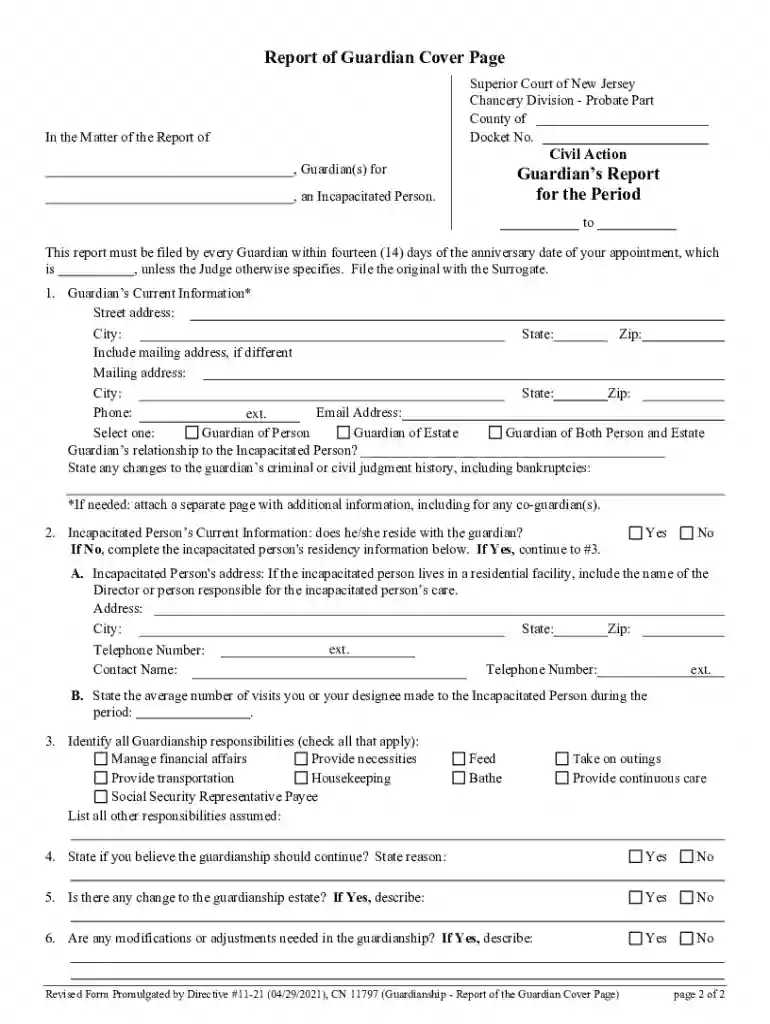
File the Report of Guardian: Annually, guardians must complete and submit the Report of Guardian to update the court on the ward's well-being and management of their affairs.
Following these steps meticulously is crucial for the successful establishment and maintenance of guardianship.
The nj guardianship guardian is governed by specific legal principles and procedures set forth in New Jersey law. Guardianship serves several purposes under the law:
Understanding these legal aspects is critical for guardians to ensure compliance with state laws and regulations governing guardianships.
The application process for nj guardianship guardian involves gathering documentation and court proceedings, and typically has the following timelines:
Preparation of Documentation: This can take several weeks, as potential guardians must compile relevant information, including medical assessments and affidavits from witnesses.
Filing the Petition: Once the petition is filed, it may take a few weeks for the court to set a hearing date.
Court Hearing: Depending on the court’s schedule, the hearing may occur within one to three months after filing. During the hearing, evidence will be reviewed, and the judge will decide on the guardianship request.
Obtaining the Court Order: If the judge approves the petition, the order can be issued shortly after the hearing, but finalizing any necessary documents may take additional time.
Guardians should be prepared for this timeline and understand that processing times can vary based on the specifics of each case and the court's workload.
We've got more versions of the nj guardianship forms form. Select the right nj guardianship forms version from the list and start editing it straight away!
At DocHub, your data security is our priority. We follow HIPAA, SOC2, GDPR, and other standards, so you can work on your documents with confidence.


