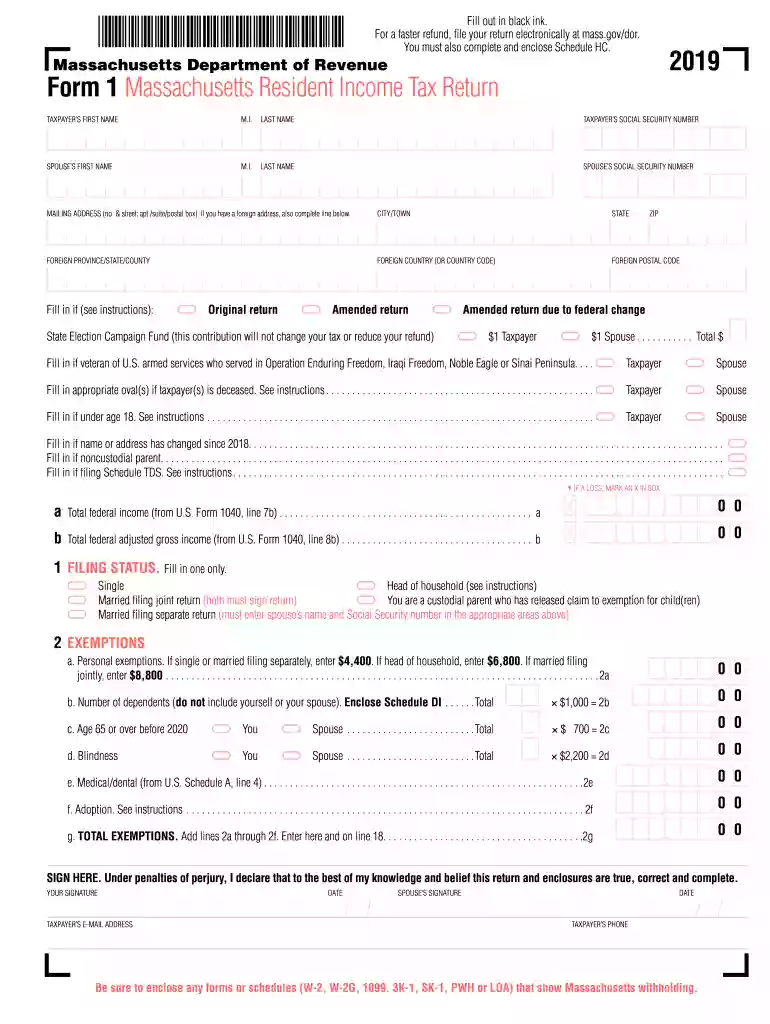
Definition and Meaning of the MA Form
The "MA Form" refers to the Massachusetts Resident Income Tax Return, specifically Form 1. This document is essential for Massachusetts residents to report their income, calculate taxes owed, and claim any applicable deductions and credits. It's designed to ensure that taxpayers provide a comprehensive overview of their financial activities for a given tax year. The form consists of various sections that require detailed information about income sources, personal data, and any specific state-related tax obligations.
Key Features of the MA Form
- Income Reporting: Taxpayers must report income from various sources, including wages, dividends, and rental income.
- Deductions and Credits: The form allows for the declaration of deductions, such as student loan interest or retirement contributions, and credits like the earned income tax credit.
- Tax Calculations: A dedicated section for computing total taxes and determining any refunds or payments owed.
- Personal Information: Includes spaces for personal identification details and filing status.
How to Use the MA Form
Using the MA Form requires attention to detail and an understanding of one's financial situation. Below is a step-by-step guide to effectively navigate the process:
Step-by-Step Instructions:
- Gather Required Documents: Collect W-2s, 1099s, receipts for deductions, and any notices from previous tax years.
- Fill Out Personal Information: Input your name, Social Security Number, and residency status on the form's top section.
- Complete Income Sections: Report all income sources, ensuring transparency and accuracy.
- Calculate Deductions: Identify eligible deductions and enter them to reduce taxable income.
- Validate Calculations: Double-check all computations, particularly for total income and tax liability.
- Sign and Date: Ensure the form is signed and dated correctly to affirm its accuracy.
Tips for Accurate Completion:
- Use official IRS and Massachusetts Department of Revenue guidelines.
- Double-check figures and personal details for errors.
- Consider using tax software that supports MA Form 1 for streamlined calculations.
How to Obtain the MA Form
The Massachusetts Resident Income Tax Return, or MA Form 1, can be acquired through several channels, ensuring accessibility for all taxpayers.
Acquisition Methods:
- Online Retrieval: Visit the Massachusetts Department of Revenue website to download and print the form.
- Local Tax Offices: Obtain physical copies at local revenue departments or libraries across Massachusetts.
- Tax Software: Many platforms include digital versions of the MA Form for easy completion and submission within the software.
Considerations for Form Access:
- Ensure the form version corresponds to the correct tax year.
- Verify that downloaded copies are legible before filling them out.
Steps to Complete the MA Form
Completing the MA Form involves precision and careful adherence to the state's tax requirements. Follow these detailed steps to ensure accuracy:
Step-by-Step Guide:
- Review Pre-Filled Information: If using pre-populated forms, verify all preloaded details.
- Detail Income Sources: Accurately enter all income streams, ensuring correct categorization.
- Deduction Review: Calculate any state-specific deductions or credits that could apply.
- Manual and Software Checks: Utilize both manual reviews and tax software checks to identify discrepancies.
- Finalize with Signatures: Add all necessary signatures, including any required for dependents or joint filers.
Edge Cases:
- Consider adjusted figures for amended returns.
- Handle additional non-resident or part-year resident complexities if applicable.
Importance of Completing the MA Form
Filing the MA Form accurately is crucial for maintaining compliance with state tax laws and ensuring all financial obligations are met.
Reasons for Compliance:
- Legal Obligations: Satisfy state requirements to avoid penalties or legal proceedings.
- Financial Accuracy: Allows for an accurate record of state income and tax obligations.
- Potential Refunds: Proper filing can lead to eligible claim settlements or tax refunds.
Use Cases:
- Verifying state tax payments when applying for large loans or financial aid.
- Establishing clear financial documentation for audit purposes.
Common User Profiles:
- Permanent Residents: Individuals residing in Massachusetts for most of the tax year.
- Part-Year Residents: Individuals who lived in Massachusetts for a portion of the tax year and need to report income while resident.
- College Students: Students who maintain Massachusetts residency status.
- High-Income Earners: Those needing detailed documentation for complex income streams and deductions.
Business and Freelancer Use:
- Self-Employed Individuals: Required to report statewide earnings distinct from federal income.
- Small Business Owners: Reporting company or personal income related to Massachusetts operations.
Key Elements of the MA Form
Understanding the structure and components of the MA Form is crucial for complete and accurate submission.
Primary Sections Include:
- Personal Data: Names, address, and Social Security numbers.
- Income Summary: Comprehensive collection of all taxable income.
- Tax Calculation Area: Includes fields for applied rates and credit application.
- Deductions Section: Space for obligatory reporting of eligible deductions and credits.
Important Considerations:
- Total income needs accurate representation to avoid overpayment or underreporting.
- Consistent reporting addresses to mitigate mailing or legal discrepancies.
Legal Use of the MA Form
The legal compliance related to the MA Form ensures rightful tax practices and averts potential legal issues for residents.
Regulatory Framework:
- IRS and State Alignment: Aligns with federal tax structures but observes Massachusetts-specific considerations.
- ESIGN Act Compliance: Allows for digital signature use where accepted by Massachusetts standards.
Consequences of Misuse:
- Financial Penalties: Incorrect information can lead to fines or additional tax assessments.
- Audits: Increasing the chance for audits if discrepancies are detected in submitted information.
Being thorough with the MA Form submission not only satisfies state requirements but also secures one's financial standing and legal compliance within Massachusetts.