







Understanding the Gottman Love Maps Questionnaire
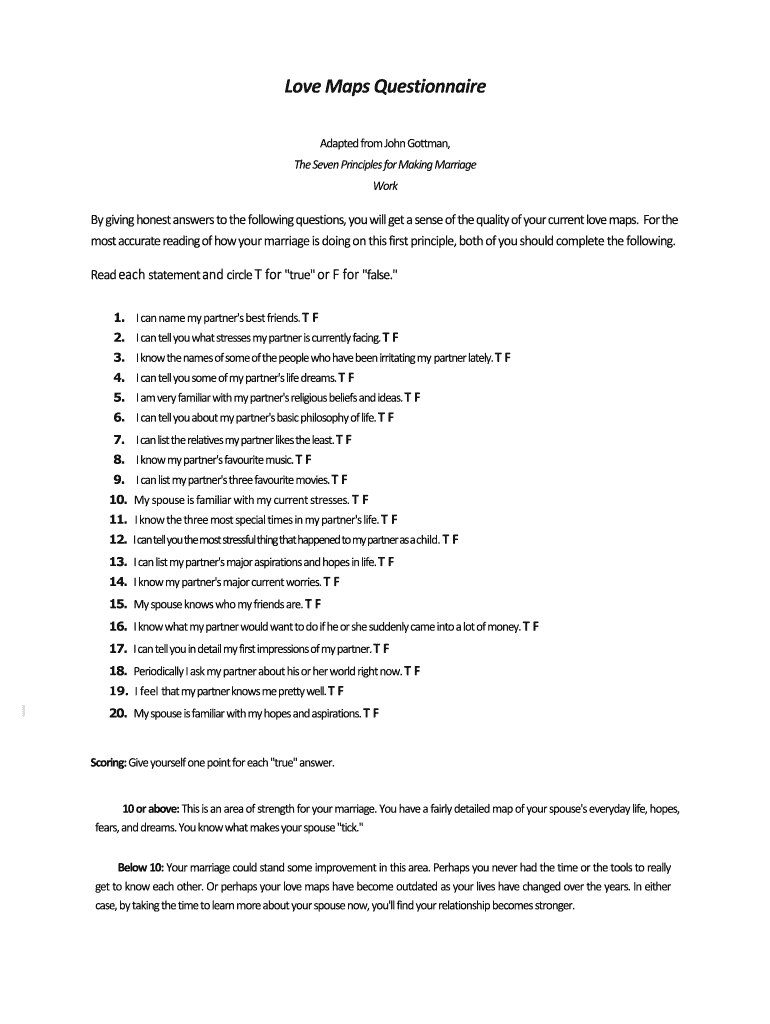
The Gottman Love Maps Questionnaire, derived from John Gottman’s principles in “The Seven Principles for Making Marriage Work,” serves as an insightful tool for couples. It involves a series of true/false questions designed to evaluate partners' understanding of each other's lives, aspirations, and stressors. This questionnaire plays a crucial role in assessing relationship intimacy and connection, ultimately guiding couples towards a deeper emotional understanding.
Structure of the Love Maps Questionnaire
The Love Maps Questionnaire is structured to encourage open communication between partners. Its key components include:
- True/False Questions: Questions cover a range of topics about personal history, preferences, and dreams.
- Scoring System: Each couple's responses are analyzed to determine whether they have a strong or weak love map, pinpointing areas for potential improvement.
- Engagement: Couples can participate in a game format, which not only makes the process enjoyable but also fosters learning about each other in a relaxed setting.
Importance of Love Maps
Understanding how to navigate each other's world is foundational to a healthy relationship. Having a strong love map allows for:
- Increased Empathy: Partners are more likely to support each other during stressful times.
- Emotional Safety: Couples develop a sense of security, knowing they are understood and valued.
- Effective Conflict Resolution: Knowledge of each other’s backgrounds and feelings can streamline problem-solving discussions.
Utilizing the Gottman Love Maps Worksheet
The worksheet based on the Love Maps Questionnaire facilitates structured reflection. Couples can systematically explore their knowledge of one another through this comprehensive format:
- Worksheet Sections: The worksheet may cover categories including dreams, goals, and significant experiences.
- Personal Reflection: Each partner fills out their individual responses, which can then be shared to stimulate richer conversations.
- Comparison and Discussion: Once filled out, partners compare answers to identify strengths and areas needing attention.
Tips for Effective Use
To maximize the benefits of the Gottman Love Maps Worksheet, consider these strategies:
- Regular Check-Ins: Make it a point to revisit the questionnaire periodically, as lives and relationships evolve.
- Create a Comfortable Environment: Choose a relaxed setting to engage in discussion, free from distractions.
- Be Open-Minded and Supportive: Foster an atmosphere where both partners feel comfortable sharing their thoughts and feelings openly.
Exploring the Gottman 52 Questions
The Gottman 52 Questions, often included with the Love Maps materials, add additional depth to the inquiry process. These questions revolve around:
- Future Aspirations: Understanding where both partners envision their life together.
- Personal Values: Exploring attitudes towards family, finance, and goals that shape decisions in the relationship.
- History Sharing: Discussing childhood experiences or pivotal life events that influence current behaviors and beliefs.
Incorporating the Questions into Daily Life
Utilizing the 52 questions can be integrated into daily interactions to promote ongoing dialogue, including:
- Dinner Conversations: Make it a habit to discuss a question over dinner, enhancing connection during shared meals.
- Weekend Activities: Dedicate time during outings to pose and explore these questions, making the exploration fun and light-hearted.
- Reflection Journals: Each partner can write their thoughts in a journal and share insights later, encouraging deeper understanding outside real-time conversations.
Evaluating the Outcomes of the Questionnaire
After completing the Love Maps Questionnaire and discussing it, couples should assess their relationship dynamics. This evaluation may include:
- Identifying Strengths: Recognizing aspects of the relationship where both partners feel secure and knowledgeable about each other.
- Noting Improvement Areas: Highlighting gaps in knowledge that present opportunities for growth and engagement.
- Setting Goals: Partners can agree on specific areas to focus on, promoting ongoing learning and connection.
Commitment to Growth
By regularly engaging with the Love Maps Questionnaire and related tools, couples can actively work towards enhancing their relationship. Commitments might include:
- Scheduled Date Nights: Allocate time for relationship-building activities focused on sharing and understanding.
- Attending Workshops: Consider participating in relationship workshops or retreats that focus on the principles outlined in the love maps concept.
- Seeking Professional Guidance: For couples facing difficulties, engaging a relationship therapist can facilitate deeper exploration and provide tools for improvement.
Resources for the Love Maps Questionnaire
Couples looking to deepen their understanding of the Love Maps Questionnaire can access a variety of resources, including:
- Gottman Workbook PDF: A comprehensive guide that outlines the principles and provides structured formats for assessment and improvement.
- Printable Love Maps PDF: Easily accessible formats for couples to print and fill out together, promoting engagement in various settings.
Engaging with the Gottman Love Maps Questionnaire and its associated materials allows couples to nurture their relationship profoundly. By prioritizing knowledge of each other’s lives and aspirations, partners can cultivate a strong, supportive partnership built on understanding and mutual respect.




