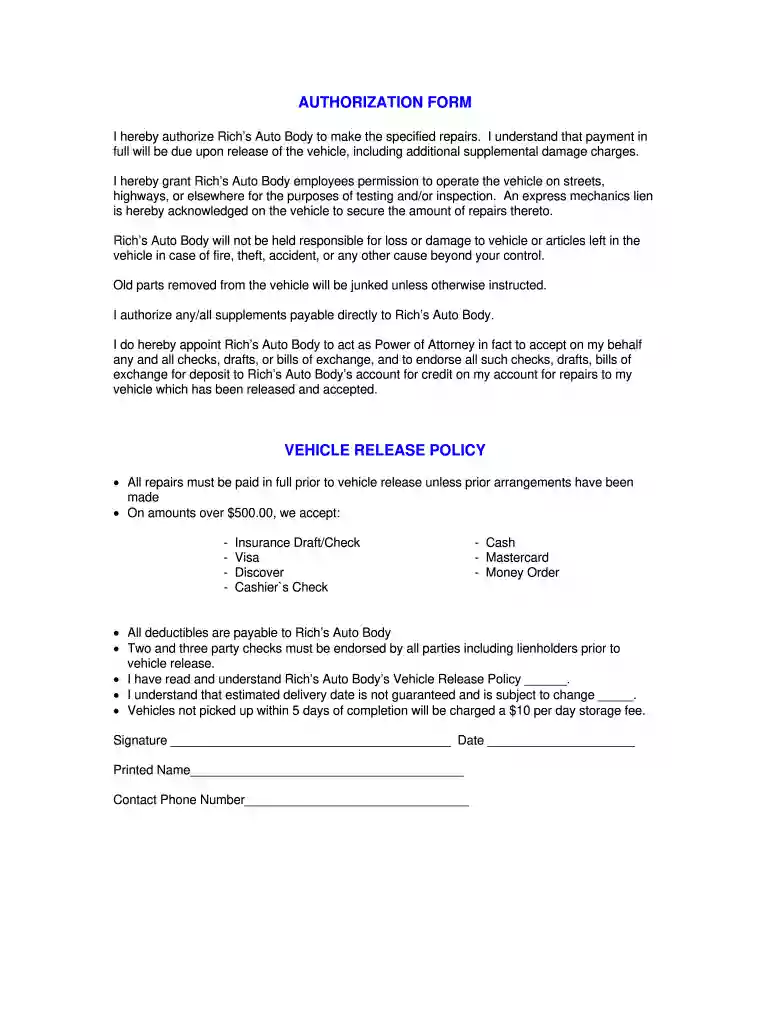
Definition and Meaning of the Body Shop Release Form
The body shop release form is a legal document that authorizes an auto body shop to perform repairs on a vehicle while clarifying the terms of service and liability. It is essential for protecting both the vehicle owner and the auto repair facility. The form typically outlines:
- Customer Consent: The customer acknowledges their permission for the auto repair shop to conduct specified repairs.
- Payment Obligations: Terms regarding the associated costs, including any deposits required and payment methods accepted.
- Liability Waivers: Clauses that protect the body shop from liability for damages that might occur during the repair process or as a result of pre-existing conditions in the vehicle.
- Vehicle Release Terms: Conditions under which the vehicle will be released after repair and potential fees for storage if the vehicle is unclaimed.
Understanding the body shop release form is critical for ensuring both parties are aware of their rights and responsibilities, creating a transparent transaction process.
Important Terms Related to the Body Shop Release Form
Familiarizing oneself with key terminology is crucial when dealing with a body shop release form. Here are some essential terms:
- Authorization: This term refers to the express consent provided by the vehicle owner allowing repairs to commence.
- Liability Disclaimer: A section that outlines the repair shop’s limited liability for certain damages or losses that may occur.
- Repair Estimate: An approximation of the costs involved in the repairs, often provided before the form is signed.
- Indemnity Clause: A provision that protects one party from legal liability for losses incurred by the other party.
Understanding these terms can help both vehicle owners and repair shops navigate the processes involved more efficiently and with clarity regarding their legal standing.
Steps to Complete the Body Shop Release Form
Filling out the body shop release form should be done carefully to ensure that all necessary information is provided. Here are the steps to complete the form effectively:
- Collect Necessary Information: Gather details such as the vehicle's make, model, and VIN (Vehicle Identification Number).
- Review Estimate and Costs: Ensure you have a clear understanding of the repair estimate, including labor, parts, and additional fees.
- Fill Out Customer Details: Provide your full name, contact information, and any other relevant personal information the form requires.
- Specify Services Required: Clearly indicate the types of repairs authorized by checking relevant boxes or listing them explicitly.
- Read Terms and Conditions: Carefully review all terms, especially liability waivers and payment obligations, to avoid misunderstandings.
- Sign and Date the Form: Ensure your signature is provided where indicated, confirming your consent and understanding of the terms.
Completing the form accurately helps protect your rights as a consumer and sets clear expectations for the repair shop.
Legal Use of the Body Shop Release Form
The body shop release form serves several legal purposes, ensuring compliance with state laws and industry standards. Key aspects include:
- Consent Documentation: By signing the form, the customer legally affirms their consent for repairs to be made, reducing potential disputes.
- Protection from Liability: The form often includes waivers protecting the shop from claims related to unforeseen damages that may arise during repair work or as a result of previous issues.
- Regulatory Compliance: The document may help the shop comply with local and state regulations, which can vary significantly regarding auto repairs and consumer rights.
- Enforcement Mechanism: In cases of disputes, the form can serve as a legal record in any ensuing negotiations or court proceedings.
Ensuring legal compliance through the appropriate use of the body shop release form is crucial for both vehicle owners and repair shops.
Who Typically Uses the Body Shop Release Form
The body shop release form is primarily utilized by several parties involved in the repair process:
- Vehicle Owners: Individuals or businesses needing repairs on their vehicles use this form to authorize work at an auto body shop.
- Auto Body Shops: Repair facilities utilize the form not only to secure permission for repairs but also to outline payment structures and manage liability.
- Insurance Companies: Often, insurance adjusters or representatives may require a signed body shop release form to process claims related to repair costs.
- Legal Representatives: In cases of disputes or claims, lawyers might request copies of this form to understand the agreements made between the customer and the shop.
By understanding who uses this form, it becomes apparent that it serves as an essential tool in the vehicle repair process, protecting all involved parties while clarifying the terms of service.

Key Elements of the Body Shop Release Form
The body shop release form contains several critical elements that contribute to its function and utility. These elements include:
- Customer Information: This section includes the name, contact details, and vehicle information, establishing the identity of the person authorizing repairs.
- Scope of Repairs: Clearly lists the specific services and repairs authorized by the vehicle owner to ensure both parties agree on what work is to be conducted.
- Payment Terms and Authorization: Details the financial obligations and methods accepted for payment, making expectations clear from the outset.
- Liability Clauses: Protecting the shop from liability, these clauses define the situation under which the shop is not responsible for damages or issues not directly caused by their repairs.
- Signature: The customer's signature is crucial as it legally binds the parties to the agreed-upon terms of repair and liability.
Including these key elements in the release form ensures that it serves its function effectively, minimizing confusion and legal risks during the repair process.
Examples of Using the Body Shop Release Form
Here are scenarios showcasing the practical use of the body shop release form in various contexts:
- Collision Repairs: After an accident, a vehicle owner brings their car to a body shop for extensive collision repairs. The owner signs a body shop release form authorizing specific repairs as outlined in the repair estimate, including the replacement of a damaged fender and repainting the vehicle.
- Restoration Projects: A classic car owner may use the form to authorize a body shop to perform restoration work. The form details the scope of work, such as bodywork and paint restoration, while placing liability on the shop for any damage during the project, as agreed upon.
- Insurance Claims: When a vehicle is repaired under an insurance claim, the body shop often requires the release form to document that the vehicle owner has authorized repairs. This procedure protects the shop if the insurance company disputes any part of the claim post-repair.
These examples illustrate the versatility and importance of the body shop release form in a range of repair scenarios, emphasizing its role in protecting both consumers and service providers.