
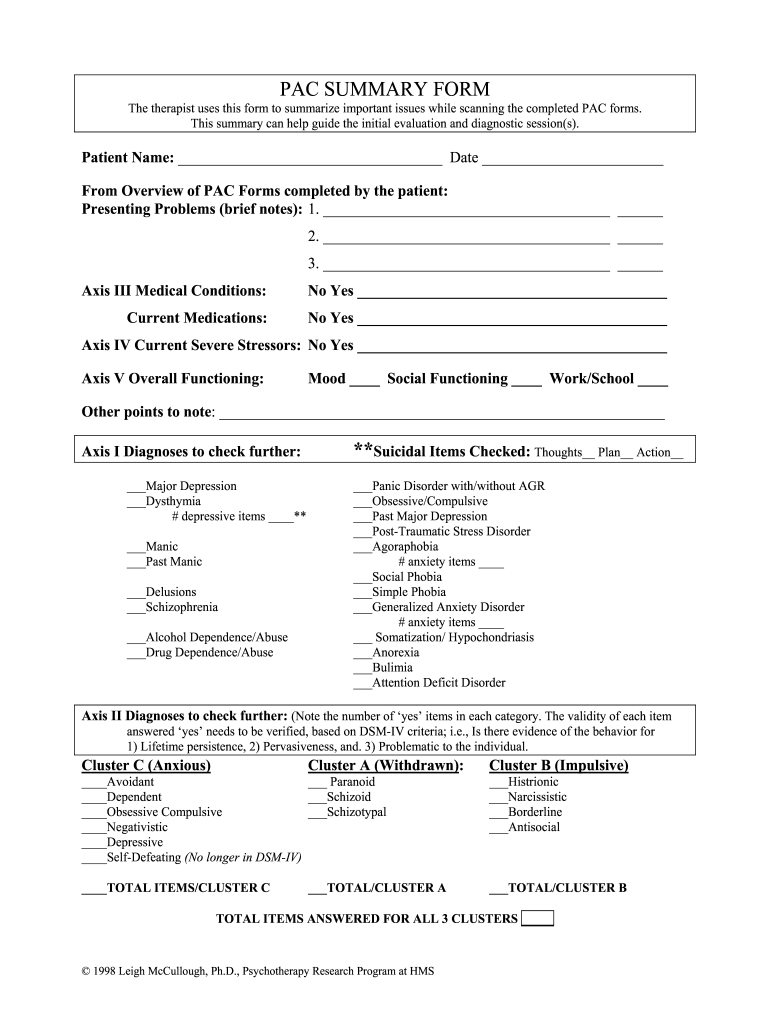







Definition & Meaning of the Counselling Assessment Form
The counselling assessment form is a structured tool used by mental health professionals to gather comprehensive information about a client's background, presenting issues, and therapeutic needs. This form facilitates an effective initial evaluation and is pivotal in developing a tailored treatment plan. It generally includes sections for personal and demographic details, presenting problems, history of mental health issues, family dynamics, and social factors contributing to the client's current state.
Purpose of the Counselling Assessment Form
- Initial Evaluation: It allows therapists to assess a client's mental health status effectively and identify areas that require immediate attention.
- Treatment Planning: By compiling detailed information, therapists can create customized treatment strategies aligned with the client's unique situations and needs.
- Documentation: The form serves as an official record, crucial for ongoing therapy sessions and professional reviews.
Key Elements of the Counselling Assessment Form
A comprehensive counselling assessment form typically comprises various critical components that help in gathering relevant data regarding the client's needs.
- Client Information: This section includes basic details such as name, contact information, age, and gender. It establishes a foundation for understanding the client's context.
- Presenting Issues: Clients are prompted to elaborate on the challenges they face, whether emotional, behavioral, or psychological.
- Mental Health History: This part delves into previous mental health issues, treatments, and hospitalizations, helping therapists understand the client's background and previous interventions.
- Family History: Details about the mental health issues faced by family members can highlight genetic predispositions or environmental factors influencing the client.
- Social and Environmental Factors: This includes information about the client’s support system, living conditions, employment status, and other external factors impacting mental well-being.
Steps to Complete the Counselling Assessment Form
Completing a counselling assessment form involves a systematic approach to ensure all relevant information is accurately captured.
- Initial Gathering of Information: The client should be encouraged to provide personal and demographic details accurately.
- Exploration of Presenting Issues: Clients should describe their current challenges in their own words. Encourage them to elaborate for clarity.
- Documenting Family and Personal History: Collect information on any relevant family dynamics and prior mental health experiences. This may require sensitive conversations.
- Assessment of Current Life Situation: Discuss significant life events, stressors, or changes in circumstances that may impact the client’s mental health.
- Final Review: Once completed, the therapist should review the form with the client to ensure accuracy and gather additional insights if necessary.
How to Use the Counselling Assessment Form
The counselling assessment form serves multiple purposes throughout the mental health treatment process.
- As a Diagnostic Tool: Therapists analyze the information to help diagnose mental health conditions based on the details provided.
- In Treatment Planning: The completed form informs the development of tailored interventions and therapeutic goals, ensuring they are relevant to the client's specific needs.
- For Progress Monitoring: During subsequent sessions, the initial information allows therapists to track changes in the client’s condition, thereby evaluating the effectiveness of the treatment approach over time.
Important Terms Related to the Counselling Assessment Form
Understanding specific terminology related to the counselling assessment form enhances clarity for both clients and mental health professionals.
- Therapeutic Alliance: The collaborative relationship between the therapist and the client, which is essential for effective therapy.
- Clinical Diagnosis: The process through which mental health professionals determine the nature of a client’s issues based on established criteria.
- Assessment Tools: Various instruments used alongside the assessment form to further explore the client’s psychological state, including questionnaires and interviews.
Who Typically Uses the Counselling Assessment Form
The counselling assessment form is primarily utilized by:
- Mental Health Professionals: Such as psychologists, licensed professional counselors, social workers, and psychiatrists, who aim to understand their clients comprehensively.
- Educational Institutions: School counselors may use the form to assess the mental well-being of students facing academic or social challenges.
- Healthcare Providers: Primary care physicians may integrate an assessment form to evaluate the mental health aspects of a patient’s overall health, especially in cases where co-morbid conditions are identified.


Legal Use of the Counselling Assessment Form
Proper use of the counselling assessment form must adhere to legal and ethical standards to protect client privacy and ensure compliance with regulations.
- Confidentiality: All information disclosed in the assessment form must be treated as confidential, in line with HIPAA regulations, ensuring that it is only shared with authorized individuals.
- Informed Consent: Clients must be informed about how their data will be used and have the opportunity to consent before completing the form.
- Record-keeping Protocols: Proper management and secure storage of completed forms are critical to maintaining client confidentiality and ensuring records are available for future reference as required.
Examples of Using the Counselling Assessment Form
Practical scenarios illustrate the application of the counselling assessment form in various contexts.
- Individual Therapy: A therapist uses the form to gain insights into a client's anxiety symptoms, family background, and coping strategies, shaping a targeted intervention plan.
- Group Therapy: Facilitation of group sessions can benefit from summary data collected in assessment forms, allowing group leaders to address common issues confronted by participants.
- Crisis Interventions: In urgent scenarios, such as suicidal ideations or severe distress, the form helps quickly identify risk factors and necessary immediate interventions for the client’s safety.
Through these comprehensive elements and detailed steps, mental health professionals can effectively utilize the counselling assessment form to enhance therapeutic outcomes for their clients.




