
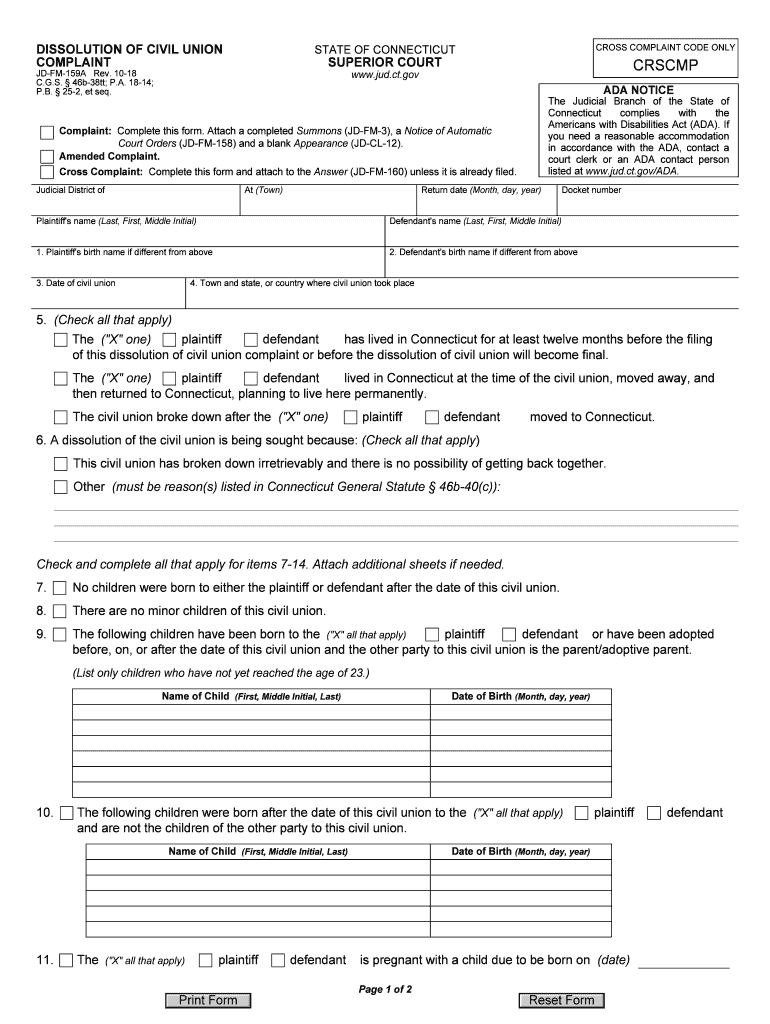







Definition and Purpose of the Civil Union 159a Form
The Civil Union 159a form is a legal document used in the State of Connecticut to file a complaint for the dissolution of a civil union. It is crucial for terminating the civil union legally, ensuring that all parties adhere to state regulations during the process. This form is comprehensive, including sections for personal information, reasons for dissolution, and potential agreements regarding dependents, making it a foundational document in the civil dissolution process. The need for such a document arises from the need to address various legal, financial, and personal implications of ending a civil union, which are similar yet distinct from those associated with marriage.
How to Use the Civil Union 159a Form
- Initial Preparation: Obtain a copy of the form from a court clerk or an authorized legal service. Ensure you have all relevant personal documents on hand.
- Filling Out Personal Information: Input accurate personal details for both parties, including names, addresses, and any existing children.
- Stating Reasons for Dissolution: Clearly specify the grounds for seeking dissolution. Common reasons may include irretrievable breakdown of the relationship or mutual consent.
- Document Review and Correction: Once filled, review the document for accuracy. Ensure all information is complete and error-free to prevent delays.
Completing this form accurately is crucial, as any discrepancies may affect the legal process and prolong the dissolution.
Steps to Complete the Civil Union 159a Form
- Gather Necessary Information: Collect all relevant documentation, including identification, civil union certificate, and any agreements about children or property distribution.
- Fill Out the Form: Input information into each section, starting with personal details and moving onto the reasons for dissolution.
- Seek Legal Counsel: Although not mandatory, consulting a legal expert can clarify any uncertainties and ensure compliance with Connecticut laws.
- Submit the Form: File the completed form with the appropriate division of the probate court. In some cases, this might need to be supplemented with additional documentation as specified by the court.
Having a structured approach ensures that every part of the form is correctly completed and submitted in a timely manner.
Importance of the Civil Union 159a Form
The Civil Union 159a form is vital for legally ending a civil union, offering clarity and protection for both parties involved. By formalizing the process, it ensures compliance with state regulations, helping prevent legal disputes. Additionally, it outlines the duties and responsibilities of both parties regarding dependents and shared assets. This enforceability means that both parties are legally protected, offering a framework for conflict resolution.
Who Typically Uses the Civil Union 159a Form
Individuals who are part of a civil union in Connecticut and seek to dissolve that partnership typically use this form. These may include:
- Couples Facing Irreconcilable Differences: When any attempts at resolution fall short, and both parties agree that separation is the best course.
- Mutual Agreements: When both parties have mutually consented to terminate their civil union amicably.
- Legal Representatives: Attorneys acting on behalf of individuals may also complete and submit this form as part of their services.
Understanding who uses the form helps focus on the procedural and compliance aspects critical for these groups.


Key Elements of the Civil Union 159a Form
- Personal Details: Contains individual information about both parties, establishing identities within the context of the union.
- Grounds for Dissolution: Clarifies reasons for dissolving the union, leading to smoother processing when aligning with state laws.
- Dependent Agreements: Includes sections detailing any decisions regarding children, offering clear guidelines on custody and support.
- Asset Distribution: Provides space to document agreements on the division of shared property and financial responsibilities.
These components are fundamental to processing the form effectively and ensuring all aspects of the union's termination are considered.
State-Specific Rules for the Civil Union 159a Form
Connecticut imposes specific legal frameworks for the dissolution of civil unions, including:
- Residency Requirements: At least one party must be a resident of Connecticut for a specified timeframe before filing.
- Waiting Periods: There may be mandated waiting periods post-filing before official dissolution is granted.
- Compliance with ADA: Must adhere to accessibility guidelines for individuals who require accommodations, ensuring equitable processing.
Those completing the form must understand these state-specific rules to ensure compliance and expedited processing.
Required Documents for the Civil Union 159a Form
To complete the Civil Union 159a form, gather:
- Certified Copy of the Civil Union Certificate: Verifies the existence of the legal union in question.
- Identification Documents: Such as a driver's license or passport for both parties.
- Financial Statements: If applicable, to address alimony or asset division.
- Dependent Information: For those with children, documentation regarding custody or support arrangements.
These documents support the claims made in the form, helping establish facts and ensure a fair dissolution process.
Legal Use of the Civil Union 159a Form
The legal utilization of the Civil Union 159a form ensures that the dissolution process is formalized, binding, and recognized by the State of Connecticut. It creates a legally enforceable record that can be referred to in future legal proceedings if disputes arise. This process ensures that all decisions regarding dependents, assets, and financial responsibilities are documented and agreed upon by both parties. Using this form under Connecticut's legal framework provides protection and clarity for individuals terminating their civil union.




