
Protective order 2026

Get Form
protective order Preview on Page 1

Here's how it works

01. Edit your form online
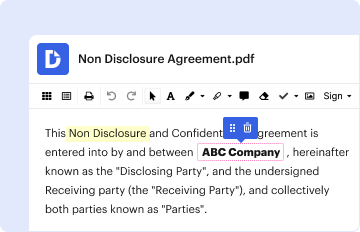
Type text, add images, blackout confidential details, add comments, highlights and more.
02. Sign it in a few clicks
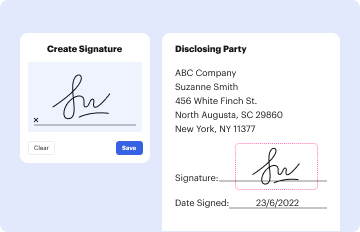
Draw your signature, type it, upload its image, or use your mobile device as a signature pad.
03. Share your form with others
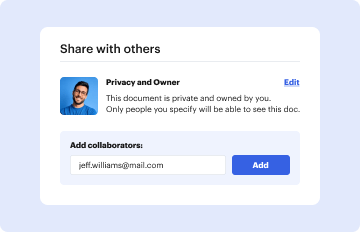
Send it via email, link, or fax. You can also download it, export it or print it out.

How to Use or Fill Out Protective Order with Our Platform

Form edit decoration
9.5
Ease of Setup
DocHub User Ratings on G2
9.0
Ease of Use
DocHub User Ratings on G2
  1. Click ‘Get Form’ to open the protective order document in the editor.
  2. Begin by filling in the court name and county in the designated fields at the top of the form. This information is crucial for identifying where your case will be heard.
  3. Next, enter the state where the court is located. This ensures that all legal proceedings are properly documented within the correct jurisdiction.
  4. In the section labeled 'Petitioner/Plaintiff,' input your name or your client's name as applicable. Similarly, fill out the 'Respondent/Defendant' section with the opposing party's details.
  5. Proceed to complete any additional sections as required by your specific case, ensuring that all parties agree to maintain confidentiality regarding sensitive information as outlined in point one of the order.
  6. Finally, review all entries for accuracy before signing. Utilize our platform’s features to add signatures and dates where necessary, ensuring compliance with legal standards.

Start using our platform today to easily fill out and manage your protective order forms online for free!

be ready to get more

Complete this form in 5 minutes or less

Get form

Got questions?

We have answers to the most popular questions from our customers. If you can't find an answer to your question, please contact us.
Contact us
In most cases, a Protective Order will last up to 2 years. There are some situations where a court can issue an order that lasts longer than 2 years. Although you may file these forms without having a lawyer, you are encouraged to get a lawyer to help you in this process.
A new Texas law makes it easier for victims of family violence to get a protective order. House Bill 1432, which went into effect September 1st, 2023, removes the requirement to prove that violence is likely to occur again before a family violence protective order can be granted.
A person can apply for a protective order on their own behalf and/or on behalf of a child in situations where: a spouse, dating partner, or household member has or has threatened to hurt the person; or. the person has been a victim of family or dating violence, a sexual offense, stalking, trafficking, or burglary.
Requirements for a protective order for domestic violence to be issued include establishing that family violence has occurred and is likely to occur again without such an order. The burden of proof for this involves whats known as a preponderance of evidence favoring the accuser.
It is a legal document in which a Judge orders someone to follow specific conditions of behavior that is, tells someone things that they must or must not do. Police can make immediate arrests if they have reason to believe those conditions have been violated.

Security and compliance

At DocHub, your data security is our priority. We follow HIPAA, SOC2, GDPR, and other standards, so you can work on your documents with confidence.

Learn more
ccpa2
pci-dss
gdpr-compliance
hipaa
soc-compliance

People also ask

The primary difference lies in the relationship between the parties. Restraining orders are typically used in non-domestic situations involving harassment, stalking, or civil disputes. Protective orders are used in cases of domestic violence or abuse where the abuser has a close personal relationship with the victim.
The specific elements you need to prove to get a restraining order vary from state to state, but in general, you need to show: A specific instance or instances of abuse or harassment (such as sexual assault by an intimate partner) The threat of violence or of further abusive behavior or harassment.

Related links