Maryland warranty deed 2026

Get Form
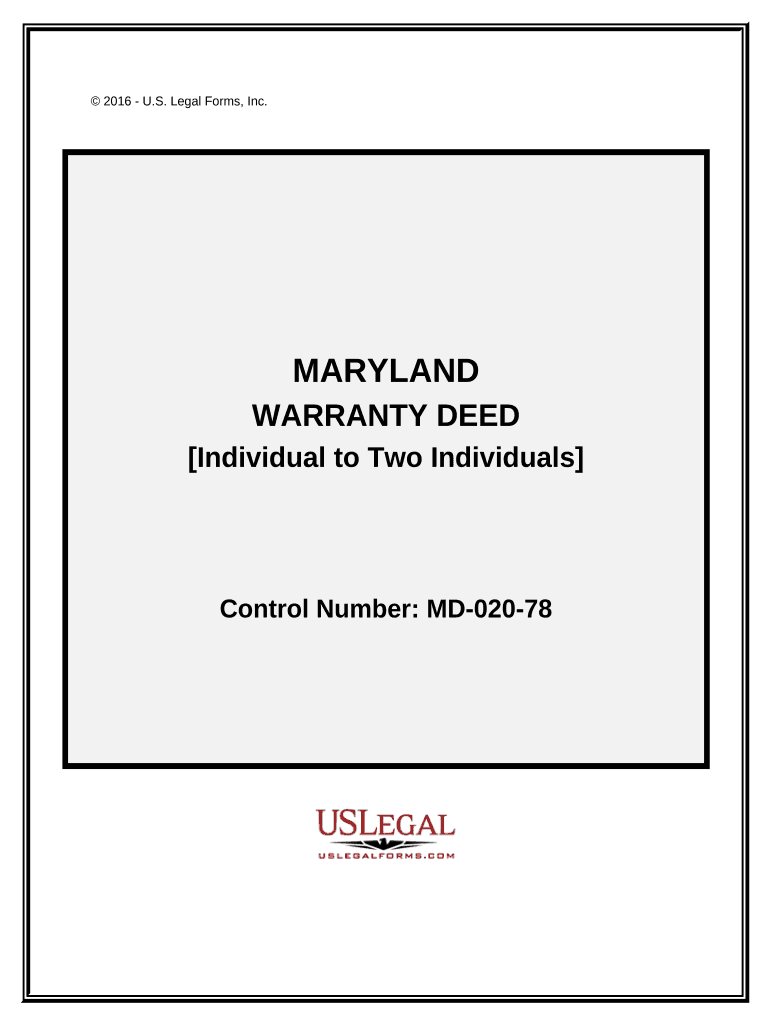
maryland warranty deed Preview on Page 1

Here's how it works

01. Edit your maryland warranty deed online
Type text, add images, blackout confidential details, add comments, highlights and more.
02. Sign it in a few clicks
Draw your signature, type it, upload its image, or use your mobile device as a signature pad.
03. Share your form with others
Send it via email, link, or fax. You can also download it, export it or print it out.

How to use or fill out Maryland Warranty Deed with our platform

Form edit decoration
9.5
Ease of Setup
DocHub User Ratings on G2
9.0
Ease of Use
DocHub User Ratings on G2
  1. Click ‘Get Form’ to open the Maryland Warranty Deed in the editor.
  2. Begin by entering the date of the deed at the top of the form. This is crucial for legal documentation.
  3. Fill in the name of the Grantor (the person transferring property) and their address. Ensure accuracy as this identifies who is conveying ownership.
  4. Next, specify the consideration amount (the price paid for the property) in both words and numbers to avoid discrepancies.
  5. Enter the names and addresses of the Grantees (the individuals receiving ownership). They should be listed as joint tenants if applicable.
  6. Attach a legal description of the property as Exhibit A. This section is vital for identifying the exact location and boundaries of the property being transferred.
  7. Finally, have a Notary Public witness your signature to validate the document before submission.

Start using our platform today to easily complete your Maryland Warranty Deed online for free!

be ready to get more

Complete this form in 5 minutes or less

Get form

Got questions?

We have answers to the most popular questions from our customers. If you can't find an answer to your question, please contact us.
Contact us
The Quitclaim Deed: The quitclaim deed is the worst type of deed because it conveys no warranty whatsoever that the sellers title is good title or that there are no encumbrances on the property.
A general warranty deed is often considered the most common way to transfer real property.
A warranty deed is one that helps ensure the lawful transfer of ownership between a seller (the grantor) and the buyer (the grantee). Warranty deeds are meant to protect the buyer from any issues that may arise with their new home, particularly with the title.
You dont always need a lawyer to write a warranty deed. If no money is being exchanged, you can use a property deed service. If youre selling a property, however, its a smart move to contact a lawyer, escrow company, or title company.
Special Warranty Deed Risks: The limited protection may expose buyers to title issues that arose before the sellers ownership period. This can be risky, especially for older properties or those with a complicated title history.

Security and compliance

At DocHub, your data security is our priority. We follow HIPAA, SOC2, GDPR, and other standards, so you can work on your documents with confidence.

Learn more
ccpa2
pci-dss
gdpr-compliance
hipaa
soc-compliance
be ready to get more

Complete this form in 5 minutes or less

Get form

People also ask

The primary risk associated with a Special Warranty Deed lies in its scope of protection. This deed only covers the period the grantor owned the property, meaning the buyer takes on a risk of potential issues arising from before that period, which the grantor is not obliged to address.
Who Benefits the Most from Recording a Warranty Deed? The buyer, or grantee, of a property benefits the most from obtaining a warranty deed. Through the recording of a warranty deed, the seller is providing assurances to the buyer should anything unexpected happen.

Related links