
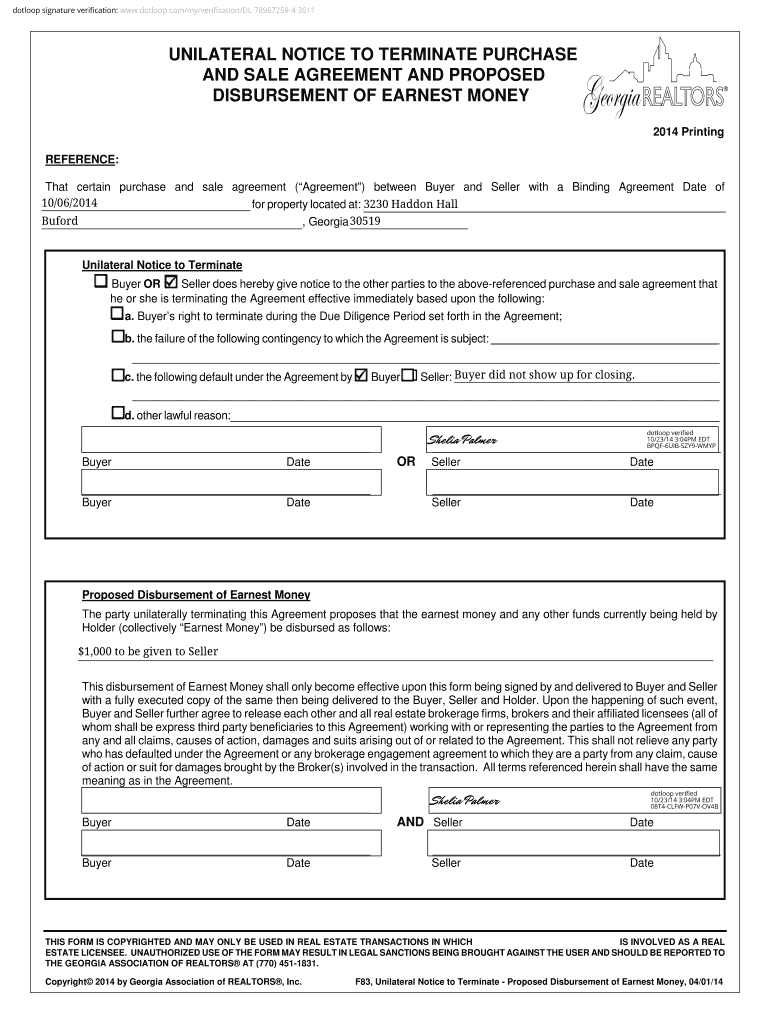







Definition and Meaning of Unilateral Notice to Terminate Purchase and Sale Agreement
A unilateral notice to terminate the purchase and sale agreement is a legal document utilized in real estate transactions, enabling one party—the Buyer or Seller—to unilaterally terminate the agreement under specific circumstances. This document is essential for formalizing the decision to dissolve the agreement without requiring mutual consent from both parties. Common reasons for issuing this notice may include contingencies not being met, defaults by the other party, or other legitimate concerns that justify ending the contract.
Understanding the implications of a unilateral notice is crucial. Upon delivery of this notice, the terminating party communicates their intention effectively, preventing misunderstandings. This notice also sets the stage for the disbursement of any earnest money deposited during the agreement, detailing how these funds should be allocated or returned. It’s important to know that while one party may initiate this action, the notice must be prepared and executed in accordance with the terms set forth in the original purchase and sale agreement, as well as applicable state laws.
How to Use the Unilateral Notice to Terminate Purchase and Sale Agreement
When deciding to use a unilateral notice to terminate a purchase and sale agreement, careful consideration and methodical execution are necessary. Here are key steps to guide you in the process:
-
Review the Original Agreement: Before drafting the notice, examine the purchase and sale agreement to identify specific clauses related to termination rights. Check for any contingencies that might allow for a unilateral termination.
-
Specify the Reason for Termination: Clearly articulate the reason for the termination in the notice. This could be due to failure to fulfill contingencies, defaults by the other party, or any other contractual grounds. Providing a transparent rationale can reduce the likelihood of disputes later.
-
Draft the Notice: Use clear and concise language when drafting the unilateral notice. The content should include:
- Identification of the parties involved
- Description of the property in question
- Reference to the original purchase and sale agreement
- Clear statement of termination intent
- Instructions regarding disbursement of earnest money if necessary
- Date of notice issuance
-
Deliver the Notice: The notice should be delivered in a manner compliant with the terms of the original agreement. This could include methods such as certified mail, personal delivery, or electronic transmission if allowed.
-
Keep Records: Document the delivery of the notice and retain a copy for your records. This will serve as proof should disputes arise regarding the termination.
Key Elements of the Unilateral Notice to Terminate Purchase and Sale Agreement
A well-structured unilateral notice to terminate a purchase and sale agreement generally contains several critical components:
-
Parties' Identification: Clearly state the names and addresses of both the Buyer and Seller to identify the parties involved in the transaction.
-
Property Description: Provide a detailed description of the property subject to the purchase and sale agreement, including the address and any identifying information.
-
Reference to the Original Agreement: Mention the date of the executed purchase and sale agreement to establish the context and relevant contract.
-
Termination Statement: Include a clear statement indicating the intent to terminate the agreement, specifying any applicable conditions that justify this action.
-
Disbursement Instructions for Earnest Money: If earnest money was originally exchanged, detail how it should be disbursed following termination. This may include instructions for returning the funds to the Buyer or retaining them by the Seller depending on the circumstances.
-
Signature Line: A signature line for the party issuing the notice, indicating their official authorization of the document.
Important Terms Related to the Unilateral Notice to Terminate Purchase and Sale Agreement
Awareness of key terms associated with unilateral notices can enhance understanding and facilitate effective communication. Some important terms include:
-
Earnest Money: A deposit made by a Buyer to demonstrate their serious intent to purchase a property, often held in escrow until closing.
-
Contingencies: Conditions outlined in the purchase agreement that must be met for the contract to proceed, such as financing or inspections.
-
Breach: A failure to fulfill obligations as stipulated in the agreement, which may provide grounds for termination.
-
Default: A situation where either party fails to comply with the terms of the contract, entitling the other party to seek termination.
-
Mutual Consent: An agreement between both parties to terminate the contract, contrasting the unilateral action taken by one party.
Understanding these terms not only provides context for the unilateral notice process but also aids in navigating any potential disputes arising from the termination.
State-Specific Rules for the Unilateral Notice to Terminate Purchase and Sale Agreement
The rules governing the unilateral notice to terminate a purchase and sale agreement can vary significantly depending on the state in which the transaction occurs. Here are a few considerations:
-
Notice Requirements: States may have specific requirements for how notice needs to be delivered (e.g., personal delivery, email, certified mail), with some requiring that proof of delivery be maintained.
-
Response Timeframes: Certain states may stipulate mandatory response timelines for the receiving party upon receiving the notice, especially if it involves disbursement of earnest money.
-
Legal Grounds for Termination: While common grounds exist, specific states may have additional legal frameworks or contractual obligations that determine acceptable reasons for issuing a unilateral notice.
-
Consequences of Non-Compliance: There may be state-specific penalties or legal ramifications for failing to adhere to proper notice protocols when terminating an agreement.
To ensure compliance, parties should consult with legal counsel familiar with real estate laws in their specific state before proceeding with a unilateral notice. This can help safeguard against potential disputes and maintain lawful adherence to local regulations.




