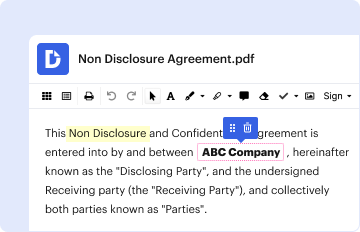
Type text, add images, blackout confidential details, add comments, highlights and more.
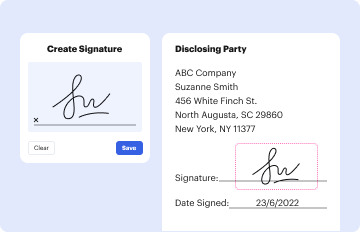
02. Sign it in a few clicks
Draw your signature, type it, upload its image, or use your mobile device as a signature pad.
03. Share your form with others
Send it via email, link, or fax. You can also download it, export it or print it out.
How to use or fill out Warranty Deed from Individual to Corporation - Massachusetts with our platform
Ease of Setup
DocHub User Ratings on G2
Ease of Use
DocHub User Ratings on G2
Click ‘Get Form’ to open the Warranty Deed in the editor.
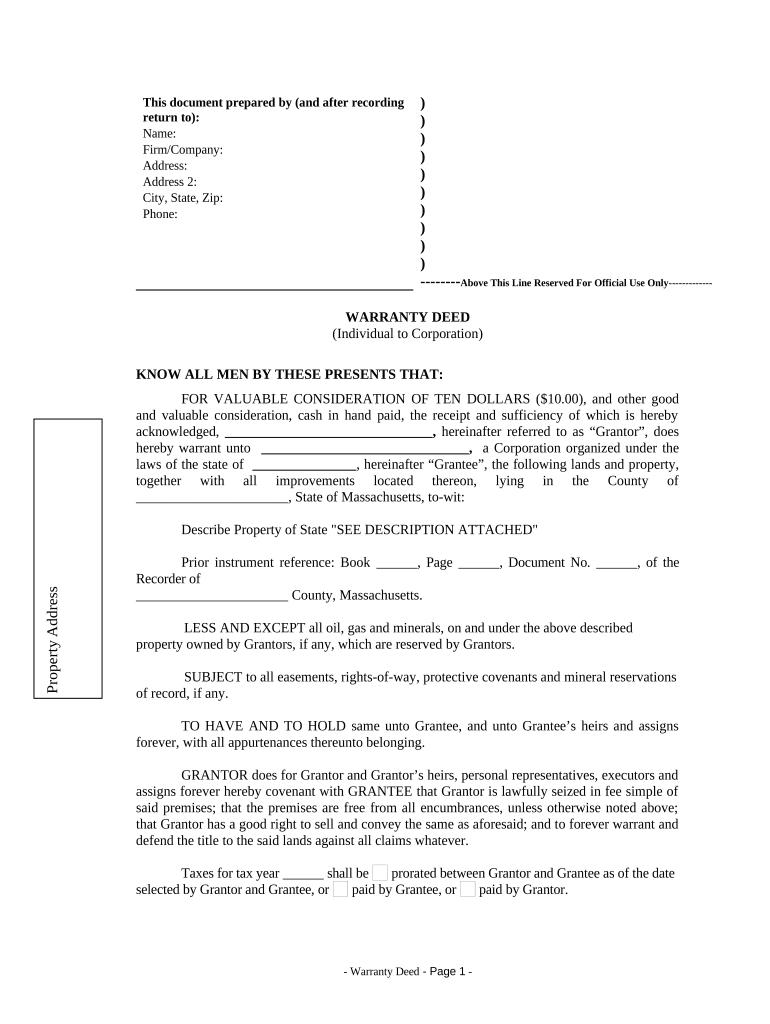
Begin by filling in the 'Prepared by' section at the top. Enter your name, firm/company, address, city, state, zip, and phone number.
In the main body of the deed, identify yourself as the 'Grantor' and provide your name. Then specify the 'Grantee' as the corporation receiving the property.
Describe the property being transferred. If necessary, attach a detailed description and reference it in this section.
Complete any prior instrument references if applicable. This includes book and page numbers from previous deeds.
Indicate any exceptions or reservations regarding oil, gas, minerals, or easements that may apply to the property.
Sign and date the document where indicated as Grantor. Ensure all required parties sign if applicable.
Finally, have a notary public witness your signature and complete their section for validation.
Start using our platform today to easily fill out your Warranty Deed for free!
Fill out Warranty Deed from Individual to Corporation - Massachusetts online It's free
A deed transferring a fee interest in Massachusetts real property from the grantor to the grantee. In Massachusetts, a warranty deed conveys title in fee simple with full statutory warranties. This Standard Document contains integrated notes with explanations and drafting tips.
What are the disadvantages of a warranty deed?
Disadvantages of Warranty Deeds Title companies will research the chain of deeds, past court judgments, and unpaid taxes before green-lighting the transfer. The grantor also remains on the hook long after the sale. If a forgotten lien surfaces, the buyer can pull the grantor into court for damages and legal fees.
Why does Massachusetts use quitclaim deed?
The quitclaim deed is the most commonly used deed in the purchase and sale of residential property in Massachusetts. It plays a fundamental role in the types of assurances the seller makes when transferring its rights, and in how the buyer takes title.
What are the different types of deeds in Massachusetts?
Massachusetts law recognizes three types of deeds, each of which provides varying levels of protection for buyers and sellers. These three types are warranty deeds, quitclaim deeds, and release deeds.
What type of deed is used in Massachusetts?
In Massachusetts, there are three types of property deeds used for real estate transactions: warranty deeds, quitclaim deeds and release deeds. Each type of deed in Massachusetts offers varying levels of protection and guarantees against flaws in the title of the transferred real estate.
Related Searches
Warranty deed from individual to corporation massachusetts templateWarranty deed from individual to corporation massachusetts sampleWarranty deed from individual to corporation massachusetts exampleWarranty deed from individual to corporation massachusetts formQuitclaim deed MassachusettsQuit claim Deed form Massachusetts PDFMassachusetts quitclaim deed requirementsFree Quit Claim Deed form Massachusetts
Security and compliance
At DocHub, your data security is our priority. We follow HIPAA, SOC2, GDPR, and other standards, so you can work on your documents with confidence.
There are three kinds of deeds used for real estate transactions in Massachusetts: warranty deeds, release deeds, and quitclaim deeds. Each offers different types of protection and guarantees against any defects in the title that is being transferred in the transaction.
Is there a difference between a warranty deed and a property deed?
The Warranty Deed plays a crucial role in real estate transactions. It signifies the legal transfer of property ownership from the seller to the buyer. Unlike other types of deeds, it guarantees that the property title is clear, which means its free from any legal claims or encumbrances, ensuring a smooth transaction.
Who benefits the most from a quitclaim deed?
The quitclaim deed simply transfers any interest they may have to the other party. Because of the lack of title guarantees, quitclaim deeds are most often used to transfer property between two parties who know and trust each other, such as family members.
Related links
DELAWARE 77-0201147 (STATE OF INCORPORATION) (
We sell our products in the United States through our own direct sales force which is organized geographically to support major network operators at both the
Sep 9, 2025 Sections for a selection of specific forms are noted below: Sections 41:1 41:23 Deeds, including long forms for Quitclaim and Warranty deeds
Cookie consent notice
This site uses cookies to enhance site navigation and personalize your experience.
By using this site you agree to our use of cookies as described in our Privacy Notice.
You can modify your selections by visiting our Cookie and Advertising Notice.