




01. Edit your hand hygiene audit checklist online
Type text, add images, blackout confidential details, add comments, highlights and more.

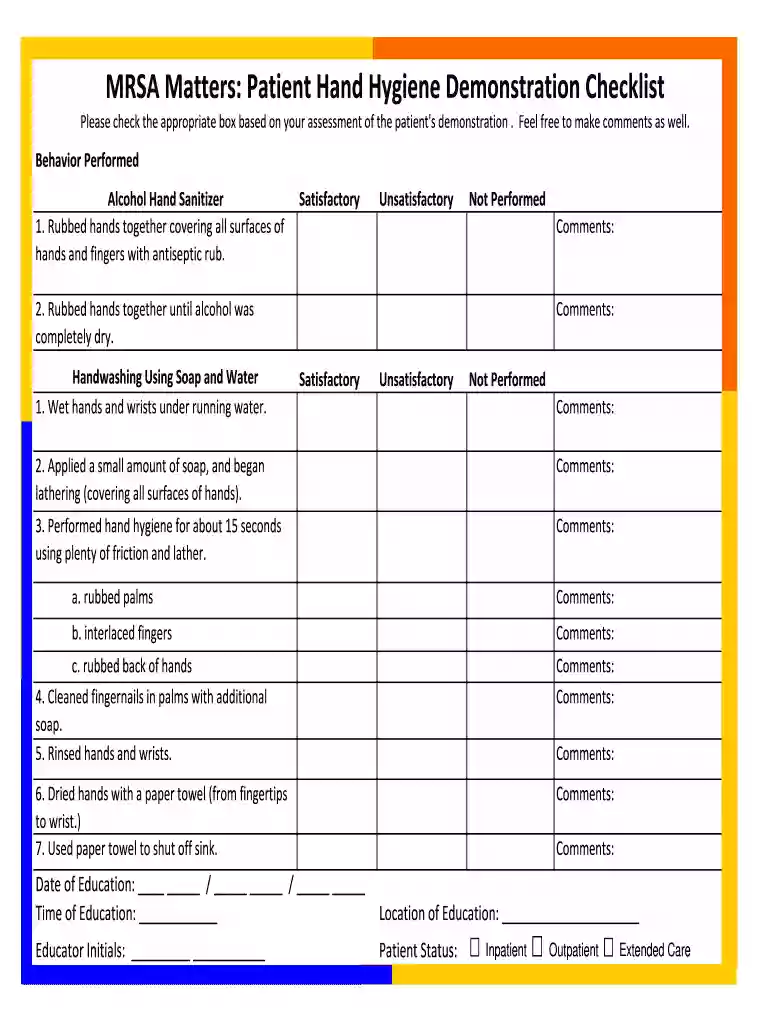
Type text, add images, blackout confidential details, add comments, highlights and more.

Draw your signature, type it, upload its image, or use your mobile device as a signature pad.

Send hand hygiene compliance checklist cdc via email, link, or fax. You can also download it, export it or print it out.
A hand hygiene compliance checklist is a structured tool used to evaluate and enhance hand cleanliness practices, primarily within healthcare settings. It serves the essential function of ensuring that staff adhere to recommended hand hygiene protocols, thus minimizing the risk of healthcare-associated infections, including MRSA and other pathogens.
Key components of the checklist typically include steps to assess proper handwashing techniques, the use of alcohol-based hand sanitizers, and methods for an effective hand hygiene routine. Each item on the checklist can be rated as satisfactory, unsatisfactory, or not performed, allowing for immediate feedback and corrective actions.
Utilizing this checklist is crucial in maintaining a high standard of patient safety and quality care. By implementing a rigorous hand hygiene compliance checklist, healthcare facilities can foster a culture of safety, inform training practices, and ultimately improve patient outcomes.
Completing the hand hygiene compliance checklist involves a systematic approach to ensure that handwashing practices meet established guidelines.
Incorporating a regular review of the results helps identify trends, address recurring challenges, and recognize high-performing individuals or teams.
The hand hygiene compliance checklist should encompass several critical elements to maximize its effectiveness.
By addressing these elements, the checklist can serve as a comprehensive tool for assessing and improving hand hygiene compliance across different settings.
The hand hygiene compliance checklist is typically utilized by various stakeholders within healthcare environments, including:
The versatility of the checklist makes it a valuable resource for anyone involved in patient care and facility hygiene.


Legal considerations play a crucial role in the application of the hand hygiene compliance checklist, particularly within healthcare settings, where adherence to regulations impacts patient safety.
By understanding and applying the legal implications associated with the use of the hand hygiene compliance checklist, organizations can enhance safety while mitigating risks.
Practical examples of how the hand hygiene compliance checklist can be employed can provide clearer insights into its functionality and benefits.
Implementing these examples allows for practical application and effective use of the checklist to enhance hand hygiene compliance.
Regular audits of hand hygiene compliance are essential in sustaining a high level of hygiene awareness among healthcare staff.
Overall, the importance of regular hand hygiene audits cannot be understated, as they contribute significantly to patient safety and infection control in healthcare settings.
At DocHub, your data security is our priority. We follow HIPAA, SOC2, GDPR, and other standards, so you can work on your documents with confidence.
Section 3: Observation Form - Hand Hygiene. Hand Hygiene: This form is intended to guide hand hygiene-based facility and healthcare personnel observations.Read more
May 19, 2020 Clean your hands immediately with an alcohol-based hand rub or soap and water for 20 seconds. Wash reusable facial coverings (such as bandanasRead more


