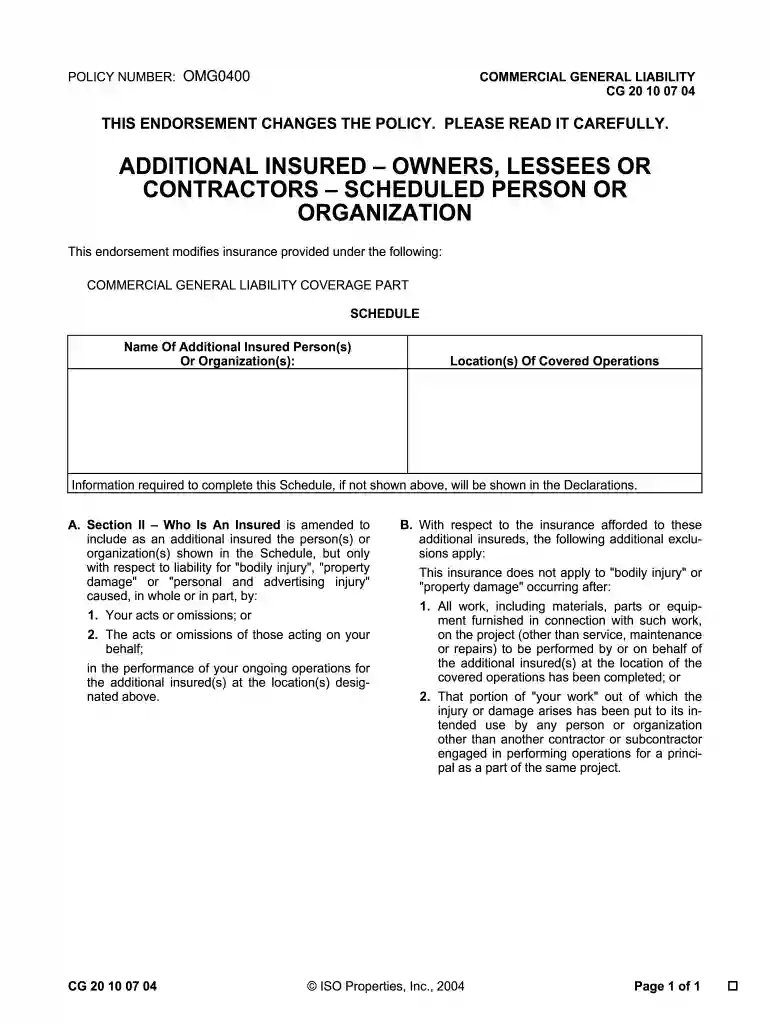
Additional insured endorsement form cg 20 10 0704-2026

Get Form
blanket additional insured endorsement pdf Preview on Page 1

Here's how it works

01. Edit your blanket additional insured endorsement pdf online
Type text, add images, blackout confidential details, add comments, highlights and more.

02. Sign it in a few clicks
Draw your signature, type it, upload its image, or use your mobile device as a signature pad.

03. Share your form with others
Send blanket additional insured endorsement form via email, link, or fax. You can also download it, export it or print it out.

Definition & Meaning of the Additional Insured Endorsement Form CG 20 10 0704

The additional insured endorsement form CG 20 10 0704 is a crucial document in the realm of commercial general liability insurance. This form extends coverage to additional parties that are not the primary insured but have a vested interest in the coverage provided by the policy. Specifically, this endorsement is typically included in situations where a contractor or service provider is hired, enabling other entities, such as property owners or general contractors, to be included as insured parties under the primary policy.

The highlights of this endorsement include:

  • Coverage Scope: It protects additional insured parties from liability claims related to bodily injury, property damage, or personal and advertising injury that may arise from the insured's operations or work.
  • Endorsement Conditions: The form outlines specific conditions under which the coverage applies, which could be during the period of work or within certain project limits.
  • Exclusions: There are specified exclusions, such as those related to injuries or damages occurring after project completion or due to the independent negligence of the additional insured.

This understanding of the form CG 20 10 0704 is fundamental for businesses engaging in contractual agreements where liability coverage needs to be shared with other parties to mitigate risks effectively.

Key Elements of the CG 20 10 0704 Endorsement

Understanding the essential components of the additional insured endorsement can clarify its application and relevance in various business contexts. Here are some critical elements:

  • Parties Involved: Clearly outlines the primary insured and the additional insured parties, ensuring that all relevant entities are protected under the coverage specified.
  • Coverage Details: Explicitly states the nature of coverage provided, including which types of liability incidents are covered.
  • Policy Limitations: Provides information on the maximum amount payable for claims made under this endorsement, frequently aligning with the general liability limits of the primary insured.
  • Notification Requirements: Details necessary procedures for notification in the event of a claim, ensuring prompt communication among involved parties.

This section emphasizes the importance of clarity in defining each element to prevent disputes regarding coverage and liability among statistical parties.

Practical Applications of the CG 20 10 0704 Endorsement

The practical use of the additional insured endorsement form CG 20 10 0704 spans various industries, most notably construction and service contracts. Here are some scenarios illustrating its application:

  • Construction Projects: A subcontractor might utilize this endorsement to cover the general contractor on a job site. Should an incident occur involving a worker or equipment leading to a claim, both parties are protected under the insurance policy.
  • Special Events: Event organizers often require vendors to carry this endorsement, allowing the event organizers to be covered if an incident occurs attributable to vendor activities.
  • Commercial Leasing: Landlords frequently ask tenants to name them as additional insured to protect against potential claims arising from tenant activities that could cause harm or damage on the property.

These scenarios underscore the versatility of the CG 20 10 0704 endorsement in establishing a secure framework for managing liability across varied operational landscapes.

Legal Use and Compliance Requirements

Legal implications arise from the use of the additional insured endorsement, reflecting both the necessity for compliance and the importance of properly documenting agreements. Factors impacting its legal application include:

  • Contractual Obligations: Many contracts mandate the inclusion of additional insured clauses. Failure to comply can result in legal disputes or diminished protection for the covered parties.
  • Jurisdictional Variations: The application and enforcement of liability coverage can vary significantly by state. Businesses must stay informed about local regulations that dictate the use of additional insured endorsements.
  • Documentation Practices: Proper completion and retention of the CG 20 10 0704 form are essential. This includes clear signatures from all parties and timely communication of the endorsement to insurers.

Maintaining legal compliance not only helps in mitigating risk but also ensures that all parties clearly understand their rights and responsibilities concerning liability insurance.

Steps to Complete the Additional Insured Endorsement Form

Filling out the additional insured endorsement form CG 20 10 0704 is a structured process that requires careful attention to detail. Here are the steps typically involved:

  1. Gather Necessary Information: Collect all relevant data about the primary insured, the additional insured, and the specifics of the coverage being requested.
  2. Complete the Form: Fill in the designated fields accurately, specifying names, addresses, and other essential identifiers for all parties.
  3. Define the Scope of Coverage: Clearly articulate the types of liability coverage included, ensuring they are consistent with contractual requirements.
  4. Review Policy Limits: Ensure the coverage limits meet the needs of all parties involved. Adjust as necessary based on the project or relationship dynamics.
  5. Acquire Signatures: Obtain signatures from all involved parties to formalize the endorsement agreement and ensure consent.
  6. Submit to Insurance Provider: Once signed, submit the completed form to the insurance company for inclusion in the primary policy.

By following these steps, businesses can effectively navigate the completion of the endorsement form, thereby enhancing liability protection for all involved parties.

Examples of Additional Insured Endorsement Usage

The application of the additional insured endorsement can vary widely across different scenarios. Here are specific examples illustrating its practical utility:

  • Subcontractor Engagement: A construction company hires a subcontractor for electrical work. The electrical contractor is added as an additional insured on the general contractor’s policy, ensuring they are protected against claims arising from their work.
  • Vendor Agreements: A company hosting a trade show requires exhibitors to provide additional insured endorsements to protect the host in case of liability claims related to vendor activities during the event.
  • Landlord-Tenant Relationships: A commercial property owner mandates their tenants to name them as additional insured in their liability insurance, thus ensuring coverage for any incidents traced back to the tenant’s activities on the property.

These examples highlight the critical nature of the endorsement in various business settings, showcasing how it promotes shared risk management and protects multiple interests.

be ready to get more

Complete this form in 5 minutes or less

Get form

Security and compliance

At DocHub, your data security is our priority. We follow HIPAA, SOC2, GDPR, and other standards, so you can work on your documents with confidence.

Learn more
ccpa2
pci-dss
gdpr-compliance
hipaa
soc-compliance