




01. Edit your fsa receipt template online
Type text, add images, blackout confidential details, add comments, highlights and more.

Type text, add images, blackout confidential details, add comments, highlights and more.

Draw your signature, type it, upload its image, or use your mobile device as a signature pad.

Send fsa receipt generator via email, link, or fax. You can also download it, export it or print it out.
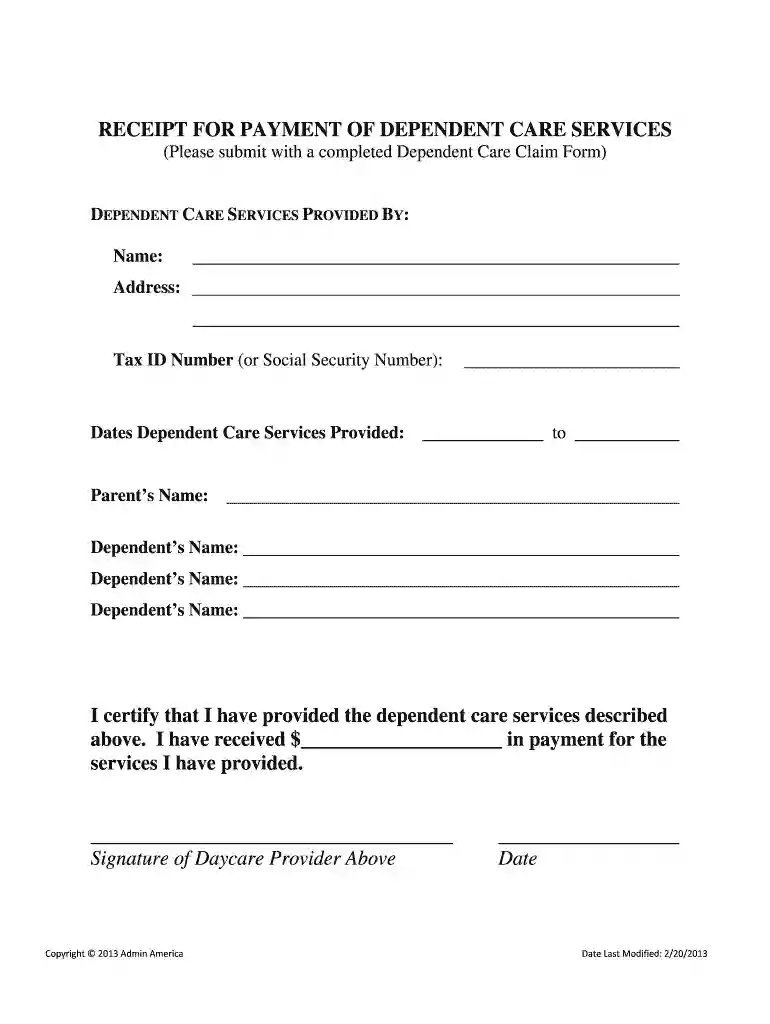
The FSA (Flexible Spending Account) receipt template serves as an essential document for individuals seeking reimbursement for qualified medical expenses, childcare services, and other eligible costs under the FSA program. The template ensures that all necessary information is captured for efficient processing and compliance with IRS regulations.
A well-structured FSA receipt template includes several vital components:
Provider Information:
Service Details:
Payment Confirmation:
These elements collectively ensure that the FSA receipt meets legal and reimbursement requirements, providing clarity and proof for both the individual and the payer.
To effectively utilize the FSA receipt template, follow these steps:
Gather Necessary Information:
Fill Out the Template:
Review for Accuracy:
Save and Distribute:
Using the template correctly ensures compliance and facilitates timely reimbursement.
FSA receipt templates can be employed in various scenarios, including:
Dependent Care Reimbursement: For parents utilizing childcare services, the receipt template helps claim costs associated with daycare facilities or nanny services.
Medical Expenses: Individuals can submit receipts for out-of-pocket medical spending, such as co-pays for doctor visits or prescription medications.
Comprehensive Tracking: The template also assists those wanting to track eligible expenses systematically, ensuring they utilize the full benefits of their FSA accounts.
It's critical to align the FSA receipt with IRS guidelines to ensure legitimacy during audits. Important considerations include:
Eligible Expenses: Only claim amounts for services that qualify under the FSA, as outlined by the IRS.
Record-Keeping: Maintain copies of all receipts submitted for at least three years. This is essential for substantiation if the IRS requests documentation.
Proper Formatting: Ensure the receipt is neatly organized, clearly legible, and inclusive of all required elements, as neglecting any of these can result in rejected claims.
Different FSA receipt templates may cater to specific needs or services:
FSA Childcare Receipt Template: Specifically designed for daycare and childcare expenses, capturing additional details such as the names of dependents.
Medical FSA Receipt Template: Tailored for medical expenses, emphasizing the nature of healthcare services and related providers.
Dependent Care FSA Nanny Receipt Template: Customized to outline nanny services, including hourly rates and care provided for children.
Using the appropriate template ensures that the information provided aligns well with service specifics, maximizing the chances of reimbursement approval.
To optimize reimbursement processes when using FSA receipts:
Use an FSA Receipt Generator: Automated tools can simplify the creation of FSA receipts, ensuring all required fields are completed accurately.
Organize Documents: Keep all receipts in a dedicated folder, categorized by type (medical, childcare, etc.) to make retrieval easier during submission.
Stay Updated on Rules: Regularly check for any changes in IRS rules regarding eligible expenses to avoid submitting claims for ineligible items.
By incorporating these practices, individuals can effectively manage their FSA accounts and minimize any potential delays in reimbursement.
At DocHub, your data security is our priority. We follow HIPAA, SOC2, GDPR, and other standards, so you can work on your documents with confidence.
Day Care FSA Receipt for Services. If your dependent care provider does not offer formal receipts, you may use this form to document services providedRead more
May 2, 2017 Health flexible spending arrangement (FSA). For plan year 2017, a cafeteria plan may not allow an employee to request salary reductionRead more


