Quitclaim Deed from Corporation to Corporation - Oregon 2026

Get Form
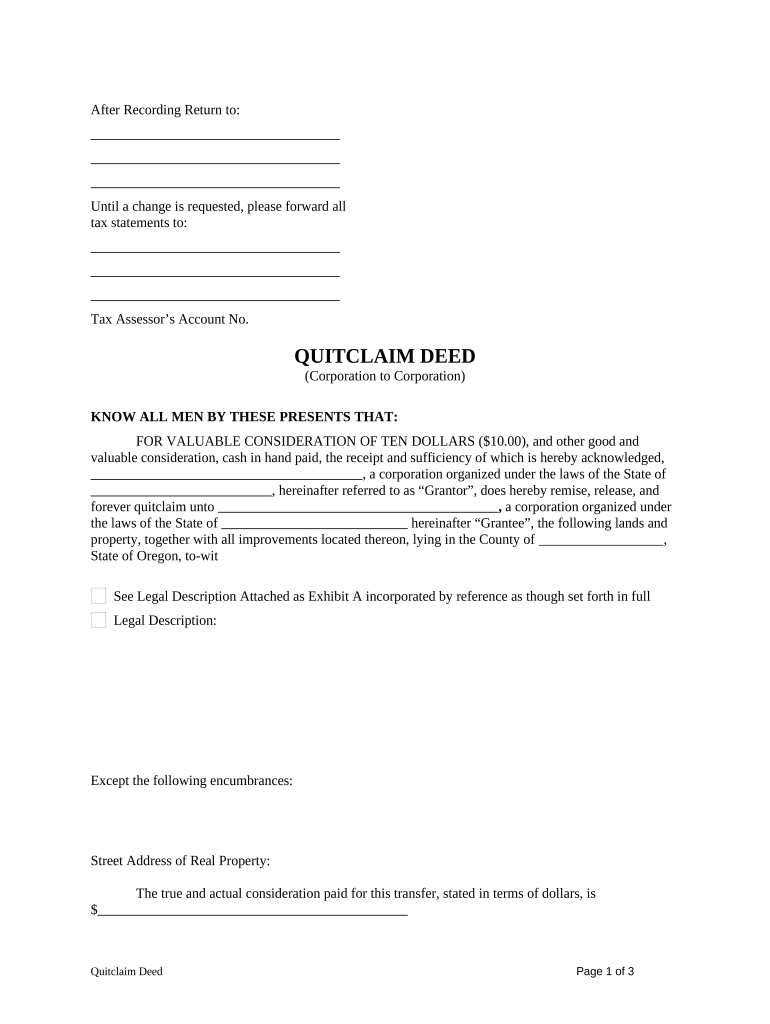
Quitclaim Deed from Corporation to Corporation - Oregon Preview on Page 1

Here's how it works

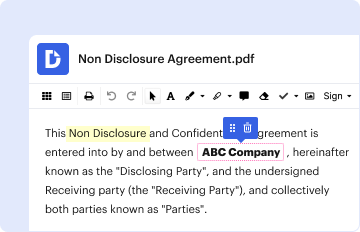
01. Edit your form online
Type text, add images, blackout confidential details, add comments, highlights and more.
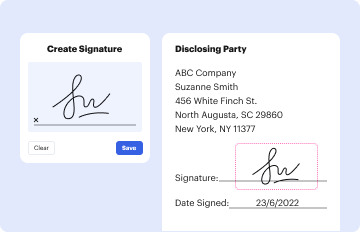
02. Sign it in a few clicks
Draw your signature, type it, upload its image, or use your mobile device as a signature pad.
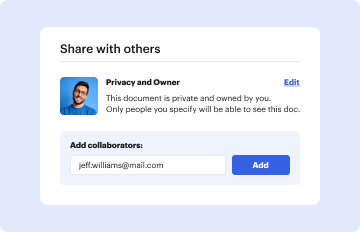
03. Share your form with others
Send it via email, link, or fax. You can also download it, export it or print it out.

How to use or fill out Quitclaim Deed from Corporation to Corporation - Oregon with our platform

Form edit decoration
9.5
Ease of Setup
DocHub User Ratings on G2
9.0
Ease of Use
DocHub User Ratings on G2
  1. Click ‘Get Form’ to open the Quitclaim Deed in the editor.
  2. Begin by entering the Grantor's corporation name and state of incorporation in the designated fields. This identifies the entity transferring property rights.
  3. Next, input the Grantee's corporation name and state of incorporation. This is the entity receiving the property.
  4. Fill in the legal description of the property being transferred, referencing Exhibit A if necessary. Ensure accuracy to avoid future disputes.
  5. Indicate any encumbrances on the property, if applicable, and specify any exceptions such as oil, gas, or mineral rights reserved by the Grantor.
  6. Complete the section regarding tax proration for the current tax year, selecting how taxes will be handled between Grantor and Grantee.
  7. Finally, have an authorized representative sign and date the document. Include their title and ensure notarization is completed for legal validity.

Start using our platform today to streamline your Quitclaim Deed process for free!

be ready to get more

Complete this form in 5 minutes or less

Get form

Got questions?

We have answers to the most popular questions from our customers. If you can't find an answer to your question, please contact us.
Contact us
0:09 1:54 A quick claim deed is a legal document that transfers ownership interest in real estate. It does notMoreA quick claim deed is a legal document that transfers ownership interest in real estate. It does not guarantee that the branch. Valit. Companies often handle real estate transactions.
The following is an overview of the steps to filing a quitclaim deed. Obtain a quitclaim deed form. Your very first step is obtaining your quitclaim deed. Fill out the quitclaim deed form. Get the quitclaim deed docHubd. Take the quitclaim deed to the County Recorders Office. File the appropriate paperwork.
Failing to Verify the Titles Condition. One of the biggest mistakes people make when using a quitclaim deed is assuming that the propertys title is free and clear. A quitclaim deed transfers ownership, but it does not guarantee that the property is free from encumbrances such as liens, judgments, or unpaid taxes.
The quitclaim deed simply transfers any interest they may have to the other party. Because of the lack of title guarantees, quitclaim deeds are most often used to transfer property between two parties who know and trust each other, such as family members.
However, this approach has certain risks, so its not always the best option. Using a quitclaim deed might create tax issues or result in a loss of control of the property after the transfer. Additionally, the property could still require probate if you dont handle the transfer correctly.

Security and compliance

At DocHub, your data security is our priority. We follow HIPAA, SOC2, GDPR, and other standards, so you can work on your documents with confidence.

Learn more
ccpa2
pci-dss
gdpr-compliance
hipaa
soc-compliance

People also ask

The deed for transferring property ownership must be signed by an authorized officer of the corporation. This ensures that the transaction complies with corporate governance and legal standards.
Under Massachusetts law, if a grantor conveys ownership with quitclaim covenants, it must convey title that is free from all encumbrances made by the grantor. It must also defend against any claims to title that arose during its ownership, subject to any exceptions it makes.

Related links