






Definition and Meaning of Breach Lease
A "breach lease" refers to a violation of the lease agreement terms by any involved party, typically the tenant. This breach can involve situations such as non-payment of rent, violation of property rules, unauthorized use of the property, or subletting without approval. It serves as a legal framework to manage conflicts between landlords and tenants and enforces the agreed upon lease terms. If a breach occurs, the landlord may issue a formal notice to the tenant, sometimes requiring corrective action within a specific timeframe.
Types of Lease Breaches
- Non-payment of rent: Failure to pay rent on time.
- Unauthorized modifications: Making changes to the property without permission.
- Violation of pet policy: Housing pets in a pet-free property.
- Noise complaints: Frequently disturbing the peace in a multi-tenant building.
- Illegal activities: Engaging in unlawful behavior on the premises.
How to Use the Breach Lease Notice
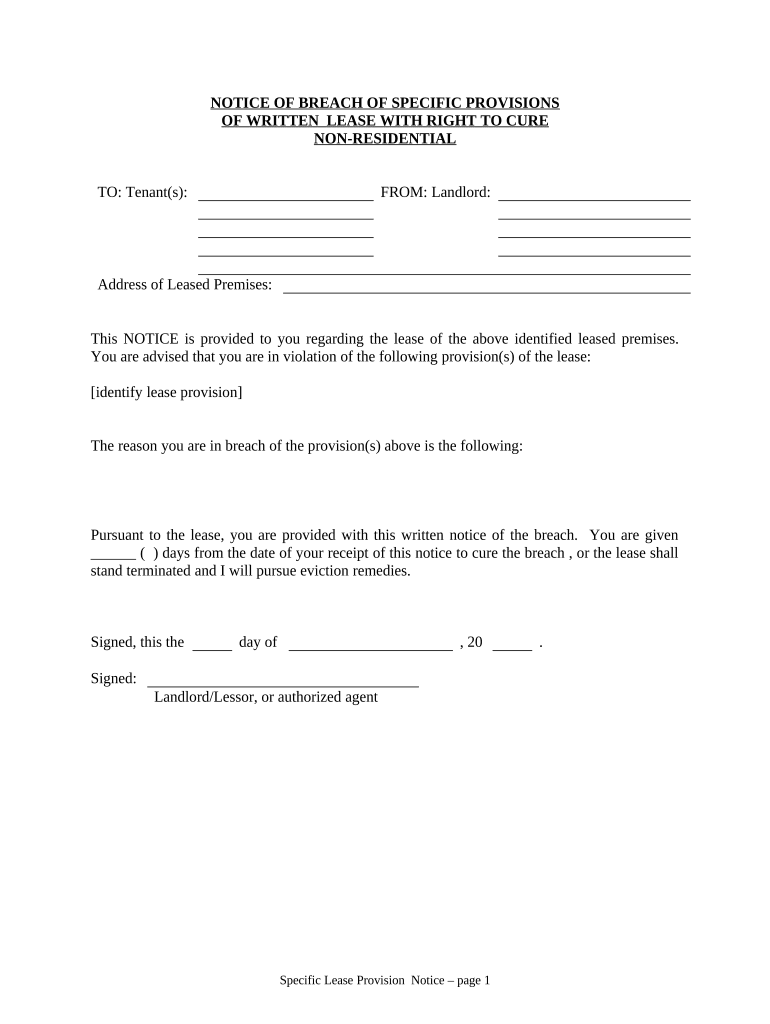
The breach lease notice is a formal communication tool used by landlords to inform tenants of any lease violations. To utilize this tool effectively, landlords follow specific steps to ensure legal compliance and proper notice delivery.
- Identify the Breach: Clearly state the lease terms violated by the tenant.
- Draft the Notice: Highlight the breach and possible repercussions if not rectified.
- Provide a Correction Period: Offer a reasonable timeframe for the tenant to address the issue.
- Include Proof of Delivery: Confirm notice delivery through mail receipts or personal delivery.
Best Practices for Drafting
- Use clear and concise language to avoid ambiguity.
- Reference specific lease terms violated.
- Ensure the notice aligns with state-specific tenant laws.
Steps to Complete the Breach Lease
Completing a breach lease notice involves several key steps to ensure all essential information is conveyed accurately.
- Review Lease Agreement: Confirm which terms have been violated.
- Gather Evidence: Collect documentation or testimonies supporting the breach.
- Draft Notice: Use a standard template to ensure all legal requirements are met.
- Outline Consequences: Clearly state what will occur if the breach is not remedied.
- Seek Legal Advice: Consult an attorney if unsure about any legal ramifications.
- Deliver Notice: Use certified mail or hand delivery to ensure receipt.
Elements to Include
- Date of notice delivery
- Description of the breach
- Cure period for rectifying the breach
- Contact information for further communication
Key Elements of the Breach Lease
A breach lease notice must comprise certain elements to validate its enforceability:
- Details of the Parties Involved: Names and addresses of tenant and landlord.
- Lease Provisions: Specific clauses and conditions that have been breached.
- Timeframe for Compliance: Deadline for the tenant to remedy the breach.
- Consequences of Non-Compliance: Potential for eviction or legal action.
Examples of Crucial Provisions
- Rent payment schedule and amounts
- Maintenance responsibilities
- Security deposit terms
- Policy on subleasing and guest allowances
Legal Use of the Breach Lease
The legal appropriateness of a breach lease revolves around ensuring adherence to state and federal laws governing rental agreements. Understanding these components is vital for effective enforcement.
Tenant’s Legal Protections
- Right to Cure: Opportunity to correct the breach before facing eviction.
- Right to Hearing: Legal proceedings if disputes arise.
- Tenant Defenses: Potential defenses against unlawful or unjust claims.
Landlord Obligations
- Provide Clear Notice: Detailed description of breach and rectification steps.
- Ensure Fair Practices: Avoid retaliatory actions which are illegal in many jurisdictions.
State-Specific Rules for the Breach Lease
Different states have unique regulations when it comes to enforcing lease breaches. Understanding these state-specific guidelines is crucial for both landlords and tenants.
Examples of State Variations
- California: Requires a three-day notice to pay rent or vacate.
- New York: May mandate additional notice periods depending on the lease type.
- Texas: Generally strict on tenant rights in breach scenarios.
Explore the relevant tenant and landlord rights by reviewing state housing laws applicable where the rental property is located.
Penalties for Non-Compliance
Failing to comply with lease terms can result in significant legal and financial consequences for tenants. These penalties vary based on the nature and location of the breach.
- Eviction: Possible removal from the property.
- Financial Penalties: Additional fees or loss of deposits.
- Damage to Credit Score: Unpaid rent can affect credit standing.
Landlord Consequences
- Legal Fees: Costs associated with legal proceedings.
- Property Damages: Resulting from premature tenant departure or conflict escalation.
Examples of Using the Breach Lease
Examining real-world scenarios provides insights into how breach lease notices are implemented and enforced.
Scenario 1: Non-Payment of Rent
A tenant repeatedly misses rent deadlines, prompting the landlord to issue a breach notice, offering a seven-day period as a remedy window.
Scenario 2: Unauthorized Alterations
A tenant installs unauthorized walls in an apartment, leading to a lease violation notice, demanding restoration to original condition within a stipulation time frame.
By understanding these processes and components, landlords and tenants can navigate lease agreements with clarity and confidence.