






Definition and Meaning
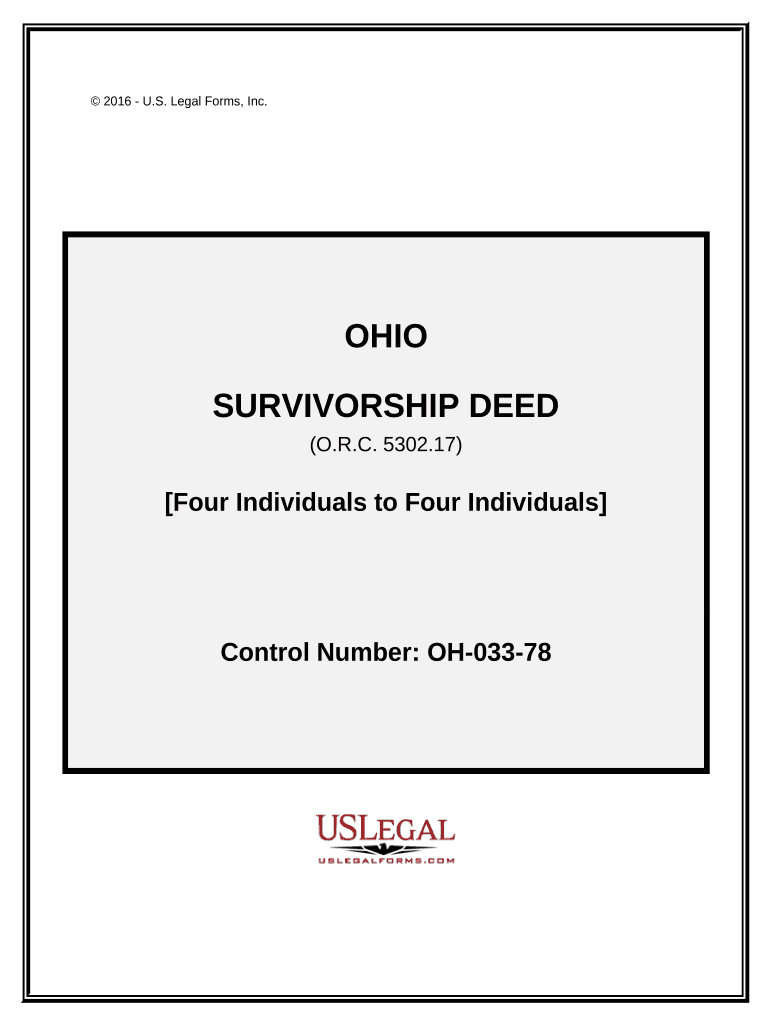
The Ohio Survivorship Deed is a legal document used to transfer real property ownership among multiple individuals in Ohio. It includes provisions for survivorship rights, meaning if one owner passes away, their interest is automatically transferred to the surviving owners. This deed is primarily utilized to simplify the ownership transition process and ensure clarity and security for joint property holders.
Key Features
- Joint Ownership: Establishes co-ownership of property, typically among family members or business partners.
- Survivorship Rights: Ensures seamless transfer of ownership rights to surviving owners without necessitating probate.
- Legal Recognition: Recognized under Ohio law as a valid and enforceable method of property transfer upon death.
How to Use the Ohio Survivorship Deed
To effectively utilize the Ohio Survivorship Deed, individuals must follow a structured process to ensure legal compliance. It is necessary to understand the purpose and legal implications of this deed within the context of property ownership.
Practical Application
- Execution of Deed: All parties involved must appropriately fill and sign the deed.
- Notarization: A notary public is required to witness and notarize the signatures of all parties.
- Recording: The executed deed must be recorded with the county recorder’s office in the county where the property is located.
- Retaining Copies: Keep copies of the recorded deed for personal records and legal protection.
Steps to Complete the Ohio Survivorship Deed
Completing the Ohio Survivorship Deed involves several critical steps to ensure all legal protocols are met. Below is a detailed step-by-step guide to executing this form.
Completion Process
- Gather Required Information: Collect all necessary details, including names and addresses of co-owners, property description, and tax parcel number.
- Draft the Deed: Accurately fill out the deed form, specifying the type of ownership (Joint Tenants with Right of Survivorship).
- Signatures: Each co-owner must sign the deed in the presence of a notary public.
- Notarization: Ensure the deed is properly notarized with the notary’s stamp and signature.
- Record the Deed: Submit the completed and notarized deed to the appropriate county recorder’s office for official recording.
Important Terms Related to Ohio Survivorship
Understanding the terminology associated with the Ohio Survivorship Deed is crucial for proper comprehension and application of the deed.
Key Terms
- Joint Tenants with Right of Survivorship: A form of co-ownership where, upon the death of one owner, the remaining owners automatically inherit the deceased owner's interest.
- Grantor: The individual(s) transferring property rights to the co-owners.
- Grantee: The individual(s) receiving ownership interest under the deed.
- Notary Public: A state-authorized official who verifies signatures and aids in preventing fraud.
Legal Use of the Ohio Survivorship Deed
This deed is specifically designed for the legal transfer of property among multiple parties in Ohio. Its use is governed by state laws and requires adherence to specific legal procedures.
Compliance and Legal Context
- Adherence to State Laws: The deed must comply with Ohio state statutes governing property transfers.
- No Probate Requirement: The deed bypasses the probate process, facilitating a smoother transfer upon death.
- Legal Advice Recommended: Consulting a legal professional is advised to ensure compliance and proper execution.
Who Typically Uses the Ohio Survivorship Deed
Various individuals and entities may choose to use the Ohio Survivorship Deed for its benefits and features.


User Profiles
- Family Members: Couples or family members owning a jointly-held property.
- Business Partners: Business associates with shared investment properties.
- Estate Planners: Individuals implementing strategies to avoid probate and simplify asset transfers.
Why You Should Consider the Ohio Survivorship Deed
The Ohio Survivorship Deed offers numerous advantages, making it an appealing choice for joint property owners.
Benefits and Considerations
- Simplified Transfer Process: Streamlines ownership transition, eliminating probate and related complexities.
- Cost-Effective: Reduces costs associated with probate and legal disputes.
- Peace of Mind: Provides assurance that property interests will be managed according to owners' intentions.
State-Specific Rules for Ohio Survivorship
Ohio has particular legal requirements and rules that govern the use and execution of survivorship deeds.
Compliance Guidelines
- State-Specific Forms: Forms and language must align with Ohio legal standards.
- Recording Requirements: Must be recorded with Ohio's county recorder's office where the property is located.
- Legal Precedents: Awareness of any state-specific legal precedents that might influence the deed's application is critical.
Understanding these elements is essential for successfully navigating the nuances of the Ohio Survivorship Deed.