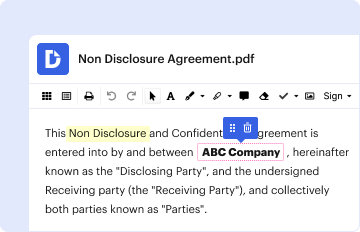
Type text, add images, blackout confidential details, add comments, highlights and more.
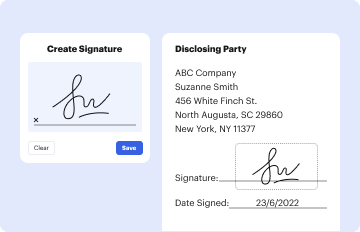
02. Sign it in a few clicks
Draw your signature, type it, upload its image, or use your mobile device as a signature pad.
03. Share your form with others
Send quit claim deed ohio via email, link, or fax. You can also download it, export it or print it out.
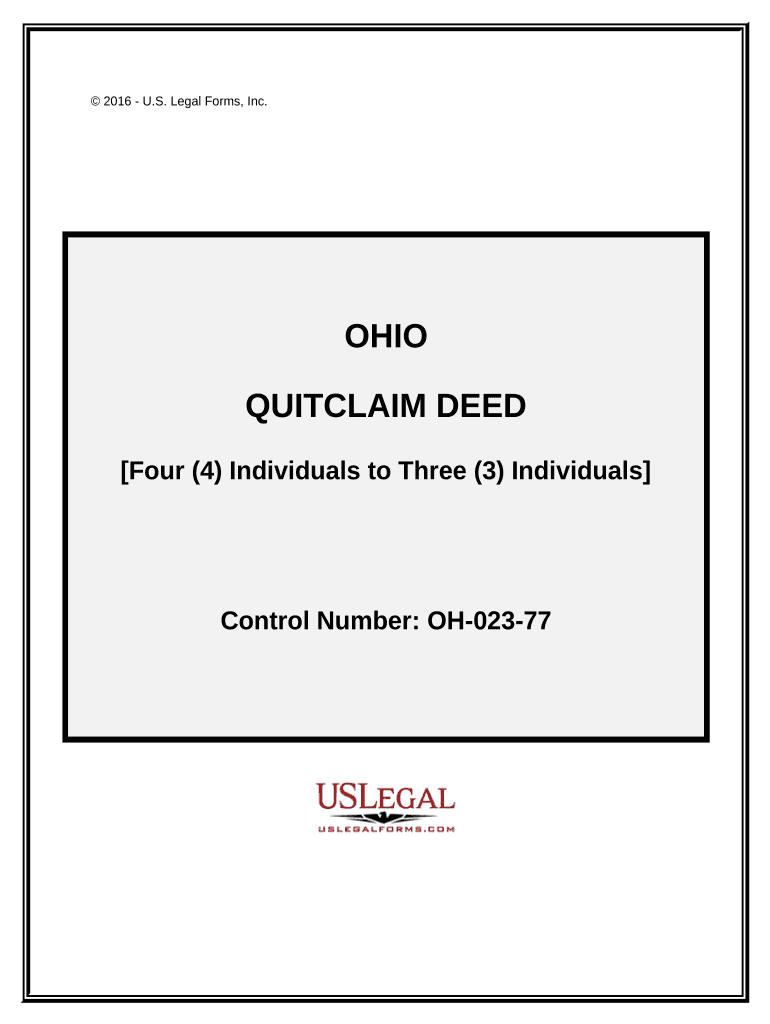
How to use or fill out Quitclaim Deed - Four Individuals to Three Individuals - Ohio with our platform
Ease of Setup
DocHub User Ratings on G2
Ease of Use
DocHub User Ratings on G2
Click ‘Get Form’ to open the Quitclaim Deed in the editor.
Begin by entering the names of the four Grantors in the designated fields. Ensure that each name is spelled correctly and matches legal documents.
Next, input the names of the three Grantees. Specify how they will hold the property by selecting either 'Tenants in Common' or 'Joint Tenants with Right of Survivorship' in the appropriate section.
Fill in the legal description of the property as outlined in Exhibit A. This includes details such as Auditor’s Parcel Number and prior instrument references.
Complete all signature fields for each Grantor and their spouses, if applicable. Make sure to include printed names beneath signatures for clarity.
Finally, ensure that all necessary notary sections are filled out correctly before saving your document.
Start using our platform today to easily complete your Quitclaim Deed online for free!
Fill out Quitclaim Deed - Four Individuals to Three Individuals - Ohio online It's free
Ohio quit claim deed requirementsDoes a quitclaim deed give you ownershipFranklin county quit claim deed formCuyahoga County Quit Claim Deed form PDFWhat is the purpose of a quit claim deedRepercussions of a quit claim deedQuit claim deed cuyahoga county ohioHow long does a quitclaim deed give you ownership
Security and compliance
At DocHub, your data security is our priority. We follow HIPAA, SOC2, GDPR, and other standards, so you can work on your documents with confidence.
Different Deeds Mean Different Things | Farm Office
Sep 28, 2023 In this article, we will explore four common types of deeds in Ohio: General Warranty Deed, Limited Warranty Deed, Quitclaim Deed, and Fiduciary Deed.Read more
Section 5302.11 | Quit-claim deed form. Effective: February 1, 2002. Latest Legislation: House Bill 470 - 124th General Assembly. PDF: Download AuthenticatedRead more
Cookie consent notice
This site uses cookies to enhance site navigation and personalize your experience.
By using this site you agree to our use of cookies as described in our Privacy Notice.
You can modify your selections by visiting our Cookie and Advertising Notice.