Type text, add images, blackout confidential details, add comments, highlights and more.

02. Sign it in a few clicks
Draw your signature, type it, upload its image, or use your mobile device as a signature pad.

03. Share your form with others
Send it via email, link, or fax. You can also download it, export it or print it out.

How to use or fill out Nevada Bankruptcy with our platform
Ease of Setup
DocHub User Ratings on G2
Ease of Use
DocHub User Ratings on G2
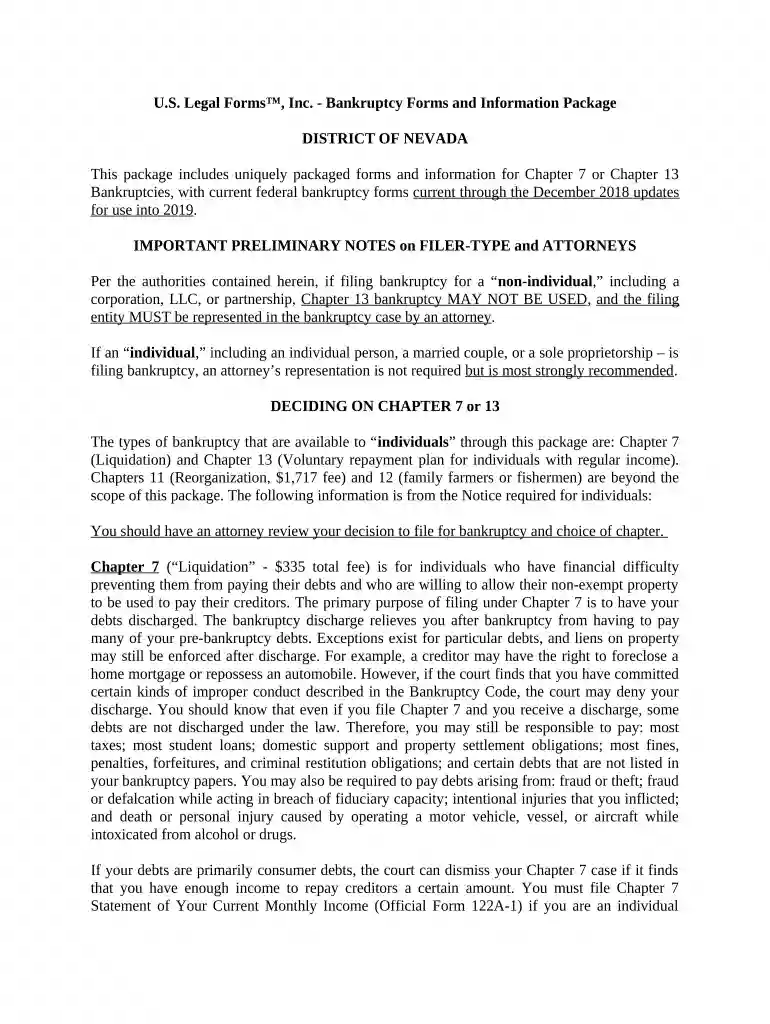
Click ‘Get Form’ to open the Nevada Bankruptcy form in the editor.
Begin by selecting the appropriate chapter for your bankruptcy: Chapter 7 for liquidation or Chapter 13 for a repayment plan. Ensure you understand the implications of each option.
Fill out your personal information in the designated fields, including your name, address, and contact details. Accuracy is crucial here.
Complete the financial sections by detailing your income, expenses, and debts. Use our platform's tools to easily input figures and ensure calculations are correct.
If filing under Chapter 7, complete the Statement of Your Current Monthly Income (Official Form 122A-1) to determine eligibility based on median income.
For Chapter 13 filers, draft a repayment plan outlining how you intend to pay back creditors over time. This plan must be submitted for court approval.
Review all entries carefully before submitting. Utilize our platform’s review features to catch any errors or omissions.
Start using our platform today to simplify your Nevada Bankruptcy filing process!
Chapter 13 Eligibility Any individual, even if self-employed or operating an unincorporated business, is eligible for chapter 13 relief as long as the individuals combined total secured and unsecured debts are less than $2,750,000 as of the date of filing for bankruptcy relief. 11 U.S.C. 109(e).
What is the income limit for Chapter 7 bankruptcy in Nevada?
If your total monthly income over the course of the next 60 months is less than $7,475 then you pass the means test and you may file a Chapter 7 bankruptcy. If it is over $12,475 then you fail the means test and dont have the option of filing Chapter 7.
What cannot be forgiven when filing bankruptcy?
Types of debt that cannot be discharged in bankruptcy include alimony, child support, and certain unpaid taxes. Other types of debt that cannot be alleviated in bankruptcy include debts for willful and malicious injury to another person or property.
What is the bankruptcy exemption in Nevada?
If you file for chapter 7 bankruptcy in Nevada, state law permits you to keep certain property (exemptions) such as up to $605,000 of equity in your home, up to $15,000 of equity in your car, and up to $1 million in certain retirement plans.
What is the 3 year rule for bankruptcy?
Determine Income Tax Dischargeability: 1. 3-Year Rule The taxes were due at least three years before the bankruptcy filing including valid extensions. 2. 2-Year Rule The tax return was filed at least 2 years before the filing.
Related Searches
Nevada Bankruptcy ECFNevada Chapter 7 income limitsChapter 7 bankruptcy NevadaChapter 13 bankruptcy NevadaNevada bankruptcy exemptionsNevada bankruptcy means testChapter 13 bankruptcy Las VegasNevada bankruptcy court dial in
Security and compliance
At DocHub, your data security is our priority. We follow HIPAA, SOC2, GDPR, and other standards, so you can work on your documents with confidence.
As a result, concealing assets, making fraudulent transfers within one year of filing, destroying financial records or lying on bankruptcy forms will typically disqualify your case and could potentially result in criminal charges.
Related links
Nevada Bankruptcy Court
The purpose of this site is to provide information about locating and filing cases in the federal courts.
Cookie consent notice
This site uses cookies to enhance site navigation and personalize your experience.
By using this site you agree to our use of cookies as described in our Privacy Notice.
You can modify your selections by visiting our Cookie and Advertising Notice.