Definition and Meaning of New Jersey Divorce
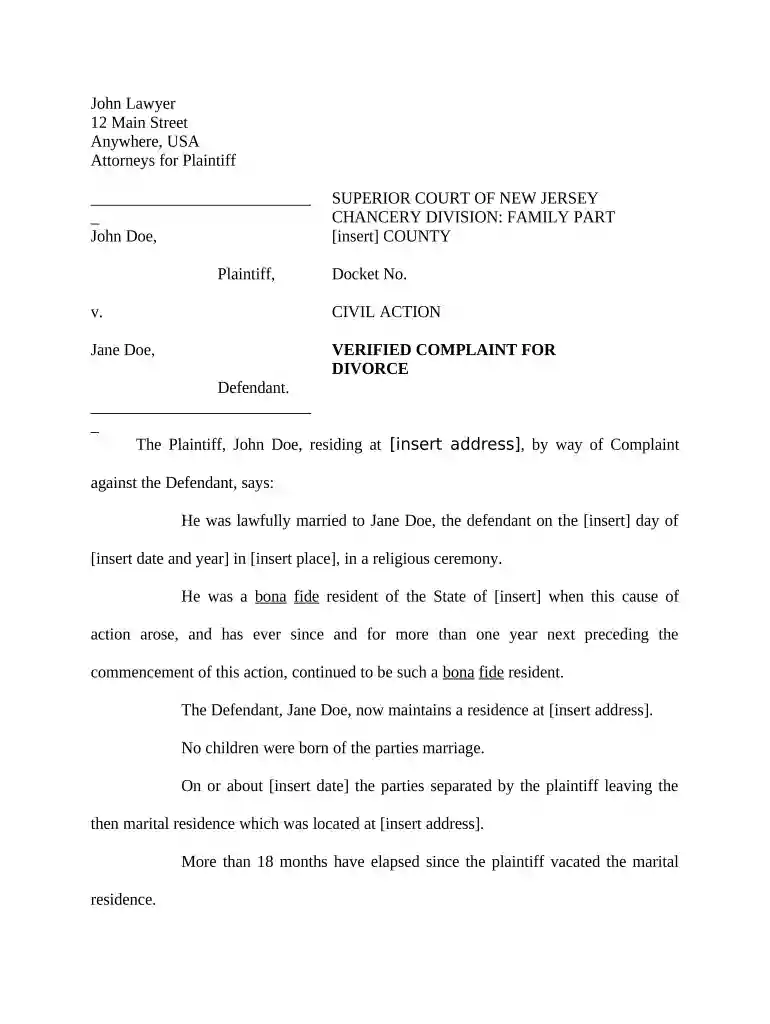
A New Jersey divorce is a legal process initiated by one spouse to dissolve the marital union according to the laws of the state. The process involves filing a complaint in the Superior Court of New Jersey, specifically within the Chancery Division's Family Part. This legal separation allows for the equitable distribution of marital assets, determination of child custody, and arrangements for spousal support if necessary.
Key aspects of understanding a New Jersey divorce include:
- Grounds for Divorce: New Jersey allows for both fault-based and no-fault divorces. No-fault divorce can be obtained based on irreconcilable differences or separation for 18 months.
- Marital Assets: Marital property is typically divided equitably, meaning fair but not necessarily equal. This requires an understanding of what constitutes marital versus separate property.
- Legal Rights: Both parties have rights defined by state law, including rights to property, alimony, and custody provisions.
When navigating the New Jersey divorce process, it is essential to understand these foundational elements to ensure an informed approach to the legal proceedings.
How to Obtain a New Jersey Divorce
Obtaining a divorce in New Jersey requires following specific legal steps within the court system. The process can be complex, but breaking it down into manageable actions can help clarify what is necessary.
- Determine Eligibility: One spouse must have resided in New Jersey for at least one year before filing for divorce, with the exception of cases involving adultery.
- Complete Required Forms: The primary document is the Complaint for Divorce, which must be completed and includes necessary details about the marriage, separation, and requests for relief.
- File Your Divorce Complaint: Submit the completed complaint and necessary attachments to the Superior Court in your county. You will also need to pay the associated filing fees unless a fee waiver is granted.
- Serve Your Spouse: After filing, your spouse must be officially notified of the divorce proceedings through a process called service of process. This can be done via certified mail or by a process server.
- Await a Response: Your spouse has a set period to respond to the complaint. If they do not respond, you can proceed with a default judgment.
- Engage in Discovery: If contested, both parties may engage in a process called discovery to share evidence and financial information relevant to the divorce.
Following these steps properly is crucial to advancing the divorce proceedings in accordance with New Jersey law.
Important Terms Related to New Jersey Divorce
Understanding specific terminology associated with New Jersey divorce can significantly improve the clarity of the process. Here are some essential terms:
- Equitable Distribution: The division of marital assets based on fairness, which may not always mean a 50/50 split.
- Alimony: Financial support paid to one spouse by the other during or after a divorce, intended to help the lower-earning spouse maintain a standard of living similar to what was experienced during the marriage.
- Child Custody: A legal term that refers to the rights and responsibilities regarding a child's upbringing, including physical and legal custody arrangements.
- Mediation: A process involving a neutral third party to help spouses reach an agreement regarding the terms of the divorce without going to trial.
- No-Fault Divorce: A type of divorce where neither party is required to prove wrongdoing by the other; grounds typically include irreconcilable differences.
Familiarity with these terms can enhance communication with legal professionals and better navigate the divorce process.
Steps to Complete the New Jersey Divorce
Completing a New Jersey divorce involves a series of organized steps to ensure all legal requirements are satisfied. The process can vary based on whether the divorce is contested or uncontested.
Uncontested Divorce Steps
- Mutual Agreement: Both parties agree to the divorce terms, including asset division, custody, and support.
- Complete the Necessary Forms: Use the required nj divorce forms, such as the Complaint for Divorce, Marital Settlement Agreement, and Certification of Insurance.
- File with the Court: Submit all signed forms along with the filing fee to the Superior Court in the applicable county.
- Obtain a Final Judgment: Once the judge reviews the documents and is satisfied with the presented agreement, they will issue a final judgment of divorce.
Contested Divorce Steps
- File the Complaint: The initiating spouse files the Complaint for Divorce and officially serves the other party.
- Response: The defendant must file an answer to the complaint, possibly including counterclaims.
- Discovery Phase: Both parties exchange necessary information through depositions, document requests, and interrogatories.
- Pre-Trial Conference: A meeting is scheduled to discuss the case and explore potential resolutions.
- Trial: If no settlement is reached, the case proceeds to trial where each party presents evidence supporting their stance.
Completing the divorce involves attentiveness to detail and adherence to timelines set by the court.
Required Documents for New Jersey Divorce
Successful navigation of the New Jersey divorce process necessitates specific documentation to support the claims and requests filed with the court. Required documents often include:
- Complaint for Divorce: The initial legal document outlining the grounds for divorce and specific requests.
- Case Information Statement: A detailed financial disclosure including income, expenses, assets, and liabilities.
- Marital Settlement Agreement: If applicable, a documented agreement reached between parties regarding asset division, custody, and other-related matters.
- Certification of Insurance Coverage: A certification regarding current insurance policies to ensure the dependent’s coverage post-divorce.
Ensuring accurate and thorough documentation is vital for a smooth divorce process in New Jersey.
Form Submission Methods in New Jersey
Submitting divorce forms in New Jersey can be accomplished through various means, ensuring flexibility and accessibility for individuals involved in the process. Here are the options available:
- Online Submission: Many counties in New Jersey permit electronic filing through the Judiciary’s online system. This method provides convenience and transparency, allowing parties to track submitted documents.
- By Mail: Divorce forms may be completed and mailed to the appropriate county courthouse. Ensure to send all required documents through certified mail for proof of delivery.
- In-Person Filing: You can visit the county courthouse to file the forms directly. This option allows for immediate confirmation of submission and an opportunity to ask any questions about the process.
Each of these submission methods is designed to accommodate the needs of individuals seeking to initiate or progress their divorce case.