






Definition & Meaning of the Agreement for Payment of Unpaid Rent - New Jersey
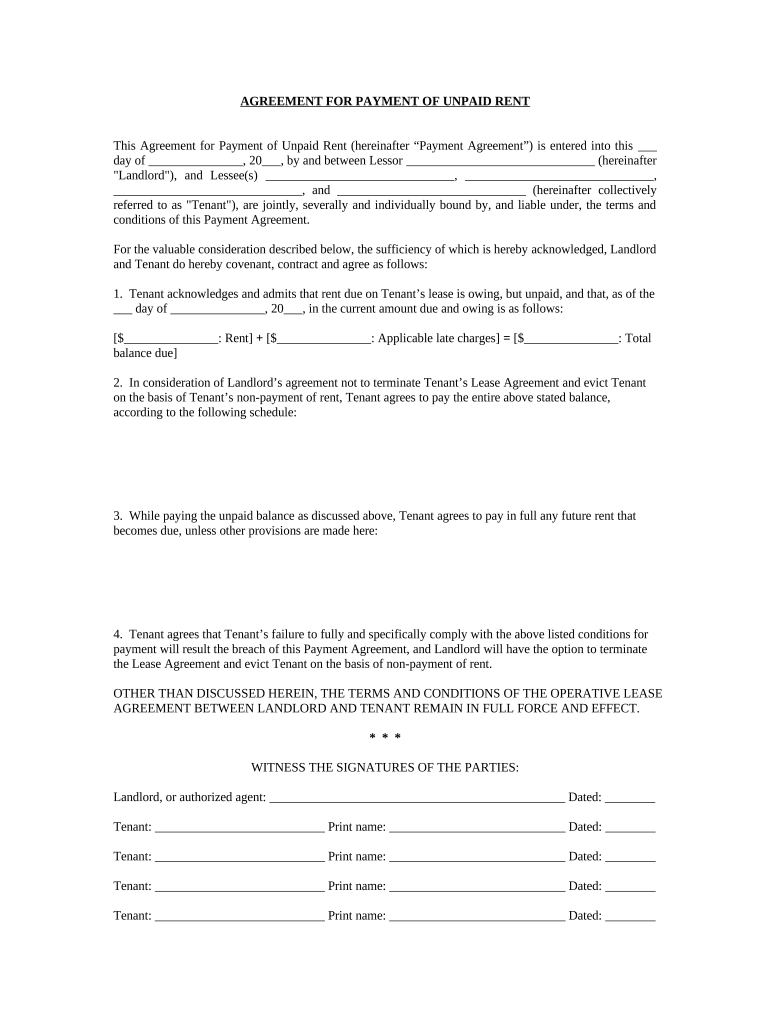
The Agreement for Payment of Unpaid Rent in New Jersey serves as a formal contract between landlords and tenants acknowledging the existence of unpaid rent. It is designed to prevent eviction by outlining the total rent balance due and establishing a mutually agreed-upon payment schedule. This document ensures that both parties have a clear understanding of their obligations and the ramifications of failing to comply with the agreement terms.
This agreement is particularly important in the context of New Jersey’s landlord-tenant laws, which govern rental agreements and eviction processes. By putting the terms of repayment in writing, the agreement acts as both a record of the debt and a framework to manage and resolve the issue. If tenants adhere to the payment schedule established in this agreement, they can avoid eviction and maintain their tenancy.
How to Use the Agreement for Payment of Unpaid Rent - New Jersey
Using the Agreement for Payment of Unpaid Rent involves several key steps. Initially, both the landlord and tenant must acknowledge the unpaid balance and agree to the repayment terms. The document should include the following:
- Identification of Parties: Clearly state the names and addresses of all parties involved.
- Amount of Unpaid Rent: Specify the total unpaid rent amount to avoid misunderstandings.
- Payment Schedule: Establish a timeline for payments, including specific due dates and amounts.
Once both parties agree to the terms, the document must be signed and dated. It is advisable for both landlord and tenant to keep a copy of the signed agreement for their records. The agreement will serve as a reference in case disputes arise in the future.
Steps to Complete the Agreement for Payment of Unpaid Rent - New Jersey
Completing the Agreement for Payment of Unpaid Rent entails a systematic approach to ensure all necessary details are covered:
-
Gather Necessary Information:
- Obtain the rental property’s address, tenant details, and the amount of unpaid rent.
-
Draft the Agreement:
- Use a template or create a customized document that includes key elements such as:
- Identification of parties
- Total unpaid rent
- Payment schedule (amounts and due dates)
- Use a template or create a customized document that includes key elements such as:
-
Review Legal Obligations:
- Familiarize yourself with New Jersey’s landlord-tenant laws to ensure compliance and that the terms are enforceable.
-
Negotiate Terms:
- Discuss the agreement with the tenant to ensure that they are comfortable with the terms set forth.
-
Obtain Signatures:
- Once both parties agree, have the landlord and tenant sign the document. Always date the signatures for clarity.
-
Distribute Copies:
- Ensure that both parties retain a signed copy for their records.
By following these steps, landlords and tenants can create a clear and enforceable agreement that outlines the terms for repaying overdue rent.
Important Terms Related to the Agreement for Payment of Unpaid Rent - New Jersey
Understanding key terms is crucial when dealing with the Agreement for Payment of Unpaid Rent. Common terms include:
- Unpaid Rent: The amount of rent due that has not been paid by the tenant.
- Eviction: The legal process through which a landlord removes a tenant from a rental property.
- Breach of Contract: A situation where one party fails to fulfill their obligations as laid out in the agreement, potentially leading to legal action.
- Payment Schedule: The specific timeline and amounts the tenant agrees to pay to settle unpaid rent.
- Default: The failure to adhere to the payment schedule, which may allow the landlord to pursue eviction.
Comprehending these terms helps both landlords and tenants navigate their rights and responsibilities when dealing with unpaid rent.
Legal Use of the Agreement for Payment of Unpaid Rent - New Jersey
The legal use of the Agreement for Payment of Unpaid Rent is significant in ensuring compliance with New Jersey’s landlord-tenant regulations. This agreement should be created with adherence to specific laws governing rental agreements, including:
-
Enforceability: The agreement must include clear terms that are understood and agreed upon by both parties. Compliance with state laws can enhance its enforceability.
-
Local Laws: Be knowledgeable about any local ordinances or additional regulations that may affect rental agreements in the specific municipality where the property is located.
-
ADA Compliance: Ensure that all language in the agreement is accessible and clear, considering any necessary accommodations for tenants with disabilities under the Americans with Disabilities Act (ADA).
-
Court Validity: A properly signed and dated agreement can serve as evidence in court proceedings, demonstrating that the tenant was aware of their obligations.
By adhering to legal requirements, both landlords and tenants can safeguard their interests while ensuring adherence to New Jersey's housing laws.
Examples of Using the Agreement for Payment of Unpaid Rent - New Jersey
Examples of using the Agreement for Payment of Unpaid Rent illustrate practical scenarios in which this document can serve both parties effectively:
-
Scenario One: A tenant has fallen behind on three months of rent due to job loss. The landlord and tenant agree to a payment plan whereby the tenant will pay a reduced amount each month for the next six months, allowing them time to recover financially while remaining in the property.
-
Scenario Two: A tenant communicating their financial difficulties enters into an agreement with their landlord to catch up on their unpaid rent over the next four months. The landlord agrees to postpone any eviction proceedings as long as the tenant adheres to the payment schedule outlined in the agreement.
-
Scenario Three: A landlord facing delays in rent payments documents the agreement, specifying that the tenant must pay $300 per month toward the total $900 unpaid rent. This formal acknowledgment protects the landlord’s interests and provides a clear record of the repayment obligations.
These real-life scenarios underscore the agreement's role in facilitating positive communication and resolution between landlords and tenants, ultimately helping to avoid eviction and promote housing stability.