Definition and Meaning of an NJ Judgment Divorce
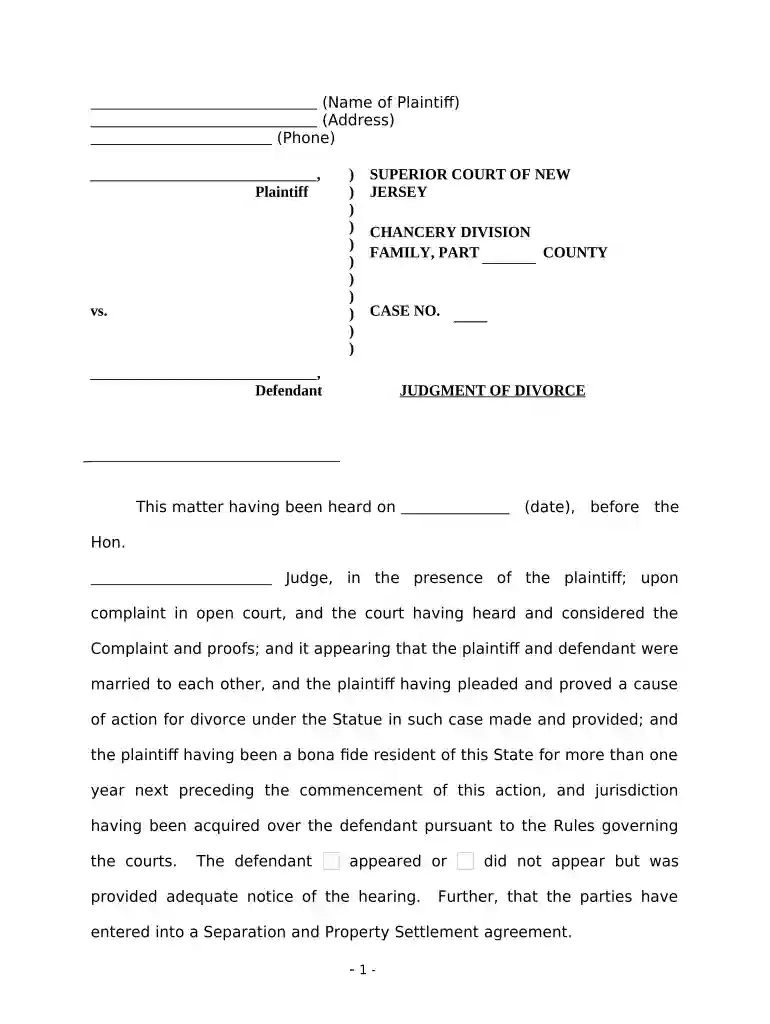
An NJ judgment divorce legally dissolves a marriage through a court decision in New Jersey. This judgment outlines the court's ruling, typically presented as a formal document known as a divorce decree. It encapsulates various aspects of the divorce, including the division of marital property, alimony, and child custody arrangements if applicable.
The judgment signifies the court's approval of the divorce based on the evidence presented, including the marriage duration, causes for divorce, and compliance with state laws regarding separation and property settlement agreements. It is crucial for both parties to understand the implications of this judgment on their legal rights and obligations moving forward.
Key Components of an NJ Judgment Divorce
- Judicial Findings: The court's reasoning for granting the divorce, often focusing on irreconcilable differences or fault grounds.
- Separation Agreements: Details on the separation agreement, detailing how marital assets and debts will be divided.
- Child Support and Custody: If children are involved, the judgment will outline support obligations and custody arrangements.
- Name Changes: The judgment may include provisions allowing a party to revert to their maiden name.
Steps to Obtain the NJ Judgment Divorce
Obtaining an NJ judgment divorce involves several steps, typically guided by specific court procedures within the state. Here are the primary actions required:
- Filing the Complaint: One spouse must file a complaint for divorce with the court, stating the grounds for the divorce.
- Serving the Other Party: The complaint must be served to the other spouse, who then has time to respond.
- Negotiation and Settlement: The parties may negotiate terms of the divorce, addressing issues such as child custody and asset division.
- Finalizing the Judgment: If the parties reach an agreement, they submit a settlement to the court. Otherwise, a trial may be necessary, after which the judge issues a judgment.
Additional Considerations
- Mediation: Couples may opt for mediation to resolve disputes amicably, potentially expediting the process.
- Legal Representation: While individuals can represent themselves, hiring an attorney is advised to navigate complex legal matters effectively.
Important Terms Related to NJ Judgment Divorce
Understanding specific terminology is crucial when dealing with an NJ judgment divorce. Here are some key terms:
- Divorce Decree: The formal document issued by the court that finalizes the divorce.
- Property Settlement Agreement: A document outlining how assets and liabilities will be distributed between spouses.
- Alimony: Financial support paid to one spouse by the other after separation.
- Custody: Legal determination regarding which parent has the right to make decisions about a child's upbringing.
Familiarity with these terms helps individuals comprehend their rights and responsibilities throughout the divorce process.
Required Documents for an NJ Judgment Divorce
To facilitate the divorce proceeding, parties must prepare and submit specific documents:
- Complaint for Divorce: The initial filing, outlining the reasons for divorce.
- Summons: A document notifying the other spouse of the divorce filings and requiring their response.
- Financial Disclosure Statement: A comprehensive summary of each party’s financial situation, including income, assets, and liabilities.
- Marital Settlement Agreement: If applicable, an agreement detailing the division of property, custody arrangements, and any support obligations.
These documents collectively provide the court with the necessary information to process the divorce.
Legal Use of the NJ Judgment Divorce
The NJ judgment divorce serves various legal purposes, including:
- Establishing finality in the marital relationship, allowing both parties to remarry without legal repercussions.
- Creating enforceable agreements regarding child support, alimony, and custody, which can be modified by the court in future hearings if circumstances change.
- Affecting property ownership and liabilities, providing a legal framework for how assets are divided.
The divorce judgment ensures that both spouses’ rights are protected and facilitates the transition to post-marital life.
State-Specific Rules for the NJ Judgment Divorce
New Jersey has specific rules and regulations guiding the divorce process. Key aspects include:
- Residency Requirements: At least one spouse must reside in New Jersey for one year before filing for divorce.
- Grounds for Divorce: New Jersey allows for both no-fault (irreconcilable differences) and fault-based grounds, influencing the divorce process and outcomes.
- Child Support Guidelines: The state has specific guidelines dictating child support amounts based on parental income and custody arrangements.
Being aware of these rules ensures compliance with New Jersey's legal system and prevents unnecessary delays in obtaining a judgment divorce.
Examples of Using the NJ Judgment Divorce
A New Jersey divorce judgment may have various applications in real-world scenarios:
- Asset Division: A couple may use the judgment to equitably divide their home, retirement funds, and debts.
- Child Custody: The court may allocate primary custody to one parent based on their ability to provide stability and support for the child.
- Alimony Agreements: Spouses may negotiate alimony terms based on their financial capabilities and needs post-divorce.
These examples illustrate the judgment's role in facilitating a clear process for managing the complexities of marital dissolution.