






Definition & Meaning
A New Hampshire corporation is a legal entity formed under the laws of the state of New Hampshire. This structure is used by businesses to manage liability, taxes, and operations in an organized manner. Creating a corporation in New Hampshire involves filing the Articles of Incorporation with the New Hampshire Secretary of State. It serves as the foundational document that establishes the business as a recognized entity separate from its owners, providing benefits such as limited liability protection.
How to Use the New Hampshire Corporation
Operating as a corporation in New Hampshire offers an array of uses. Corporations can engage in a wide range of commercial activities, from selling products and services to owning assets. This business structure can sign contracts, borrow money, and issue stock to raise capital. Furthermore, businesses organized as corporations can operate indefinitely, providing a stable foundation for long-term planning and investment. This arrangement facilitates smooth business operations and management through clear bylaws and structured governance.
How to Obtain the New Hampshire Corporation
To establish a New Hampshire corporation, prospective business owners must follow a sequence of legal procedures:
- Select a Name: Choose a unique business name complying with state guidelines.
- File Articles of Incorporation: Submit the necessary formation documents to the New Hampshire Secretary of State.
- Appoint Directors: Identify individuals responsible for overseeing the corporation’s operations.
- Create Bylaws: Draft rules and procedures for internal governance.
- Obtain an EIN: Get a federal Employer Identification Number from the IRS.
- Filing Fees: Pay the required fees at the time of submission.
Following these steps ensures legal recognition of the corporation and compliance with state laws.
Steps to Complete the New Hampshire Corporation
Completing the process to form a New Hampshire corporation requires attention to a series of detailed actions:
- Research and Name Reservation: Confirm the availability of your desired corporate name and consider reserving it.
- Articles of Incorporation: Prepare and file these with all mandated information, including corporate name, purpose, and registered agent details.
- Initial Meeting of Directors: Conduct this meeting to adopt bylaws, elect officers, and authorize issuing stock.
- Bylaws Drafting: Create comprehensive bylaws that establish roles, responsibilities, and decision-making processes.
- Professional Licensing: Depending on your business type, acquire necessary state and local licenses to legally operate.
- Annual Report and Compliance: Schedule regular filings to maintain good standing in New Hampshire.
Legal Use of the New Hampshire Corporation
Engaging in legal activities as a New Hampshire corporation requires adherence to state and federal laws. Corporations must ensure all business practices are lawful and comply with regulations such as tax reporting, employment law, and environmental guidelines. Legal use also involves maintaining records of corporate decisions, safeguarding shareholder rights, and ensuring transparent communication with stakeholders. By following legal prerequisites, corporations protect themselves from liabilities and promote ethical business conduct.
Key Elements of the New Hampshire Corporation
Essential components of a New Hampshire corporation include:
- Articles of Incorporation: The document that legally establishes the corporation.
- Bylaws: Internal rules governing procedures and management.
- Directors and Officers: Individuals responsible for strategic decisions and day-to-day operations.
- Shares and Shareholders: Units of ownership and their respective rights and roles.
- Registered Agent: A designated individual or service to receive legal correspondence.
These elements form the structural core of the corporation, facilitating organized and compliant operation.
State-Specific Rules for the New Hampshire Corporation
New Hampshire imposes unique state-specific regulations on its corporations:
- Annual Reports: Mandatory filing of an annual report to the Secretary of State is required to remain in good standing.
- Business Name Restrictions: Corporate names must clearly distinguish from other entities and include specific words like 'Company' or 'Corporation.'
- Franchise Taxes: Compliance with state taxation policies, which include business profit taxes.
- Non-depository Corporation Limitations: Specific regulations apply to corporations involved in financial transactions not protected by insurance.
These rules ensure corporations are appropriately aligned with New Hampshire's legal environment.
Required Documents
Creating a New Hampshire corporation necessitates submitting several documents:
- Articles of Incorporation with complete and accurate information.
- Bylaws outlining the corporation's governance framework.
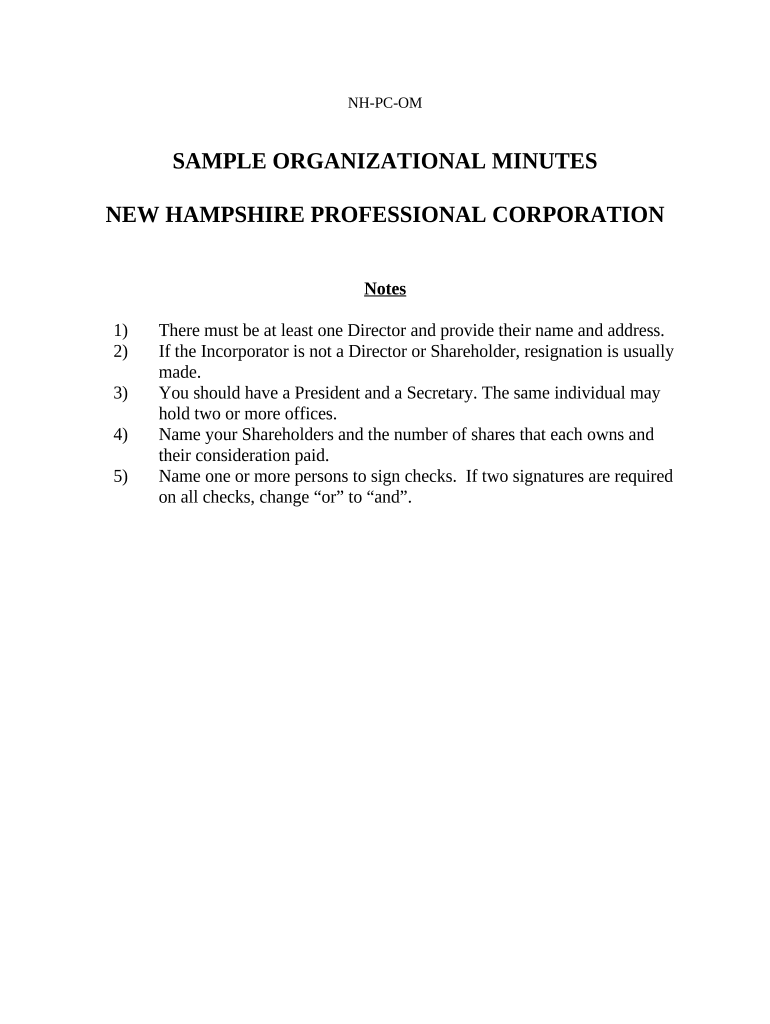
- Organizational Meeting Minutes to capture initial meetings' outcomes.
- Annual Report filed with the Secretary of State each year.
- EIN Confirmation Letter from the IRS.
Compiling these documents verifies compliance and supports the legitimacy of the corporation’s operations.
Penalties for Non-Compliance
Failing to adhere to the legal requirements for New Hampshire corporations can result in significant penalties:
- Dissolution: In extreme cases, failure to file annual reports may lead to involuntary dissolution.
- Fines and Penalties: Non-compliance with tax obligations results in financial penalties.
- Loss of Limited Liability Protection: Neglecting corporate formalities might risk personal liability for corporate debts.
Timely and consistent compliance prevents these penalties and maintains the corporation's legal standing.