






Definition and Purpose of a New Hampshire Closing
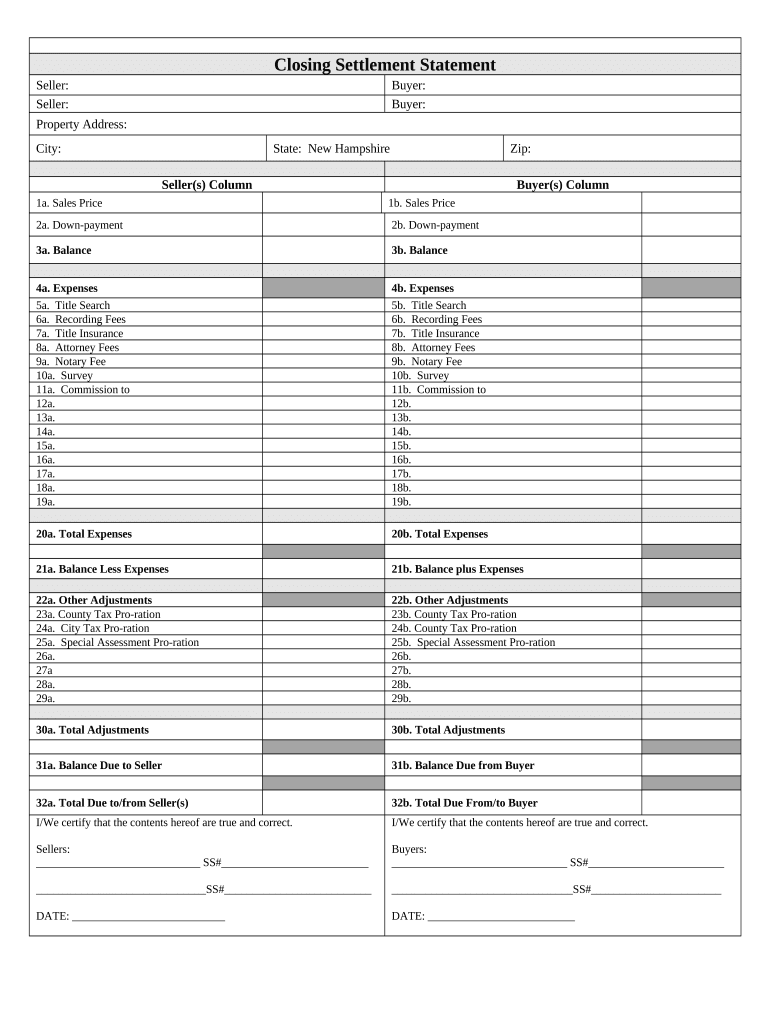
A New Hampshire closing settlement statement is a crucial document detailing the financial transactions involved in the sale of a property. This statement outlines the costs, adjustments, and payments made by the buyer and seller, providing a complete overview of financial obligations. It typically includes components like the sales price, down-payment, and any necessary expense adjustments. This document is essential for ensuring both parties agree on the financial terms before finalizing a property sale.
Components of the Settlement Statement
- Sales Price and Down-payment: The gross price of the property and any upfront payments the buyer provides.
- Adjustments and Prorations: Items like property taxes or utilities that need adjustment based on the exact closing date.
- Expenses and Fees: Lists all closing costs like attorney fees, title insurance, and loan origination fees.
- Balancing the Accounts: Ensures both sides understand amounts due or credited to them due to adjustments.
Steps to Complete the New Hampshire Closing
Successfully completing a New Hampshire closing involves various steps, each critical to ensure the transaction's legality and correctness.
Gathering Necessary Documents
- Sales Agreement: Must be signed by both parties and outline the agreed-upon terms and price.
- Title Search Documents: To confirm the seller holds a clear title devoid of liens.
- Mortgage and Loan Information: If applicable, detailing the buyer’s financing arrangements.
Reviewing and Finalizing Adjustments
- Prorate Taxes and Utilities: Adjust property taxes and utility bill payments accordingly to the closing date.
- Credits for Repairs: Determine if the buyer gets credits for property issues needing resolution from the pre-closing inspection.
Important Terms Related to New Hampshire Closings
Understanding key terminology used in New Hampshire closings helps ensure all parties accurately interpret and fulfill their responsibilities.
Commonly Used Terms
- Escrow: A third party temporarily holding funds paid until the closing is completed.
- Earnest Money: A deposit made by the buyer to show genuine intent to purchase.
- Title Insurance: Protects against possible future claims on property ownership.
Legal Use and Compliance in New Hampshire Closings
Legal compliance is non-negotiable when handling New Hampshire closings, ensuring the protection of both buyer and seller rights.
Legal and Certification Requirements
- Certification by Both Parties: Both buyer and seller must sign, acknowledging the completion of financial transactions.
- Adherence to State Laws: Ensure that all transactions abide by New Hampshire state-specific property selling laws.
Key Elements to Check During a New Hampshire Closing
Checking certain important elements of the closing statement before signing can prevent future disputes.
Essential Items to Verify
- Accurate Dollar Figures: Confirm all figures on the statement, preventing future conflicts.
- Correct Property Description: Ensure the legal description matches the actual property being sold.
- Clear Terms of Agreement: All terms and any special clauses should be clearly stated to avoid misunderstandings.
State-Specific Rules for New Hampshire Closings
Several state-specific rules govern property transactions and closings in New Hampshire, set to protect the involved parties.
Property Transfer Regulations
- Additional Deed Requirements: New Hampshire may require particular deeds or affidavits during property transfers.
- State Disclosure Obligations: Sellers must disclose specific property information under New Hampshire law.
Examples and Scenarios of Using the New Hampshire Closing Form
Studying examples can help illuminate common situations encountered during the use of New Hampshire closing forms.
Real-World Scenarios
- First-Time Home Buyer: Highlighting steps and potential areas of buyer credit or deduction that could benefit new buyers.
- Real Estate Investors: Understanding multiple property transactions involving similar or simultaneous closings.
Who Typically Uses the New Hampshire Closing
Different individuals and businesses typically require the New Hampshire closing statement within real estate transactions.


Key Parties Involved
- Homeowners/Buyers: For completing the purchase of a new home.
- Real Estate Agents/Brokers: Assisting clients in fulfilling the necessary paperwork.
- Attorneys/Legal Advisors: Helping their clients understand and sign off on the financial obligations safely.