
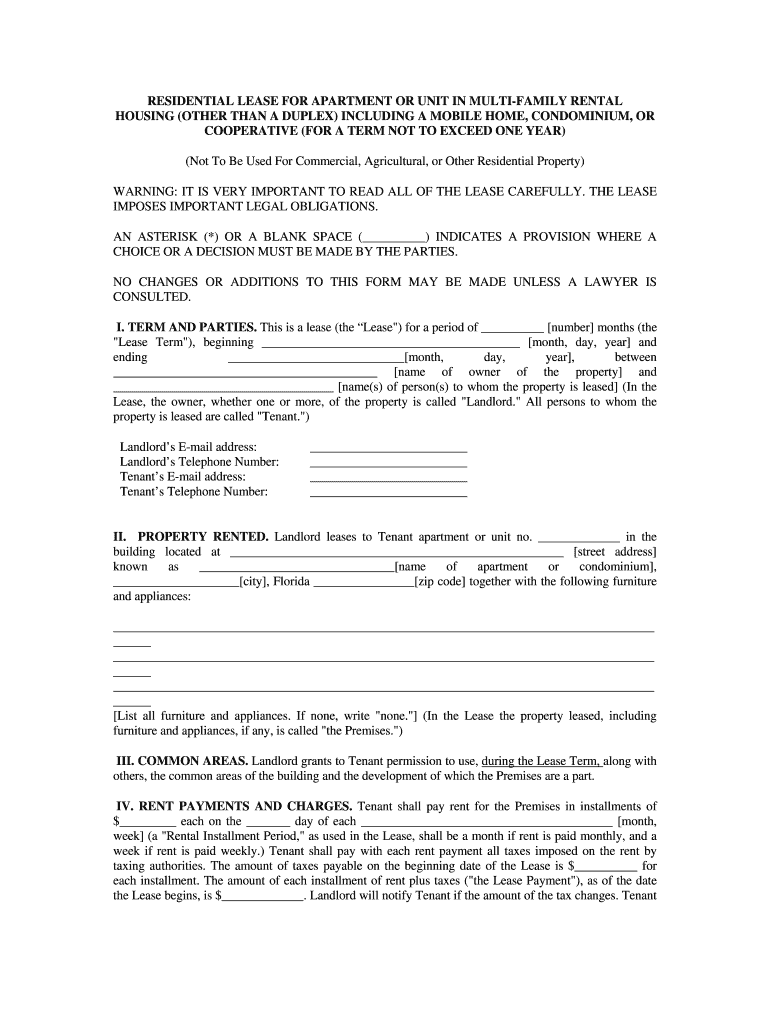




Here's how it works

01. Edit your residential lease for apartment or unit in multi family rental online
Type text, add images, blackout confidential details, add comments, highlights and more.

02. Sign it in a few clicks
Draw your signature, type it, upload its image, or use your mobile device as a signature pad.

03. Share your form with others
Send florida bar lease agreement via email, link, or fax. You can also download it, export it or print it out.
How to use or fill out residential rental apartment with our platform

- Click ‘Get Form’ to open the residential rental apartment lease in the editor.
- Begin by filling in the 'Term and Parties' section. Enter the lease term duration, start date, and end date. Specify the names of both the landlord and tenant, along with their contact information.
- In the 'Property Rented' section, indicate the apartment number and full address. List any furniture or appliances included in the lease.
- Proceed to 'Rent Payments and Charges'. Fill in the rent amount, payment frequency (monthly or weekly), and any applicable taxes. Ensure to note any prorated rent if applicable.
- Complete the 'Deposits, Advance Rent, and Late Charges' section by checking applicable boxes for security deposits, advance rent, or late fees.
- Review all sections carefully for accuracy before saving your changes. Make sure to consult a lawyer if you need to make any modifications.
Start using our platform today for free to streamline your residential rental process!
Fill out residential rental apartment online
It's free
It's free
Got questions?
We have answers to the most popular questions from our customers. If you can't find an answer to your question, please contact us.
Contact us
What is an example of a residential area?
Residential area means land used as a permanent residence or domicile, such as a house, apartment, nursing home, school, child care facility or prison, land zoned for such uses, or land where no zoning is in place.
What is the 30% rule for apartments?
The apartment 30% rule is a common guideline suggesting you spend no more than 30% of your gross monthly income (before taxes) on rent and basic utilities to maintain financial health, helping budget for savings and other expenses. While historically useful, experts debate its modern relevance due to soaring housing costs, recommending a broader financial look at your total debt-to-income ratio (DTI) and other needs, as it can be an outdated benchmark. How it works Calculate your income: Take your total monthly income before taxes (gross income). Apply the percentage: Multiply that figure by 0.30 (30%). Result: This number is your target maximum for monthly rent and utilities. Example: If you earn $5,000/month gross, your rent budget is around $1,500 ($5,000 x 0.30). Why its used Budget balance: Helps ensure housing costs dont consume too much of your income, leaving room for savings, debt, and other essentials. Lender standard: Often used by mortgage lenders and landlords as a benchmark for affordability and tenant qualification. Criticisms and modern view Outdated: Housing costs have outpaced wage growth, making 30% unrealistic in many areas, say some experts. Oversimplified: Doesnt account for high student debt, childcare, or other DocHub expenses, potentially leading people to overspend. Broader view needed: A comprehensive budget considering your total DTI, credit score, and lifestyle is more effective than this single rule. AI can make mistakes, so double-check responsesHow much should I spend on rent? Ignore the 30% Rule - EarnestFeb 23, 2026 What is the 30% Rule? Ever heard of the 30% rule? Its the idea that you should budget a minimum of 30% of your gross Earnest30% rule for housing | First Financial BankFirst Financial Bank
What is the meaning of residential apartment?
A residential building is a building containing separate residences where a person may live or regularly stay. Each residence contains independent cooking and bathroom facilities and may also be known as an apartment or a condominium.
How much do I have to make to afford a $2500 rent?
To afford $2,500 in rent using the standard 30% rule (rent should be ~30% of gross income), you generally need an annual salary of about $100,000, which breaks down to roughly $8,333 per month before taxes. However, this can vary, with some using the 50/30/20 rule (50% needs, 30% wants, 20% savings) or considering other factors like location, debt, and utilities. The 30% Rule (General Guideline) Calculation: Divide your desired rent by 0.30. Example: $2,500 / 0.30 = ~$8,333 per month gross income. Annual Income: ~$8,333 x 12 = ~$100,000. Using the 50/30/20 Rule (More Detailed Budget) This rule suggests allocating your net (after-tax) income: 50% for Needs: Rent, groceries, utilities, insurance, minimum debt payments. 30% for Wants: Dining out, entertainment, shopping. 20% for Savings/Debt: Retirement, investments, extra debt payments. How it applies: If $2,500 is your only need, youd need to comfortably cover other needs and wants within your budget, potentially requiring more than the basic $100k salary if other essential needs are high. Factors That Influence Affordability Location: High-cost-of-living areas may require a higher income. Utilities: Factor in electricity, gas, internet, etc., as these add to your total housing cost. Debt: High student loans or car payments reduce the income available for rent. Lifestyle: If you spend heavily on wants, $2,500 might stretch your budget thin. In Summary Aim for a gross annual income of around $100,000, but use a personalized budget or rent calculator to see if your specific expenses (debt, savings, utilities) make $2,500 feasible for you. AI can make mistakes, so double-check responsesHow Much Rent Can I Afford? - Rent Affordability Calculator | RedfinIf you make $30,000 a year, you can afford to spend $750 a month on rent. If you make $40,000 a year, you can afford to spend $1,0RedfinHow Much Rent Can I Afford? - Rent Affordability Calculator | ZillowZillow
What is considered a residential rental property?
Residential rental properties consist of single-family homes, condominiums, townhouses, apartments, and multifamily buildings. These properties are primarily used for residential purposes, offering individuals and families a place to live.Jun 10, 2025
Security and compliance
At DocHub, your data security is our priority. We follow HIPAA, SOC2, GDPR, and other standards, so you can work on your documents with confidence.
Learn more


Related forms
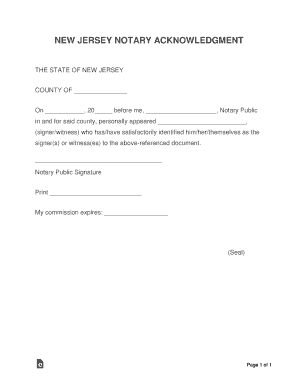
Steps to Proper Notarization - American Association of Notaries
The document is a New Jersey Notary Acknowledgment form, which certifies the identity of a signer or witness before a No ...
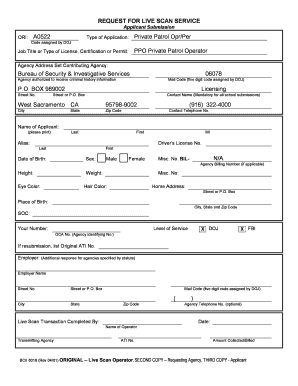
A0522
The document outlines the process for submitting a Live Scan service request for applicants seeking a Private Patrol Ope ...
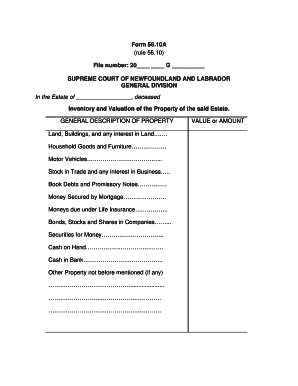
Form 56.10A File number: 20 G SUPREME COURT OF NEWFOUNDLAND ...
The document is Form 56.10A, used in the Supreme Court of Newfoundland and Labrador for the inventory and valuation of a ...
Letter of medical necessity fsa template
The document is a Letter of Medical Necessity that requires completion by a medical care provider for services or produc ...
Vat100 form pdf
The document is a Value Added Tax (VAT) return form for businesses, detailing the process of completing and submitting t ...
Application simcoe county
The document outlines the application process for subsidized housing in Simcoe County, detailing eligibility requirement ...
Bona fide job offer
The document is the Supplement J form used by applicants to confirm a bona fide job offer or request job portability und ...
People also ask
What is the difference between an apartment and a residence?
🔹 RESIDENCE = Formal/official word (where you live formally) Example: My current residence is in Delhi 🔹 APARTMENT = Flat with shared walls. Example: I rent an apartment downtownNov 3, 2025
How many units are considered residential?
Multifamily properties that contain 2-4 units are usually classified as residential. When a multifamily property or apartment complex has 5 or more units, it is typically classified as commercial. However, the apartments primary intended use, operation, and local zoning laws all contribute to its classification.Dec 11, 2023


