







Understanding the Final Receipt of Payment and Release Form
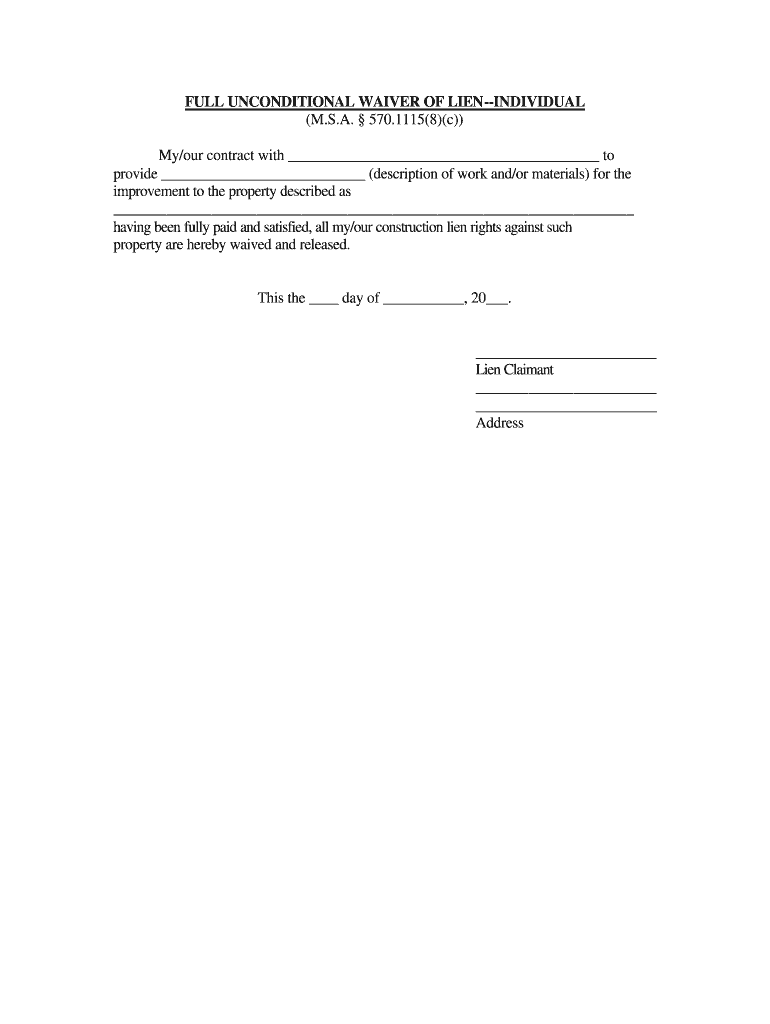
The final receipt of payment and release form is a crucial document in various financial and legal transactions, particularly in the construction and service industries. This form serves as proof that a payment has been received and acknowledged, and it simultaneously releases the payer from any further obligations associated with the transaction. It acts as a protective measure for both parties involved.
Key Functions of the Final Receipt of Payment and Release Form
The final payment release form serves several essential functions:
- Proof of Payment: It clearly indicates that the specified amount has been paid in full, eliminating any disputes regarding unpaid balances.
- Release of Claims: Upon receiving this form, the supplier or contractor relinquishes any claims against the service or property, protecting the payer from future liens or legal actions.
- Record Keeping: It serves as a formal record for both the payer and payee, simplifying bookkeeping and maintaining clear financial documentation.
Specific Components of the Form
The final receipt of payment and release form typically includes the following key components:
- Parties Involved: Identification of both the payer and payee, including names and contact information.
- Details of Payment: The amount paid, the method of payment, and the date that the transaction was completed.
- Description of Services or Goods: Clear identification of what payment has been made for, detailing any services provided or goods delivered.
- Signatures: Both parties should provide signatures as an acknowledgment of the transaction, reinforcing the validity of the release.
Steps to Complete the Form
Completing the final payment release form requires specific steps to ensure it is properly filled out and legally binding:
- Input Basic Information: Enter the names, addresses, and contact details of both parties on the document.
- Specify Payment Details: Clearly state the amount that has been paid, along with the method of payment (e.g., check, wire transfer).
- Describe the Transaction: Provide an explicit description of the goods or services that were paid for, including any relevant invoice numbers.
- Sign and Date: Each party should sign and date the form to confirm acceptance of the payment and the release of claims.
Importance of Legally Binding Signatures
The inclusion of legally binding electronic signatures adds significant value to this form. Under the ESIGN Act, electronic signatures are recognized in the United States as valid and enforceable, provided that:
- Signatures are created using reliable methods that identify the signer and demonstrate their intent to approve the document.
- The form should keep an audit trail, allowing for verifications of when and how the signatures were obtained.
Applications and Common Scenarios
The final receipt of payment and release form is commonly utilized in various scenarios, including:
- Construction Projects: Contractors often use this form to finalize payments for completed work, ensuring they cannot later impose liens for unpaid amounts.
- Real Estate Transactions: Buyers may require this form to confirm payment for property-related closing costs, protecting against future liabilities.
- Service Agreements: Freelancers and service providers use this form to verify that their clients have paid in full for completed services, safeguarding against potential disputes.
Related Documentation and Compliance
Besides the final receipt of payment and release form, users may also explore additional forms related to these transactions, such as:
- Lien Release Form: Used to formally acknowledge that a contractor has no further claims on the property.
- Paid in Full Form: Serves a similar purpose, confirming that all obligations have been met.
- Unconditional Release Form: Offers a broader release of any claims connected to the transaction.
Understanding the functionality, key components, and proper use of the final receipt of payment and release form can significantly enhance transaction transparency and reduce potential conflicts between parties. It is advisable to maintain a copy for personal records, as it may be needed for future reference.




