
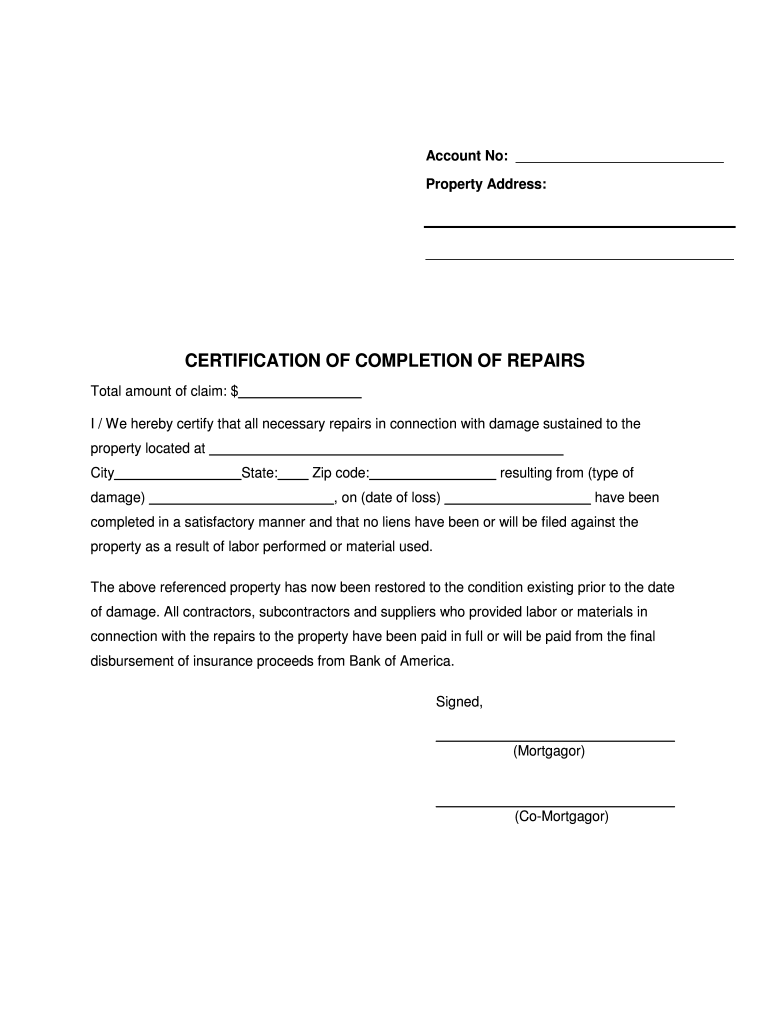







Definition & Meaning
A certificate of completion for insurance claim is a formal document that verifies the successful completion of repairs or projects, particularly after damage or loss. Often used in the context of property insurance claims, this document serves as evidence that all necessary work has been performed satisfactorily. It typically includes affirmations from contractors that the repairs have been completed and that all payments have been settled, ensuring that no liens are left against the property. The certificate is crucial for facilitating insurance payments to ensure that claimants fulfill their obligations while providing assurance to the insurer about the completed work.
Key Elements of the Certificate of Completion for Insurance Claim
Understanding the key elements is vital for ensuring that the certificate serves its intended purpose. The components typically include:
- Identification of the Property: The certificate should detail the address and specifics of the location where the repairs were conducted.
- Contractor Information: It should include the names and contact details of the contractors who performed the repairs.
- Description of Work Completed: A concise breakdown of the repairs done, specifying the nature and extent of the work undertaken.
- Confirmation of Payment: A declaration that all contractors have been compensated for their services, indicating that no liens or outstanding payments exist.
- Signatures: Typically, the document must be signed by the property owner, contractor, and potentially a representative from the insurance company to validate the completion.
These elements ensure that the certificate is comprehensive and conveys all necessary information for insurance processes.
Steps to Complete the Certificate of Completion for Insurance Claim
Completing a certificate of completion involves systematic steps to ensure accuracy and compliance:
- Gather Relevant Documentation: Collect all invoices, receipts, and contracts related to the repair work. This documentation supports the claims team in verifying the information.
- Consult with Contractors: Speak with the contractors involved to confirm that all work has been completed to the required standards, and gather their affirmations for the document.
- Complete the Template: Use a template, if available, to fill in the necessary details such as property information, completion date, and descriptions of work.
- Sign the Document: Ensure all relevant parties, including the contractor and property owner, sign the document to validate its authenticity.
- Submit to the Insurance Company: Provide the completed certificate to your insurance company as part of your claim process, often alongside supporting documents.
Following these steps ensures a smooth process for the issuance and acceptance of the certificate.
Legal Use of the Certificate of Completion for Insurance Claim
The legal implications of the certificate of completion are significant, as it acts as a binding statement of fact regarding the completion of repairs. It can be used as evidence in various scenarios:
- Claim Processing: Insurers often require this document before they process payments. The certificate provides proof that the repairs met the required standards.
- Dispute Resolution: In disputes regarding the quality of repairs or the completion of work, this document can serve as a critical piece of evidence to confirm compliance with contractual obligations.
- Lien Release: Ensuring that no liens exist against a property before selling it or refinancing is crucial. The certificate serves as a guarantee to lenders and buyers that the property is clear.
Understanding its legal implications can protect homeowners from future issues regarding home equity or disputes with contractors.
Important Terms Related to Certificate of Completion for Insurance Claim
Familiarity with key terminology can aid in better understanding the insurance claim process:
- Lien: A legal claim against a property until a debt owed by the property owner is satisfied.
- Repair Completion Certificate: A synonym often used interchangeably with the certificate of completion, indicating the same purpose.
- Certificate of Satisfaction: A document confirming that specific obligations or terms have been met, which may be required in conjunction with the completion certificate.
- Insurance Policy: The contract between the insured and insurer detailing coverage and obligations during the claim process which may reference the need for a completion certificate.
These terms provide a foundational understanding essential for navigating insurance claims effectively.
Examples of Using the Certificate of Completion for Insurance Claim
Real-world scenarios highlight the utility of the certificate of completion:
- Homeowners: After a fire damage insurance claim, a homeowner receives a certificate from their contractor once repairs are completed. This certificate is then submitted to the insurance company to trigger the final payment.
- Commercial Properties: A commercial building facing structural repairs may require multiple contractors to work simultaneously. A comprehensive certificate detailing each contractor's contributions can speed up the insurance claim process by making it clear that all necessary work has been completed satisfactorily.
- Roofing Claims: After storm damage, a roofing company provides a completed certificate to a homeowner, which includes confirmation that repairs were done per the insurance company's specifications. This document is critical in facilitating payment from the insurance company to the contractor.
Through these examples, it becomes evident how the certificate provides clarity and assurance towards fulfilling both contractor and insurer obligations.




