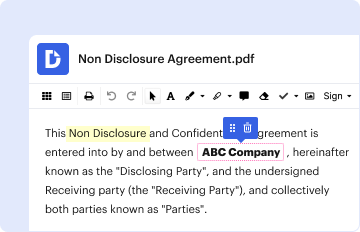
Type text, add images, blackout confidential details, add comments, highlights and more.
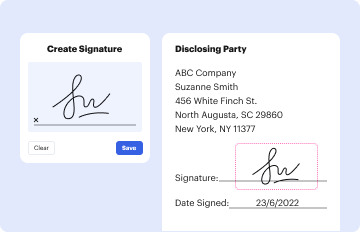
02. Sign it in a few clicks
Draw your signature, type it, upload its image, or use your mobile device as a signature pad.
03. Share your form with others
Send petition for dissolution of marriage mn via email, link, or fax. You can also download it, export it or print it out.
How to use or fill out Answer to Petition and Counterpetition for Dissolution of Marriage - Minnesota with DocHub
Ease of Setup
DocHub User Ratings on G2
Ease of Use
DocHub User Ratings on G2
Click ‘Get Form’ to open it in the editor.
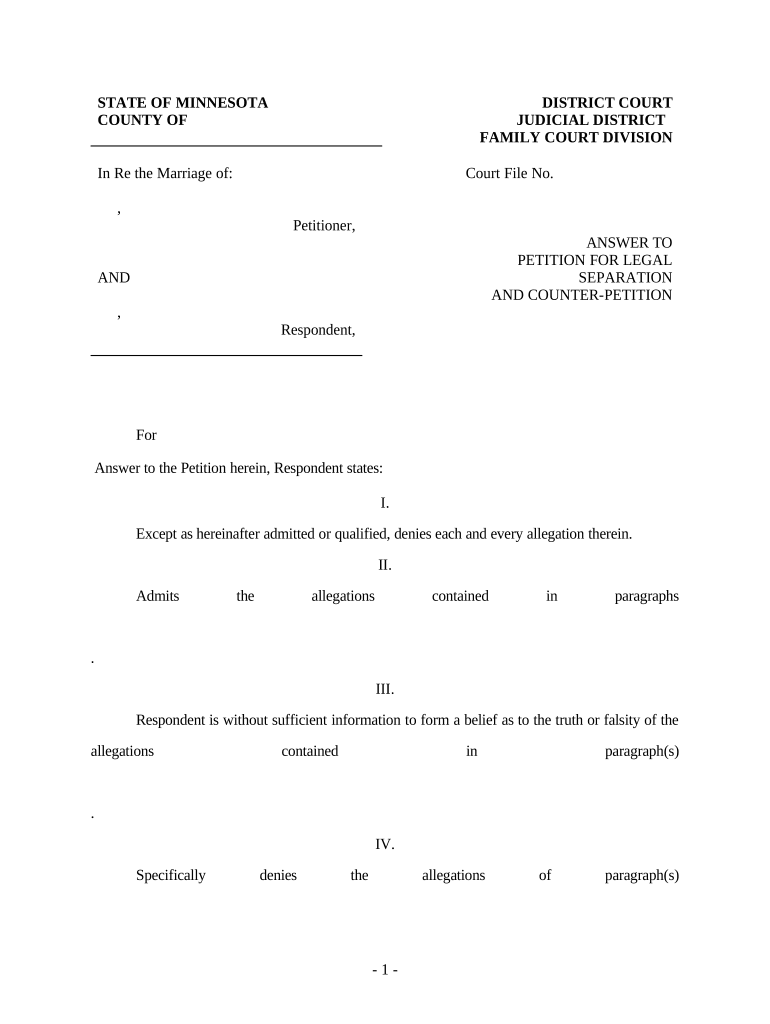
Begin by filling out the Respondent's information, including name, date of birth, and address. Ensure accuracy as this establishes your identity in the proceedings.
In Section I, respond to each allegation from the Petitioner. Use the text fields to admit or deny claims clearly. This is crucial for your legal standing.
Proceed to the Counter Petition section. Provide details about your marriage, including dates and children’s information. This helps establish context for custody and support discussions.
Complete financial disclosures regarding income, property, and debts in Sections XIII and IX. Accurate financial data is essential for fair division of assets and support calculations.
Review all entries carefully before finalizing. Utilize our platform's features to ensure clarity and correctness throughout your document.
Start using our platform today to streamline your document editing process for free!
Fill out Answer to Petition and Counterpetition for Dissolution of Marriage - Minnesota online It's free
The ``petitioner is someone who petitions the court first for the court to do something. The ``respondent is the person being sued. So, if your wife is the person filing the original petition, she would be the petitioner. Each person keeps the same designation in the same case.
How to write a response to a divorce petition?
An Answer tells the judge and your spouse what parts of the complaint you agree with and disagree with. For instance, you might agree with paragraphs 1, 2, 3, 7, 8 of the complaint for divorce, but disagree with paragraphs 4, 5, 6 of the complaint for divorce. Write that in the Answer.
What is the difference between petitioner and respondent in divorce?
Try watching this video on .youtube.com, or enable JavaScript if it is disabled in your browser. Mistake #1: Waiting Too Long to Get a Divorce. Mistake #2: Not Hiring an Attorney Soon Enough. Mistake #3: Moving Out of the Marital Home Too Quickly. Mistake #4: Not Separating Finances.
Is it better to be petitioner or respondent in divorce?
Strategic Planning: Filing first allows you to prepare your case and gather necessary documentation before your spouse responds. Potential Psychological Advantage: Being the petitioner (the one who files) might give you a sense of empowerment and can influence the dynamics of the negotiations.
Do I have to file an Answer to a counter petition?
What is the difference between a counter-petition and a response and do I need to do both? Yes. You should definitely file both. The difference between a response and a counter-petition is that a response is merely that, a response saying that you either agree or disagree with the claims made in the petition.
response to petition for dissolution of marriage
Sample answer to petition and counterpetition for dissolution of marriage minnesotaFree answer to petition and counterpetition for dissolution of marriage minnesotaSimple answer to petition and counterpetition for dissolution of marriage minnesotaAnswer to petition and counterpetition for dissolution of marriage minnesota formAnswer to petition and counterpetition for dissolution of marriage minnesota online
Security and compliance
At DocHub, your data security is our priority. We follow HIPAA, SOC2, GDPR, and other standards, so you can work on your documents with confidence.
A lot of people feel that way and do not want to be the plaintiff in a divorce matter. However, there is not too much of a difference between being the plaintiff or the defendant. As the plaintiff, you do pay a slightly higher filing fee, and you are also responsible for the marshal fee.
What is a counterclaim for Dissolution of Marriage?
The counterclaim provides the responding party an opportunity to make their own allegations about the reason for the divorce and a chance to tell the court what they are asking for.
Related links
Forms to Respond to Divorce Petition
If you were served with a Summons and Petition for Dissolution of Marriage you must respond within 30 days, or adefault divorce judgment may be entered
Your spouse has 30 days to respond to the petition after being served. agree to the terms, file a counter-petition, or contest aspects of the divorce such as.
Cookie consent notice
This site uses cookies to enhance site navigation and personalize your experience.
By using this site you agree to our use of cookies as described in our Privacy Notice.
You can modify your selections by visiting our Cookie and Advertising Notice.