Type text, add images, blackout confidential details, add comments, highlights and more.
02. Sign it in a few clicks
Draw your signature, type it, upload its image, or use your mobile device as a signature pad.
03. Share your form with others
Send it via email, link, or fax. You can also download it, export it or print it out.
How to use or fill out Letter from Tenant to Landlord about Inadequacy of heating resources insufficient heat - Minnesota with our platform
Ease of Setup
DocHub User Ratings on G2
Ease of Use
DocHub User Ratings on G2
Click ‘Get Form’ to open it in the editor.
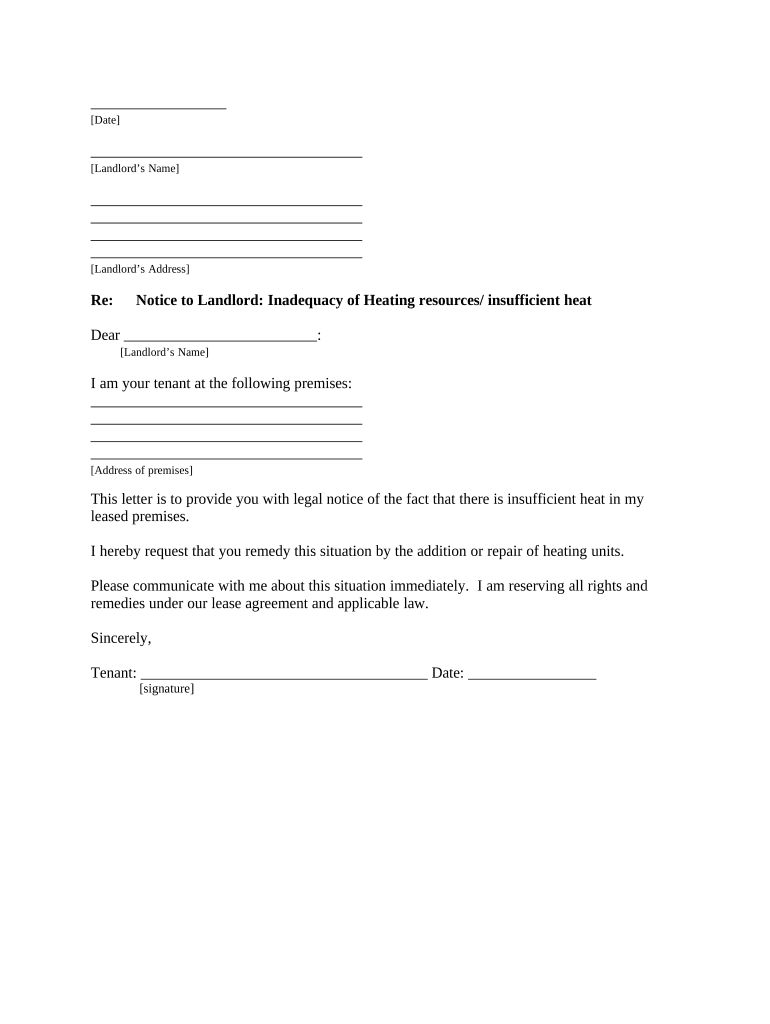
Begin by entering the date at the top of the letter. This is important for record-keeping and establishes when the notice was sent.
Fill in the landlord’s name and address in the designated fields. Ensure accuracy to avoid any delivery issues.
In the greeting, address your landlord directly using their name, which personalizes your communication.
Provide your address as a tenant in the specified section. This clarifies where you are experiencing inadequate heating.
Clearly state that this letter serves as legal notice regarding insufficient heat. Be concise but assertive in your request for repairs or additions to heating units.
Include a request for immediate communication regarding this issue, emphasizing urgency.
Sign and date the letter at the bottom, ensuring you have a record of your correspondence.
Select how you will deliver this notice by checking one of the options provided under 'Proof of Delivery'.
Start using our platform today to easily fill out and send your tenant notice for free!
Fill out Letter from Tenant to Landlord about Inadequacy of heating resources insufficient heat - Minnesota online It's free
If the heat cannot be restored right away, the landlord should provide each occupied unit with two UL approved temporary heating sources. No extension cordsRead more
Cookie consent notice
This site uses cookies to enhance site navigation and personalize your experience.
By using this site you agree to our use of cookies as described in our Privacy Notice.
You can modify your selections by visiting our Cookie and Advertising Notice.