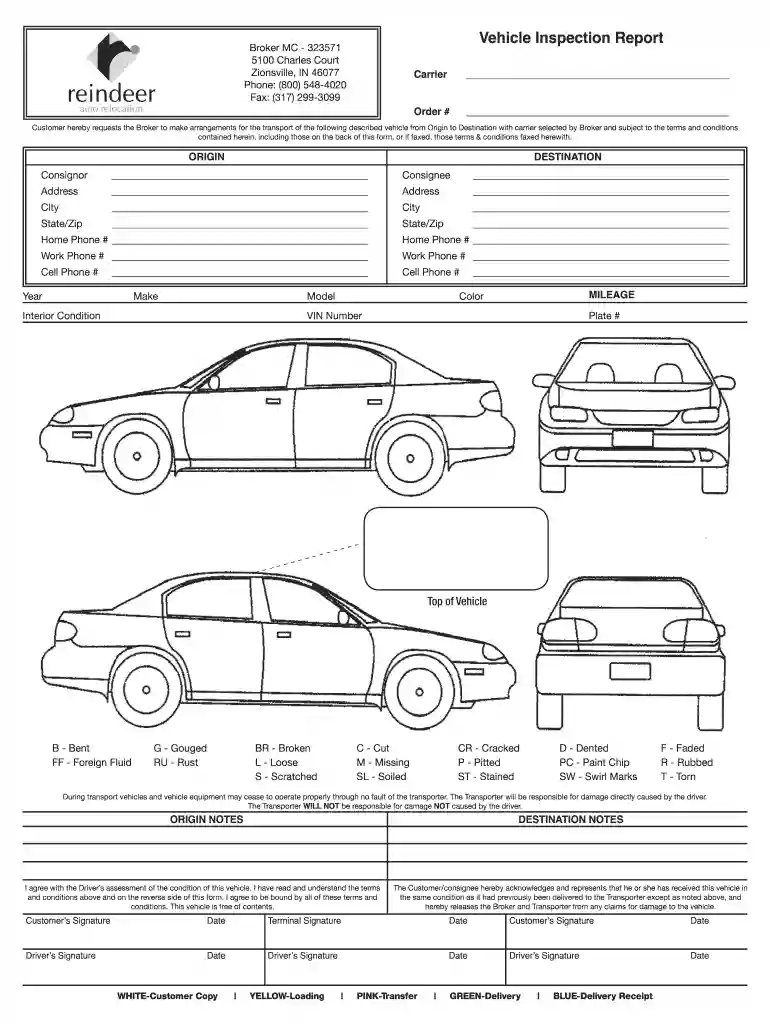
Auto inspection form 2026

Get Form
free printable vehicle inspection form Preview on Page 1

Here's how it works

01. Edit your free printable vehicle inspection form online
Type text, add images, blackout confidential details, add comments, highlights and more.

02. Sign it in a few clicks
Draw your signature, type it, upload its image, or use your mobile device as a signature pad.

03. Share your form with others
Send vehicle inspection forms free via email, link, or fax. You can also download it, export it or print it out.

Definition and Purpose of an Auto Inspection Form

An auto inspection form is a standardized document used to assess the condition of a vehicle before and after a transaction, such as buying, selling, or leasing. This form serves to provide a detailed account of the vehicle’s current state, which can include aspects such as the engine condition, exterior and interior quality, tire health, and any existing damages. By documenting this information, both buyers and sellers can ensure transparency and trust regarding the vehicle’s condition, thus preventing potential disputes in the future.

Key Features of an Auto Inspection Form

  • Vehicle Information: Includes the make, model, year, vehicle identification number (VIN), and odometer reading.
  • Condition Assessment: Provides sections for inspecting various components, including brakes, lights, tires, and engine performance.
  • Damages and Repairs: Allows for the documentation of any existing damages and previous repairs, which is essential for establishing the vehicle's history.
  • Signatures: Often includes spaces for signatures from both the inspector and the vehicle owner, establishing accountability.

How to Use the Auto Inspection Form Effectively

Using the auto inspection form effectively requires a systematic approach:

  1. Preparation: Gather necessary tools for inspection, including a flashlight, tire gauge, and basic automotive tools.
  2. Thorough Inspection: Use the form to guide the inspection process. Check and record details about the vehicle's exterior, interior, under the hood, and underneath the vehicle.
  3. Document Findings: Clearly note all findings, including any issues or repairs needed. Utilize the checklist format in the form for ease.
  4. Review with Stakeholders: Once completed, review the findings with the vehicle owner or potential buyer, ensuring all parties understand the vehicle's condition.
  5. Keep Copies: Both parties should retain copies of the signed form for future reference.

Tips for Completing the Auto Inspection Form

  • Take clear and detailed notes as you inspect various parts of the vehicle.
  • Be honest and objective in your descriptions to avoid future disputes.
  • Use photographs alongside the form's findings to provide visual confirmation of the vehicle’s condition.

Steps to Complete the Auto Inspection Form

Completing an auto inspection form effectively involves several steps:

  1. Gather Information: Start by filling in the vehicle information at the top of the form, including the VIN and odometer reading.
  2. Conduct Visual Inspection: Methodically inspect the vehicle's exterior for scratches, dents, and rust. Use the checklist in the form to track your observations.
  3. Evaluate Mechanical Components: Inspect the engine compartment, checking fluid levels, belts, hoses, and overall cleanliness. Note any unusual sounds during operation.
  4. Internal Assessment: Check seats, seat belts, and dashboard indicators. Make sure that all electronic components, such as lights and windows, operate properly.
  5. Finalize and Sign: After fully completing the inspection, sign the document and provide any necessary notes regarding the vehicle’s condition.

Key Aspects to Consider During Each Phase

  • For the exterior inspection, pay attention to paint quality and integrity.
  • In mechanical checking, listen for any unusual noises and monitor warning lights.
  • Interior assessments should include a check of comfort and functionality.

Important Terms Related to the Auto Inspection Form

Familiarity with specific terminology can enhance understanding and ensure effective use of the auto inspection form:

  • VIN (Vehicle Identification Number): A unique code used to identify individual motor vehicles.
  • Wear and Tear: Normal depreciation from use that can manifest as scratches, dents, or mechanical issues.
  • Diagnostic Test: A computerized check performed on vehicles to identify issues not visible during a standard inspection.
  • Auction Condition: A term referring to the overall state of the vehicle as assessed before being sold at an auction.

Legal Use of the Auto Inspection Form

The legal use of an auto inspection form revolves around its role in protecting consumers and sellers from disputes. When used properly, the form:

  • Establishes Record: Provides legal documentation regarding the vehicle's condition at the time of sale or transfer.
  • Reduces Liability: Helps clear any misunderstandings about the vehicle's state, protecting both parties from legal repercussions related to undisclosed damages.
  • Facilitates Insurance Claims: An accurately completed inspection form can assist in filing claims in case of accidents or damage, as it can show the vehicle's prior condition.

Compliance and Regulations

  • It’s essential for the form to be completed truthfully and comprehensively, as any discrepancies can lead to legal challenges.
  • Be aware of state laws regarding vehicle inspections, as requirements may vary, impacting how the auto inspection form is utilized.

State-Specific Rules for the Auto Inspection Form

State-specific regulations can affect how auto inspection forms should be filled out and submitted. Some considerations include:

  • Inspection Requirements: Some states mandate additional inspections for certain types of vehicles, such as those older than a specific age or those that have undergone significant modifications.
  • Reporting Damages: Regulations may require that any damages noted on the inspection form must be disclosed to potential buyers, with clear penalties for non-compliance.
  • State Inspection Programs: Some states have formal vehicle inspection programs that supplement the documentation provided by an auto inspection form, meaning that adherence to local laws is crucial.

Common Variations in State Regulations

  • In some states, the vehicle's age may dictate certain inspection criteria.
  • Other states may provide specific forms or templates for inspections to ensure uniformity and compliance with local regulations.
be ready to get more

Complete this form in 5 minutes or less

Get form

Got questions?

We have answers to the most popular questions from our customers. If you can't find an answer to your question, please contact us.
Contact us
Starting on January 1, 2025, Texans wont need state inspections on non-commercial vehicles to get their registrations. The new law goes into effect on Wednesday, January 1. House Bill 3291 was signed into law in 2023, which got rid of state inspections for non-commercial vehicles.
Prepare For Your Texas State Inspection Proof of insurance For vehicles with full coverage, any state insurance is accepted. Vehicles with liability only are required to have coverage from a provider in Texas. Drivers License/Photo ID All licenses must be valid and current.
Do I need anything to get an inspection? A valid drivers license. Your vehicles title. Your vehicles registration. Proof of insurance.
If you need proof of a safety inspection (commercial vehicle) or emissions inspection to complete your vehicles registration renewal, visit .mytxcar.org to download, display electronically, or print a copy of the document.
TEXAS - Inspection stickers will soon be a thing of the past for most Texans starting Jan. 1, 2025.

Security and compliance

At DocHub, your data security is our priority. We follow HIPAA, SOC2, GDPR, and other standards, so you can work on your documents with confidence.

Learn more
ccpa2
pci-dss
gdpr-compliance
hipaa
soc-compliance

People also ask

Emissions tests are required in major metropolitan areas, including Brazoria, Fort Bend, Galveston, Harris, Montgomery, Collin, Dallas, Denton, Ellis, Johnson, Kaufman, Parker, Rockwall, Tarrant, Travis, Williamson and El Paso Counties. Bexar county comes later.

vehicle inspection form