






Understanding the 3rd Party Authorization Letter
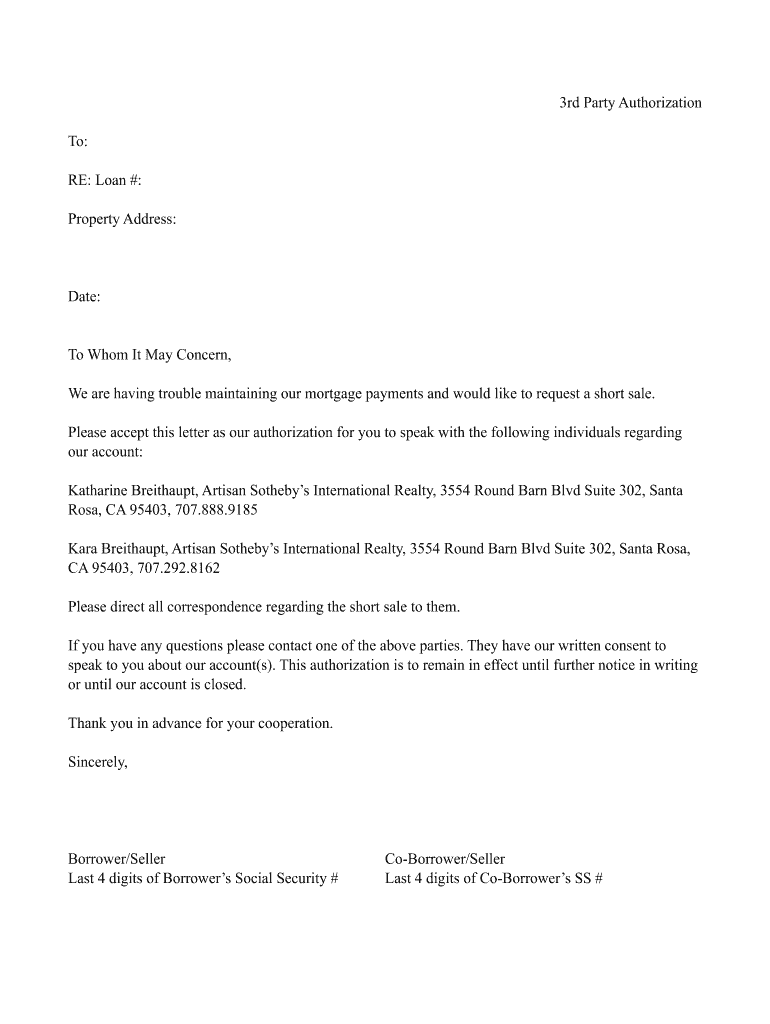
A 3rd party authorization letter is a formal document that grants permission to an individual or organization to act on your behalf in specific matters. This letter is prevalent in various contexts, including financial institutions, healthcare providers, and legal matters. For example, a borrower might use this letter to allow a real estate agent to speak with a lender regarding a mortgage account. As such, it is crucial for the letter to articulate which rights are being delegated and to whom.
Key Components of a 3rd Party Authorization Letter
To ensure the effectiveness of a third party authorization letter, certain components must be included:
-
Identifying Information: This includes full names, addresses, and contact details of both the principal (the person granting authority) and the authorized party (the individual or business receiving authority).
-
Scope of Authorization: Clearly define the specific tasks, rights, or decisions the third party is authorized to undertake on your behalf. This can include accessing financial records, making decisions related to payments, or negotiating terms.
-
Duration of Authorization: Specify the time frame for which the authorization is valid. This might be a set end date or until a particular task is completed.
-
Signature and Date: The letter must be signed and dated by the principal to affirm its validity. Depending on context, it may be advisable to have the signature witnessed or notarized.
How to Write a 3rd Party Authorization Letter
Writing a 3rd party authorization letter involves straightforward steps:
-
Header: Use a professional format. Start with your full name and address at the top, followed by the date.
-
Recipient Information: Include the recipient's name and address below your information.
-
Salutation: Start with a formal greeting, such as "Dear [Recipient's Name]."
-
Introduction: Begin with a statement indicating that you are granting authority to the third party.
-
Detail the Authorization: Clearly outline what the third party is authorized to do.
-
Limitations: Note any limits on the authority granted, if applicable.
-
Closure: End with your signature, printed name, and any other relevant information like a phone number.
Examples of Third Party Authorization Letters
-
Example for Financial Transactions: A letter could be issued to allow a financial advisor to manage investments or access account information.
-
Example in Healthcare: Patients often complete a third party authorization letter to allow family members or caregivers to discuss medical records with healthcare providers.
-
Example for Legal Matters: Clients may authorize lawyers to represent them in negotiations or court proceedings.
Legal Considerations for 3rd Party Authorization Letters
There are legal parameters governing the use of a third party authorization letter:
-
Valid Signature: The principal must have the legal capacity to sign the authorization. In some cases, individuals may require legal guardianship or have conditions that limit their ability to grant authority.
-
Compliance with Regulations: Depending on the sector (finance, healthcare, etc.), there may be specific regulatory requirements that dictate how authorization must be documented and managed.
-
Revocation of Authorization: The principal retains the right to revoke the authorization at any time, which should also be documented properly through a written notice.
Variations and Templates for 3rd Party Authorization Letters
Accessing a third party authorization form template can streamline the process. These templates are often tailored to specific industries and may include fields relevant to particular transactions or legal requirements:
-
Generic Third Party Authorization Form: A basic template suitable across various applications.
-
Industry-Specific Templates: These templates cater to specific needs, such as a healthcare third party consent form or a financial third party authorization form that complies with respective guidelines.
In utilizing a third party authorization letter, it is crucial to ensure clarity and specificity, as vague language can lead to misinterpretation of the authorized actions. Using well-defined templates can help mitigate misunderstandings and securely facilitate the delegation of authority.