Type text, add images, blackout confidential details, add comments, highlights and more.
02. Sign it in a few clicks
Draw your signature, type it, upload its image, or use your mobile device as a signature pad.
03. Share your form with others
Send it via email, link, or fax. You can also download it, export it or print it out.
How to use or fill out street easement with our platform
Ease of Setup
DocHub User Ratings on G2
Ease of Use
DocHub User Ratings on G2
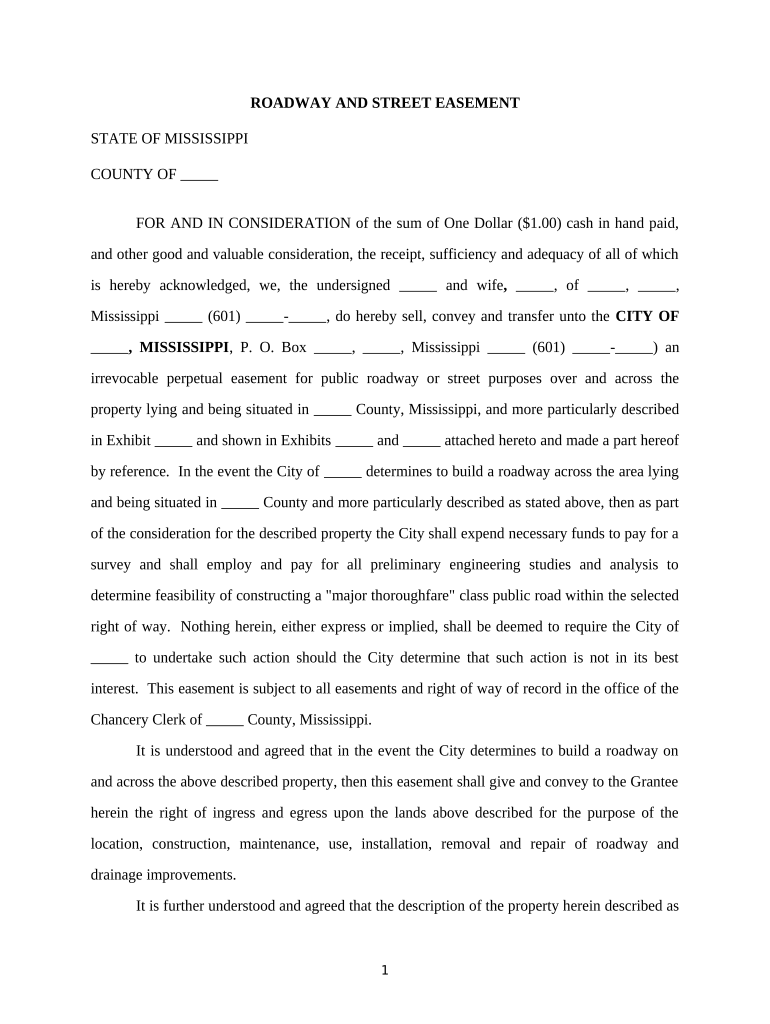
Click ‘Get Form’ to open the street easement document in the editor.
Begin by filling in the names of the Grantors at the top of the form, ensuring all parties are accurately represented.
Next, specify the consideration amount, which is typically set at One Dollar ($1.00), and include any additional valuable considerations if applicable.
In the designated fields, provide a detailed description of the property involved, including county and specific location details as outlined in Exhibits.
Complete sections regarding rights of ingress and egress, ensuring clarity on construction and maintenance responsibilities for both parties.
Finally, ensure that all signatures are collected from Grantors and a Notary Public to validate the document before submission.
Start using our platform today to streamline your street easement process for free!
What are the 3 types of easementsRight of way easement rulesPrivate road easement rulesRoad easement widthWhat is an easementEasement vs right of wayWho owns right of way propertyWho maintains a right of way easement
Security and compliance
At DocHub, your data security is our priority. We follow HIPAA, SOC2, GDPR, and other standards, so you can work on your documents with confidence.
The ROW begins at the street/curb, goes through the grass, and extends to the far side of the sidewalk nearest to the home. The City often receives questionsRead more
The mid-block alley can provide an important function of service access, car parking, utility easements, and movement of pedestrians and vehicles.Read more
Cookie consent notice
This site uses cookies to enhance site navigation and personalize your experience.
By using this site you agree to our use of cookies as described in our Privacy Notice.
You can modify your selections by visiting our Cookie and Advertising Notice.