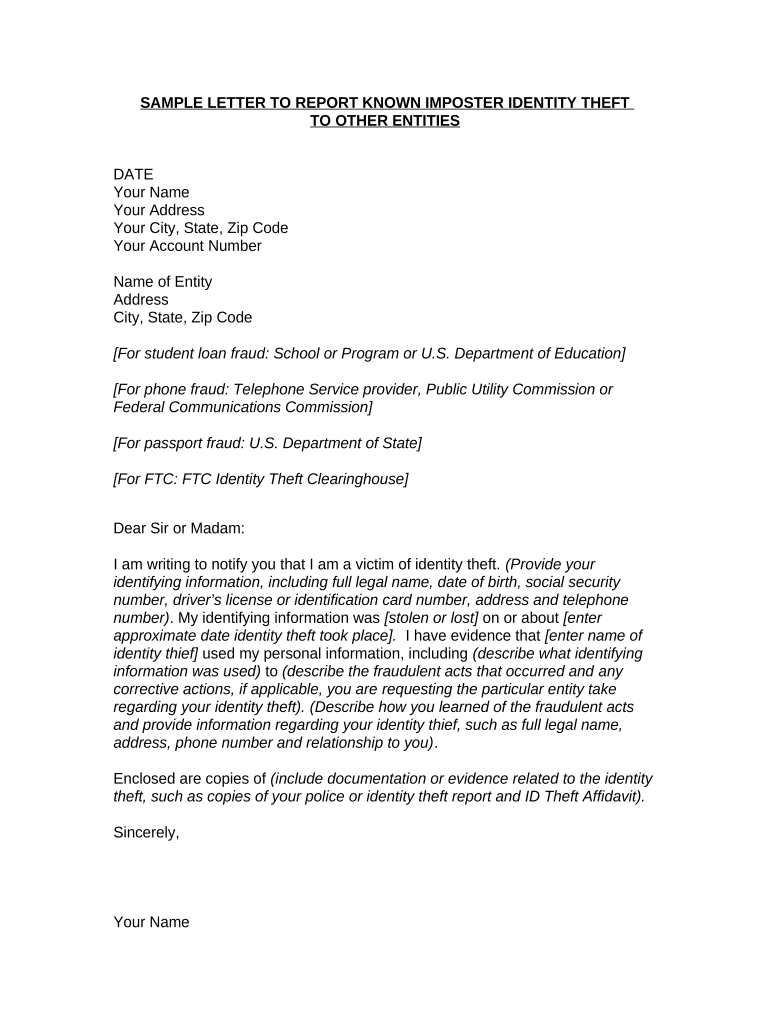







Definition and Meaning of Letter Report Theft Sample
A letter report theft sample is a template designed to assist individuals in formally reporting instances of theft or identity theft to various organizations, such as financial institutions, credit bureaus, and law enforcement agencies. This letter serves as a structured format that enables victims to provide essential information required for investigating claims of stolen identity or property. The purpose of this letter is to document the incident accurately, detail the fraudulent activities that occurred, and initiate corrective actions such as freezing accounts or securing personal data.
Key Features of a Letter Report Theft Sample
- Structured Format: The template is organized into clear sections that guide the user through necessary details, ensuring no crucial information is overlooked.
- Personal Identification: It includes spaces for personal details, making it easier for organizations to verify identity and address the theft effectively.
- Evidence Attachment: Users can attach relevant evidence, such as police reports or documentation of unauthorized transactions.
This letter is an important tool for establishing a record of the theft, which can be beneficial for legal processes or personal record-keeping.
How to Use the Letter Report Theft Sample
Using a letter report theft sample involves several straightforward steps to ensure that your report is comprehensive and effective.
- Download or Access the Template: Obtain the sample letter from a reliable source, ensuring it meets the necessary format standards.
- Fill in Personal Details: Include your name, address, phone number, and email at the beginning of the letter for easy contact by the recipient.
- Describe the Incident: Detail the circumstances surrounding the theft, including when and how it occurred, to provide context.
- State the Request: Clearly outline what actions you are requesting from the recipient, such as investigating the theft, freezing accounts, or correcting your credit report.
- Attach Evidence: Include any supporting documents like police reports, transaction records, or identification proof that corroborate your claims.
By following these steps, you can effectively communicate the urgency and seriousness of the situation to the relevant parties.
Steps to Complete the Letter Report Theft Sample
Completing a letter report theft sample requires careful attention to detail and the inclusion of particular elements that enhance its efficacy.
- Header: Start with your contact information at the top, aligned either to the left or center. Include the date, followed by the recipient's information.
- Salutation: Address the letter using a formal greeting, such as "Dear [Recipient's Name]."
- Introduction Paragraph: Introduce yourself and state the reason for writing. Mention the specific incident of theft and express your intent to report it.
- Body Paragraphs:
- Detail the Incident: Clearly explain the events leading to the theft, mentioning any relevant dates and locations.
- List Affected Accounts: Provide a list of any affected accounts or personal information that has been compromised.
- Request Specific Actions: Specify what you need from the organization, such as account freezes or investigation requests.
- Closing Paragraph: Thank the recipient for their attention and express anticipation of a prompt response. Provide your contact information once more for ease of follow-up.
- Sign the Letter: End with a formal closing (e.g., "Sincerely") followed by your signature and printed name.
By adhering to these steps, you can create a thorough and well-structured report that conveys your situation appropriately.
Important Terms Related to Letter Report Theft Sample
Understanding specific terminology is crucial when preparing a letter report theft sample. Here are some key terms that frequently appear in such correspondence:
- Identity Theft: The unauthorized use of someone else's personal information to commit fraud.
- Fraudulent Activity: Actions taken with the intent to deceive for financial or personal gain.
- Credit Bureau: Organizations that collect and maintain consumer credit information, often referred to in identity theft situations.
- Incident Report: A formal account typically filed with law enforcement detailing a criminal event or theft.
Familiarity with these terms enhances clarity and ensures that the communication conveys the seriousness of the situation.
Examples of Using the Letter Report Theft Sample
Providing concrete examples can illustrate how to effectively utilize a letter report theft sample in various scenarios.
-
Credit Card Theft: When an individual realizes that unauthorized transactions have occurred on their credit card, they can use the letter to notify the credit card company. The letter should describe the specific transactions and request an investigation.
-
Online Fraud: If someone’s personal information is used to open fraudulent accounts online, the victim could send a letter to each affected financial institution. Details of the fraudulent account along with evidence of identity theft should be included.
-
Stolen Personal Documents: In cases where personal documents (like a driver's license or social security card) are stolen, a letter to the police or a credit agency may be necessary to initiate protective measures such as identity theft alerts.
These examples underscore the versatility of the letter report theft sample for varying contexts of theft or identity theft, illustrating its role in ensuring timely and effective responses to such incidents.