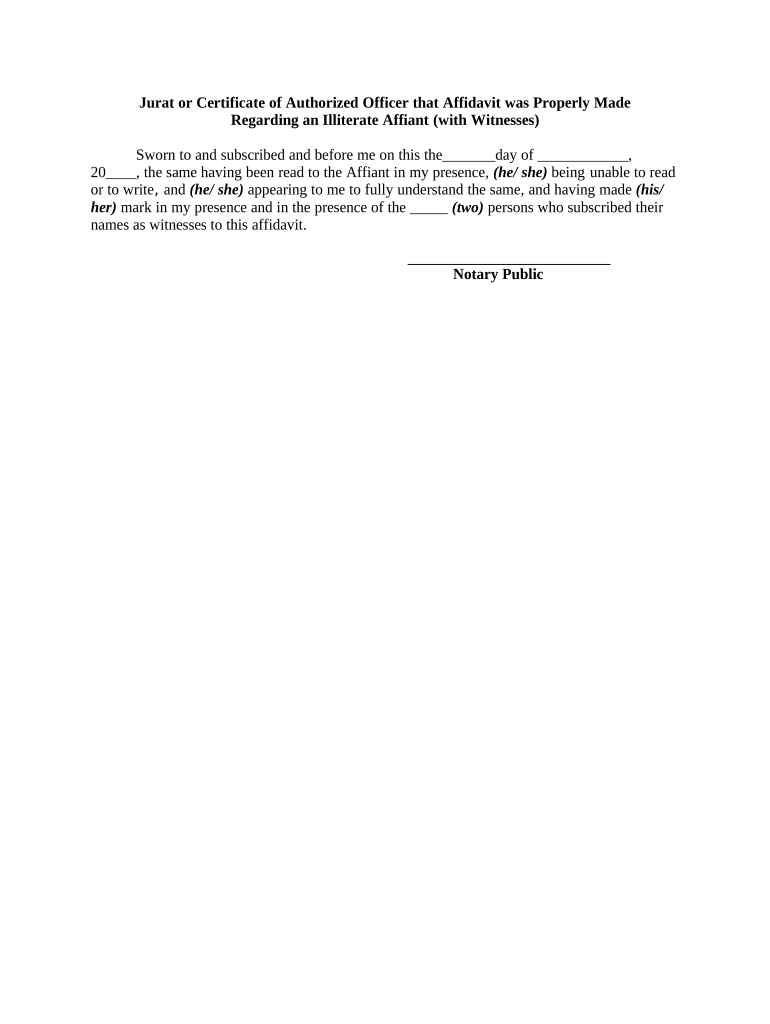







Definition and Meaning of Affidavit Illiterate
An affidavit illiterate is a legal document that serves as a sworn statement by an individual who cannot read or write. It is typically used to affirm that the affiant (the person making the affidavit) understands the content of the document despite their inability to read it themselves. The affidavit is read to them by a third party, often in the presence of a notary public and witnesses, who then verifies the process. This type of affidavit ensures that the affiant's rights are preserved and that their informed consent is obtained.
The purpose of an affidavit illiterate is significant in various legal contexts, such as estate planning, immigration, and other formal agreements where personal acknowledgment is required. The document acts as proof that the illiterate individual was fully aware of the terms they were consenting to before signing, which may take the form of a mark instead of a traditional signature. This recognition safeguards against potential claims of coercion or misunderstanding, providing a layer of protection for all parties involved.
Legal Use of the Affidavit Illiterate
The affidavit illiterate is primarily used in legal proceedings and transactions where a person's literacy is officially acknowledged. This document is frequently required in the following scenarios:
- Estate Planning: It can be used when wills or trust documents are involved to ensure that individuals who cannot read have their rights respected during the estate distribution process.
- Immigration Procedures: It may be required for individuals applying for immigration status or certain benefits, ensuring they understand their rights and responsibilities.
- Real Estate Transactions: In property sales or lease agreements, an affidavit illiterate can confirm that the signing party understands the legal implications of the contract.
In New York State, for example, the affidavit illiterate is governed by specific regulations that outline the necessary procedures and witnesses required for validity. Different jurisdictions may have their own variations in the legal wording and the process involved.
Steps to Complete the Affidavit Illiterate
Completing an affidavit illiterate involves several key steps to ensure compliance with legal requirements. The following procedural steps can guide users in preparing the document:
-
Preparation of the Document: The affidavit text must be drafted clearly, stating the affiant's identity, the facts to be affirmed, and a declaration of their illiteracy. It should include provisions for the reader and witnesses.
-
Selection of a Reader: The affiant must choose a third party—often a notary public or another trustworthy individual—to read the affidavit aloud in a clear voice.
-
Reading the Document: The selected individual reads the affidavit to the affiant, ensuring they understand the content. It is crucial that the reader confirms the affiant's comprehension before proceeding.
-
Attestation by Witnesses: Two witnesses must observe the reading and the affiant's acknowledgment. They will sign the document to verify that the process occurred as described.
-
Finalization and Notarization: The affidavit is typically signed by the affiant using a mark of their choice, and then it requires notarization to be legally binding. The notary must complete their section, confirming their witness to the signing.
-
Filing the Affidavit: Once executed, the document may need to be filed with a court or a relevant agency, depending on its intended use.
Important Terms Related to Affidavit Illiterate
Understanding the terminology associated with an affidavit illiterate can clarify its use and relevance in legal contexts. Here are some key terms:
- Affiant: The individual who makes and signs the affidavit.
- Jurat: A notary's certification that the affiant has taken an oath or affirmation regarding the accuracy of the content.
- Notary Public: An official authorized to witness signatures and certify documents.
- Witnesses: Individuals who observe the signing of an affidavit and attest to the authenticity of the process.
- Mark: A representation (such as an X or a symbol) used by the affiant in place of a traditional signature.
These terms play a critical role in the successful execution and legal standing of an affidavit illiterate.
Examples of Using the Affidavit Illiterate
Affidavit illiterates can be utilized in various real-world scenarios that illustrate their function and necessity:
-
Case Study 1: Estate Distribution: An individual without literacy skills wants to ensure their final wishes are carried out regarding their property after death. They execute an affidavit illiterate to affirm their understanding of a will drafted by a lawyer.
-
Case Study 2: Immigration Adjustment: A non-literate immigrant applying for residency may need to provide an affidavit illiterate to confirm their awareness of immigration forms and obligations, ensuring that their application is processed smoothly.
-
Case Study 3: Property Lease: A tenant signs a lease agreement through an affidavit illiterate to acknowledge their rights and responsibilities under the contract. This document verifies their understanding, protecting both parties.
These examples highlight the vital role this document plays across diverse legal situations, underscoring the importance of informed consent.
State-Specific Rules for the Affidavit Illiterate
The requirements and procedures for an affidavit illiterate can vary significantly based on the jurisdiction within the United States. Key differences may include:
- Witness Requirements: Some states may require more witnesses than others, while others may specify the qualifications of the notary public involved.
- Notarization Process: Different states provide distinct guidelines on how a document must be notarized, including specific wording or formats.
- Filing Procedures: Depending on local regulations, the affidavit may need to be submitted to specific agencies or not at all.
Understanding these state-specific rules is essential for ensuring compliance and legal validity when creating an affidavit illiterate. For instance, Texas may offer a prescribed format, while California may require additional attestations.
In summary, the use of an affidavit illiterate is crucial within various legal realms, safeguarding the rights of those who may not have literacy skills while ensuring that their intentions are clearly documented and respected in legal situations.