
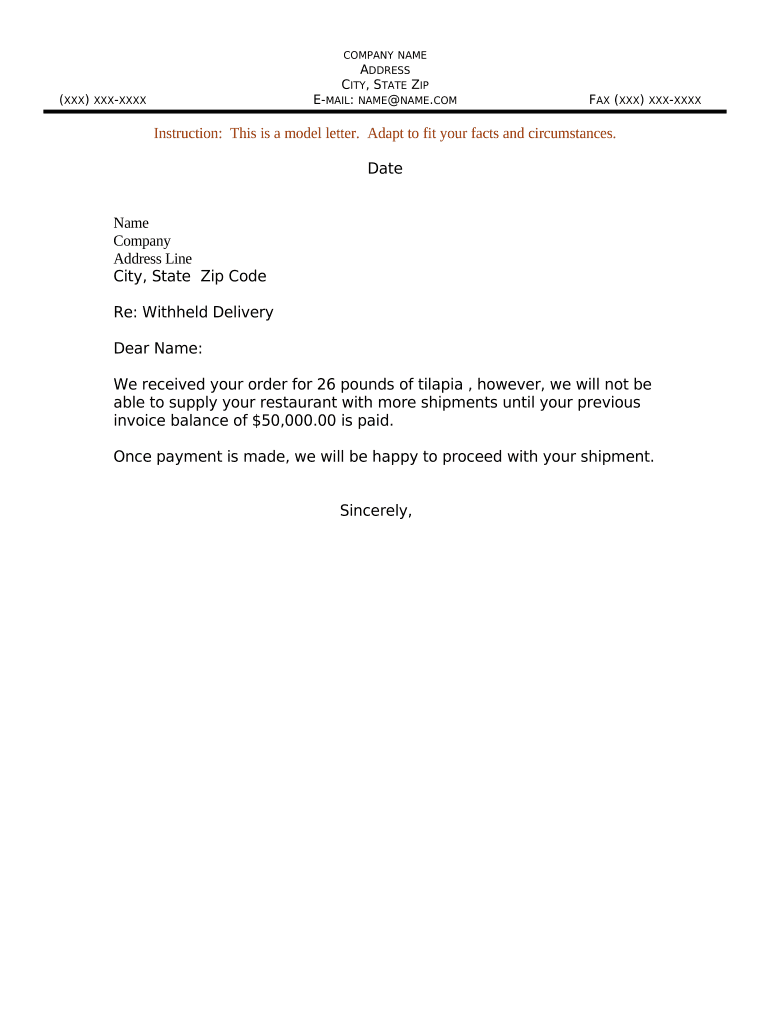







Definition & Meaning of Sample Letter Delivery
A sample letter delivery refers to a template or example letter used to inform recipients about the status, details, or logistics of a delivery. It serves multiple purposes, including notifying customers of their order shipments, providing updates about delays, or confirming that goods have arrived. This kind of letter can be used in various sectors such as retail, logistics, and personal correspondence, suiting both business and personal needs.
Importance of Sample Letters
- Clarity: A well-written delivery letter clearly communicates important information regarding the delivery schedule, ensuring that recipients are adequately informed.
- Professionalism: Using a formal letter format enhances the professionalism of the communication, fostering trust and credibility.
- Record Keeping: Delivery letters can serve as documented proof of communication regarding shipments, which may be important for future reference or disputes.
Types of Delivery Letters
- Delivery Confirmation Letters: Confirm that an item has been successfully delivered.
- Delivery Notice Letters: Inform recipients about upcoming deliveries, including dates, times, and contents.
- Delivery Delay Notices: Notify recipients when a shipment cannot be fulfilled promptly, providing reasons and any necessary steps to resolve issues.
How to Use the Sample Letter Delivery
Using a sample letter delivery effectively involves customizing it to meet specific needs while maintaining a clear and professional tone.
Steps to Customize Your Delivery Letter
- Select the Appropriate Template: Choose a sample that fits your need—confirmation, notice, or delay.
- Fill in Key Details: Include the recipient's name, address, and any pertinent tracking details related to the delivery.
- State the Purpose Clearly: Be explicit about whether it’s a confirmation, notice, or other type of communication.
- Include Contact Information: Ensure recipients know how to reach you for questions or concerns.
- Proofread the Document: Review for clarity, spelling, and grammatical accuracy before sending the letter.
Examples in Action
- For a delivery notice, you might specify the delivery date and item description, ensuring the recipient knows when to expect the goods.
- For a confirmation letter, state the successful delivery of items, coupled with tracking numbers for their records.
Key Elements of the Sample Letter Delivery
A well-structured letter includes vital components that enhance clarity and professionalism.
Elements of a Delivery Letter
- Header: Contains your name, address, and the date.
- Recipient Information: Clearly list the recipient’s name and address.
- Subject Line: Briefly state the purpose (e.g., Confirmation of Delivery).
- Body: This is where you explain the details:
- Introduction: Specify the previous order or arrangement.
- Main Content: Detail the delivery, including dates, items, and any required actions (e.g., signature).
- Closing Statement: Include a polite closing remark, offering assistance if needed.
- Signature: End with your name and any relevant title.
Importance of Each Element
- Each component works together to create a cohesive message that is easy to read and understand.
Examples of Using the Sample Letter Delivery
Real-world examples help illustrate how sample letters function in practice.
Scenario 1: Delivery Confirmation
When a customer orders merchandise, a delivery confirmation letter may state: “We are pleased to inform you that your order of 100 widgets has been delivered successfully to the address provided.”
Scenario 2: Delivery Delay Notification
In instances where a shipment is delayed due to unforeseen circumstances, a letter may read: “We regret to inform you that your delivery scheduled for March 15 will be delayed due to supply chain issues. We anticipate delivery within the next five business days.”
Scenario 3: Request for Delivery Schedule
A retailer may send a letter to a supplier, stating: “We would appreciate it if you could provide a delivery schedule for the upcoming orders to facilitate our inventory management.”
Important Terms Related to Sample Letter Delivery
Understanding key terminology enhances comprehension of delivery documentation.
Common Terminology
- Shipping Notice: Communicates shipping details and tracking information.
- Delivery Driver: The individual responsible for transporting the shipment to the recipient.
- Proof of Delivery (POD): Documentation confirming that goods have been delivered to the intended recipient.
- Return Policy: Guidelines detailing how to return delivered goods if necessary.
Contextual Use
Knowing these terms allows you to navigate delivery processes more effectively. For example, a clear understanding of proof of delivery can assist in setting expectations for customers regarding shipment confirmation.
Legal Use of the Sample Letter Delivery
Using sample letters in compliance with legal standards is essential for both individuals and businesses.
Key Legal Considerations
- Documentation: Letters can serve as legal documents, providing evidence of delivery or notification.
- Compliance: Ensure that any information provided aligns with local laws and regulations related to shipment and delivery.
- Signatures: For letters requiring acknowledgement, electronic signatures may be necessary to validate the document further.
Situations Requiring Legal Awareness
- In commercial contexts, changes in delivery schedules might affect contractual obligations, necessitating a formal letter to comply with business agreements.
State-Specific Rules for the Sample Letter Delivery
Depending on the location of your business or the recipient, specific rules may influence how a delivery letter should be formatted or delivered.
Variations by State
- Signature Requirements: Some states may have specific laws regarding who must sign a delivery letter.
- Electronic Communication: Various states have regulations surrounding the use of electronic versus paper communications, impacting formal letter delivery.
Practical Implications
Understanding these rules ensures adherence to legal standards, minimizing risks associated with non-compliance.
Conclusion: Practical Applications of Sample Letters for Delivery
Effectively utilizing sample letters can significantly enhance communication regarding deliveries.
Final Remarks
The utility of a sample letter delivery spans a range of functions and interactions—summarizing deliveries, confirming shipments, or managing scheduling concerns. Its structured format ensures that communication is concise, clear, and professional, benefiting both sender and recipient.




