







Understanding the Complaint Fence Form
Definition and Context of a Complaint Fence
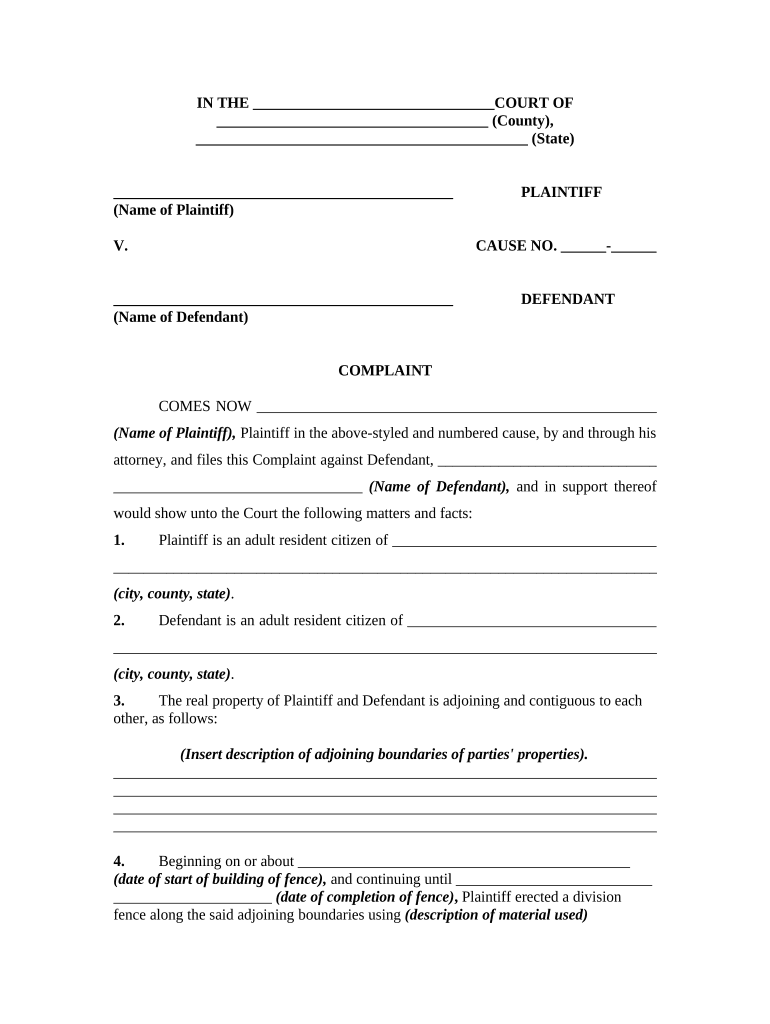
A complaint fence refers to a legal document filed by a plaintiff against a defendant over issues related to the construction, maintenance, or use of a fence separating their properties. This form is typically involved in disputes concerning costs, responsibilities, and agreements that might exist between neighbors. The complaint can arise when one party believes that the other has violated an agreement or improperly constructed or maintained a fence that separates their properties.
Key Components of a Complaint Fence
A well-structured complaint fence form generally includes:
- Plaintiff and Defendant Information: Details about both parties, including names, addresses, and legal representation.
- Description of the Dispute: A clear narrative outlining the facts of the case, including the circumstances surrounding the fence's construction or use.
- Costs Incurred: An itemized list of expenses related to the fence's construction or maintenance that the plaintiff seeks to recover.
- Claims for Damages: Specific monetary amounts the plaintiff is requesting for damages caused by the defendant’s actions or inactions regarding the fence.
- Legal Basis for the Claim: Explanation of the laws or contractual agreements that support the plaintiff’s claims.
Steps to Complete a Complaint Fence
Completing a complaint fence requires several decisive steps:
- Gather Relevant Information:
- Include construction details of the fence, agreements made with neighbors, and any relevant correspondence.
- Detailing the Narrative:
- Write a comprehensive description of the events leading to the complaint, specifying how the defendant's actions affected your rights.
- Calculating Damages:
- Compile and verify all costs incurred, ensuring clarity in how these figures relate to the fence dispute.
- Filing the Document:
- Submit the complaint to the appropriate local court, adhering to specific legal filing procedures.
- Service of Process:
- Properly notify the defendant by serving them with copies of the filed complaint through legally sanctioned means, such as a process server.
Importance of Neighbor Agreements
Neighbor relations can significantly impact property disputes related to fences. Implementing a neighbor fence agreement can mitigate misunderstandings and legal issues. A solid agreement could include:
- Cost-Splitting Arrangements: Detailed agreements on how costs for construction and maintenance will be shared.
- Planning and Design Consensus: Parameters for the type of fence to ensure it meets both parties’ aesthetic and functional needs.
- Maintenance Responsibilities: Outlining who is responsible for upkeep can prevent disputes over fence condition later.
Legal Considerations Surrounding Complaint Fence
Several legal standards can dictate the outcomes of disputes over fences:
- Property Line Laws: Understanding local property laws regarding fence placement is crucial, as incorrect placements can lead to disputes.
- Easement Rights: In some cases, easement rights may allow one neighbor to use part of another’s property for fence construction or maintenance.
- Local Ordinances: Laws can vary by state and municipality, so knowledge of local fencing regulations and ordinances is critical for compliance and dispute resolution.
Recommended Templates and Sample Letters
Utilizing a template can streamline the creation of a complaint fence or neighbor agreement. Some examples include:
- Neighbor Fence Agreement Template: A structured document laying out agreement details between parties regarding shared fence responsibilities.
- Good Neighbor Fence Letter Template: A sample letter to introduce a proposed fence agreement, fostering communication and understanding.
- Shared Fence Agreement Form: A formal template useful in documenting shared responsibilities for fence construction and maintenance.
Case Studies Illustrating Fence Complaints
Examining real-world scenarios helps clarify potential issues:
- Case Study 1: A homeowner disputes the placement of a fence that encroaches on their property line, leading to a formal complaint being filed to seek correction.
- Case Study 2: An example where one neighbor failed to maintain a shared fence, resulting in deterioration. The affected party filed a complaint to recoup costs related to repairs.
Conclusion: Navigating Complaints Effectively
The complaint fence process can involve nuanced legal considerations and interpersonal challenges. Understanding the comprehensive components and potential resolutions fosters more effective management of disputes between neighbors regarding fences.




